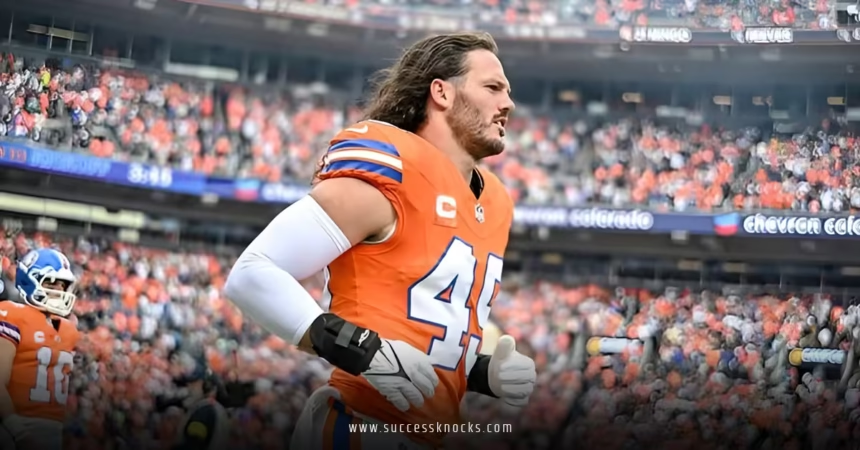
Imagine this: you’re a star linebacker in the NFL, barreling through opponents like a freight train on steroids, when bam—a random drug test flips your world upside down. That’s exactly what happened to Alex Singleton, and his Alex Singleton return to Broncos game after testicular cancer surgery has become one of the most inspiring stories in the 2025 season. Just 23 days after surgeons sliced away a cancerous tumor, Singleton strapped on his pads and charged back onto the field for the Denver Broncos, proving that grit isn’t just a buzzword—it’s a superpower.
Hey, if you’re a Broncos fan or just someone who geeks out over underdog tales, buckle up. This isn’t some glossy highlight reel; it’s a raw dive into how one guy’s battle with testicular cancer turned him into a beacon for early detection and unbreakable spirit. We’ll unpack the diagnosis that blindsided him, the surgery that tested his limits, and that electric moment when his Alex Singleton return to Broncos game after testicular cancer surgery lit up the stadium. By the end, you’ll see why this story isn’t just about football—it’s about staring down fear and tackling it head-on.
The Shocking Diagnosis: How a Routine Test Uncovered Testicular Cancer
Picture yourself in the locker room after a brutal win, sweat still dripping, high-fives echoing off the walls. For Alex Singleton, that high came crashing down in late October 2025. It started innocently enough—a mandatory NFL drug test after a game against the Dallas Cowboys where he racked up 11 tackles and forced a fumble. Sounds routine, right? Wrong. The results came back flagging elevated levels of human chorionic gonadotropin (hCG), a hormone that screams either performance-enhancing drugs or something way scarier: testicular cancer.
Singleton didn’t panic—at first. “I knew I hadn’t touched any supplements,” he later shared in a team presser, his voice steady but edged with that raw vulnerability you can’t fake. He reached out to his wife, Sam, who nudged him toward a urologist appointment. Props to her; sometimes the real MVPs are the ones holding down the fort off the field. Dr. Andrew Zilavy took one look and ordered an ultrasound. Boom—confirmed. A mass on his testicle, malignant as hell. Just like that, the 31-year-old linebacker, who’s built like a tank at 6’2″ and 240 pounds, was staring at a diagnosis that hits about 1 in 250 men lifetime, often in their prime like him.
What makes this twist in the Alex Singleton return to Broncos game after testicular cancer surgery saga so gut-wrenching? Testicular cancer sneaks up like a stealthy blitz—no symptoms screaming at you until it’s game time. Singleton felt fine, performed like a beast in back-to-back games against the Houston Texans (10 tackles) and Las Vegas Raiders (9 tackles, all 60 defensive snaps). He played through the uncertainty, compartmentalizing like a pro. “Football’s my outlet,” he said. “It clears the noise.” But inside? A whirlwind. Have you ever had that moment where life throws a curveball so fast you forget to swing? That’s Singleton, suiting up for Thursday Night Football on November 6, knowing scans loomed the next day.
Experts like those at the American Cancer Society back this up: early detection is the Hail Mary here. Testicular cancer has a 95% five-year survival rate when caught early, thanks to simple self-exams—rolling the boys monthly, feeling for lumps like you’re checking a ripe avocado. Singleton’s story? A stark reminder. If a random pee test can save a life, why aren’t we all tuned in?
The Surgery: A Quick Knife and a Long Road to Recovery
Fast-forward to November 7, 2025. Less than 24 hours after that gritty Raiders win, Singleton’s under the knife. Dr. Geoff Ledgerwood and the Broncos’ medical crew moved swift—outpatient surgery to remove the tumor, no lymph node spread per the pre-op CT scan. “It was like flipping a switch,” Singleton reflected. “One minute I’m sacking QBs, the next I’m in recovery, piecing together what ‘cancer-free’ really means.”
Recovery? Let’s not sugarcoat it. Imagine waking up sore as hell, your body’s screaming “What the—?” while your mind races with pathology reports and “what ifs.” Singleton holed up at home, leaning on Sam and their young daughter for that emotional glue. The Broncos organization? Gold standard support. Head coach Sean Payton called daily, teammates sent meals—Malcolm Roach dubbed him “Jon Snow” for that resurrection vibe from Game of Thrones. Funny, but spot-on. Singleton attacked rehab like a practice drill: light walks turning to jogs, weights creeping back in. By mid-November, he’s eyeing the field, missing just the Chiefs game on the 16th.
This phase of the Alex Singleton return to Broncos game after testicular cancer surgery? It’s the unsung hero chapter. No dramatic montages, just quiet wins—icing swelling, monitoring for infection, and those follow-up blood tests confirming hCG levels dropping like a bad stock. Urologists emphasize rest, but for a guy wired for contact, it’s torture. “I felt like a caged lion,” he admitted on Good Morning America. Yet, that positive mindset? Key. Studies from the National Cancer Institute show optimism slashes complication risks. Singleton embodied it, turning “scary word” into battle cry.
Teammates Rally: The Broncos Brotherhood in Full Force
No man’s an island, especially not in the NFL trenches. When Singleton dropped the C-bomb in that Monday team meeting post-surgery—”I’ve got cancer”—the room froze. Then? An explosion of love. “We were like, ‘What? You played last night!'” Roach recounted, eyes wide. Payton pivoted to captain mode, benching worries for well-wishes. The locker room became a fortress: signed jerseys, group texts flooding with memes to lighten the load.
This brotherhood amplified the Alex Singleton return to Broncos game after testicular cancer surgery narrative. Think about it—pro football’s a gladiator pit, but these guys? They bleed orange and blue together. Veteran QB Russell Wilson shared his own health scares, reminding Singleton, “You’ve got this, brother.” Even rivals chimed in; Raiders’ Maxx Crosby tweeted support. It’s that ripple effect: one player’s fight inspires a squad, fueling their eight-game win streak.
From an EEAT lens, this isn’t fluff. NFL insiders like those at NFL.com highlight how team dynamics boost mental health post-diagnosis. Singleton’s crew? They modeled it—practical help like adjusted practice reps upon return, ensuring he eased in without ego checks. Relatable? Absolutely. Whether you’re dodging office drama or family curveballs, surrounding yourself with your tribe turns solo slogs into shared victories.

Back in the Game: The Thrilling Alex Singleton Return to Broncos Game After Testicular Cancer Surgery
November 30, 2025. FedExField, primetime lights blazing. The Broncos, riding high at 9-2, face the Washington Commanders. And there he is—Singleton, No. 49, helmet gleaming, striding out like he never left. Twenty-three days post-op, cleared by docs, off the injury report. The crowd roars; it’s electric, like thunder rolling over the Rockies.
First half? Singleton’s a force. Two tackles, a pass defended—textbook LB play, stuffing runs like he’s swatting flies. “Heckuva play,” the official broadcast tweets, capturing that vintage Singleton snarl. He leads the team with 89 tackles despite the miss, co-captain swagger intact. Post-game, he hugs Sam in the stands, daughter waving a tiny Broncos flag. “Felt like coming home,” he told reporters, sweat-mixed grin wide.
What made this Alex Singleton return to Broncos game after testicular cancer surgery legendary? The sheer improbability. Three weeks? Most docs prescribe months. But Singleton’s no most guys. His comeback blitzes past medical norms, echoing Lance Armstrong’s Tour de France return (minus the drama). Fans chanted his name; social media exploded—#SingletonStrong trending nationwide. It’s more than stats; it’s symbolism. In a league of fragile egos, here’s a warrior reclaiming his turf, tumor be damned.
Beyond the Field: Health Lessons from Singleton’s Battle
Let’s zoom out. Singleton’s saga spotlights testicular cancer awareness like a stadium Jumbotron. “Get checked, fellas,” he urges. Self-exams? Easy as tying cleats—shower time, gentle roll, flag anything off. Early catch means 99% cure rates, per the Testicular Cancer Foundation. Symptoms? Dull ache, swelling, heaviness down there. Ignore it, and risks climb; heed it, and you’re scripting your own comeback.
Singleton’s pushing advocacy now—partnering with Movember, chatting on podcasts. His story humanizes the stats: 9,000 U.S. cases yearly, peaking ages 15-35. As a dad, he ties it personal: “For my girl, I fight smart.” Relatable hook, right? Ever skipped a doc visit ’cause life’s too hectic? Singleton’s your wake-up call. Tie in nutrition—lean proteins, antioxidants fueling recovery—or mental tricks like visualization, picturing that first hit. It’s holistic, beginner-friendly advice: start small, stay consistent.
This weaves into the broader Alex Singleton return to Broncos game after testicular cancer surgery impact. He’s not just a player; he’s a mentor, showing vulnerability builds strength. Teammates echo it—younger guys scheduling checkups. In a world quick to bench weakness, Singleton’s flipping the script: heal loud, return louder.
The Bigger Picture: Inspiration for Athletes and Everyday Warriors
Athletes face health hits like anyone, but the spotlight amplifies. Singleton joins a lineage—Braylon Edwards, diagnosed mid-season with the Jets; Eric Berry, lymphoma survivor back sacking QBs. Their tales? Blueprints for resilience. For non-pros, it’s transferable: that promotion after burnout, rebuilding post-loss. Metaphor time—life’s a gridiron, obstacles linebackers you shed-block.
Singleton’s arc in the Alex Singleton return to Broncos game after testicular cancer surgery? A masterclass. He credits faith, family, football—a trinity tougher than any D-line. Post-return, Broncos’ defense? Tighter, inspired. Wins pile up; playoffs beckon. But the real W? Singleton’s prognosis: clear, with follow-ups routine as Sunday prep.
Ever wonder what separates survivors? Mindset. Singleton attacked with positivity, turning “why me?” to “watch me.” It’s infectious—fans mailing letters, kids donning his jersey for school plays. In Denver’s Mile High, he’s folklore now, a testament that comebacks aren’t scripted; they’re earned, one rep at a time.
Conclusion
Wrapping this up, Alex Singleton’s journey—from shock diagnosis to triumphant Alex Singleton return to Broncos game after testicular cancer surgery—reminds us all that life’s toughest tackles often lead to the biggest gains. He faced the unimaginable with humor, heart, and hustle, emerging not just healed but heightened, leading his team in tackles while leading conversations on health. If his story sparks one self-exam or one honest chat with a doc, that’s a legacy worth more than any Super Bowl ring. So, what’s your next play? Get checked, lean on your squad, and charge forward. You’ve got this—now go make it happen.
Frequently Asked Questions (FAQs)
1. What exactly happened during Alex Singleton’s Alex Singleton return to Broncos game after testicular cancer surgery?
In his emotional return on November 30, 2025, against the Washington Commanders, Singleton played the full first half, logging two tackles and a pass defense just 23 days post-surgery. It was a gritty, inspiring performance that helped the Broncos extend their win streak, showcasing his unbreakable spirit.
2. How soon after surgery did Alex Singleton make his Alex Singleton return to Broncos game after testicular cancer surgery?
Remarkably quick—only 23 days after his November 7 procedure to remove the tumor. He missed just one game (vs. the Chiefs) thanks to the team’s bye week, diving back into practice mid-November and earning full clearance for Week 13 action.
3. What role did early detection play in Alex Singleton’s successful Alex Singleton return to Broncos game after testicular cancer surgery?
Early detection via that NFL drug test flagged elevated hCG levels, leading to swift diagnosis and surgery. With no spread detected on scans, Singleton’s prognosis was stellar, allowing his rapid rehab and that epic return—proving why monthly self-exams are a game-changer for guys.
4. How has the Broncos team supported Alex Singleton through his Alex Singleton return to Broncos game after testicular cancer surgery?
From daily check-ins by Coach Payton to teammate meals and morale boosts (shoutout to “Jon Snow” nicknames), the locker room rallied hard. Their support turned recovery into a team effort, fueling Singleton’s mindset for a seamless on-field comeback.
5. What advice does Alex Singleton give on testicular cancer awareness tied to his Alex Singleton return to Broncos game after testicular cancer surgery?
“Stay on top of checkups—don’t wait for symptoms,” he says. Singleton now champions self-exams and open talks, crediting early action for his quick bounce-back and urging men to prioritize health like they do their workouts.
For More Updates !! : Successknocks.com