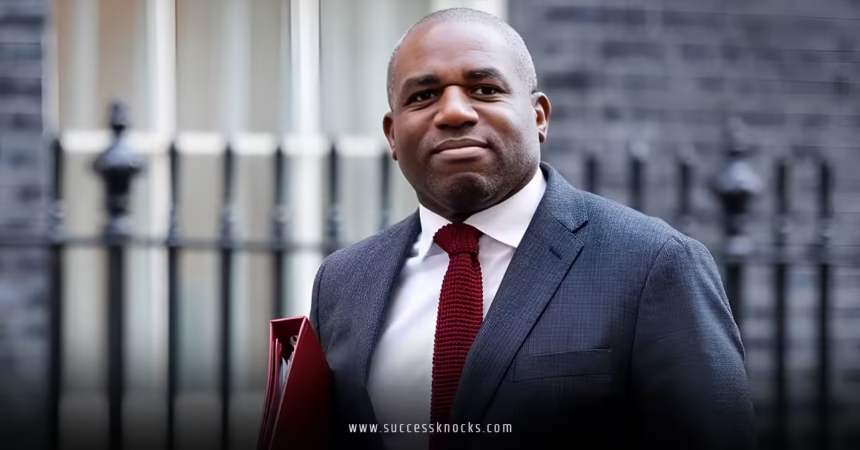
David Lammy jury trial reforms 2025 backlash has exploded across headlines, social media, and parliamentary benches like a courtroom drama gone rogue—think Perry Mason meets a Brexit-style uproar, where every twist leaves you questioning who’s really calling the shots. As the UK’s Justice Secretary and Deputy Prime Minister, David Lammy stepped into the fray last November with bold proposals to overhaul the creaking criminal justice system. But what started as a pragmatic push to clear a monstrous backlog of cases has morphed into a firestorm of criticism. Lawyers are up in arms, calling it a “stitch-up” that could erode centuries of hard-won rights. Victims’ advocates worry about unintended delays, while everyday folks on X (formerly Twitter) are venting about the death of “common sense justice.” Why does this matter to you, even if you’re not facing a trial anytime soon? Because at its core, this isn’t just about legal jargon—it’s about who gets to decide guilt or innocence in a democracy that prides itself on fairness. Buckle up; we’re diving deep into the chaos, the critiques, and what it all means for the future of British justice.
The Roots of the Crisis: Why Jury Trials Are in the Crosshairs
You know that feeling when your to-do list spirals out of control, and suddenly you’re buried under a mountain of unfinished tasks? Multiply that by 80,000, and you’ve got the Crown Court backlog in England and Wales as of late 2025. Cases are piling up like uncollected rubbish on a strike day—murder trials delayed by years, rape victims reliving trauma in endless waiting rooms, and petty thieves walking free because the system’s clogged. This isn’t hyperbole; it’s the stark reality Lammy inherited when Labour swept into power earlier this year.
A System on the Brink of Collapse
Picture this: a victim of domestic abuse waits three years for her day in court, only to hear the case dismissed due to “insufficient resources.” That’s not justice; that’s a farce. The backlog hit a record 78,000 cases by mid-2025, up 10% from the previous year under the previous government. Prisons are overflowing, with early releases becoming the norm to avoid total meltdown. Lammy, drawing from his own experience as a barrister turned MP, didn’t mince words in a fiery Sky News interview: “We’re facing a courts emergency that demands radical action.” His target? The jury trial system, a Magna Carta-era relic that’s noble in theory but glacial in practice.
Jury trials, where 12 ordinary citizens deliberate on verdicts, embody the “wisdom of the crowd.” But in 2025, with court sitting days missed totaling 21,000 annually, they’re also a bottleneck. Complex fraud cases drag on for months, technical jargon baffling jurors and inflating costs. Lammy’s blueprint, leaked in a Ministry of Justice memo, proposed reserving juries for the gravest offenses—murder, rape, manslaughter, and select “public interest” crimes carrying over five years’ imprisonment. Everything else? Handled by a lone judge or, in some tweaks, a judge plus two magistrates. It’s efficiency on steroids, inspired by Canada’s judge-only model for mid-tier cases, where courts minister Sarah Sackman KC scouted ideas just last month.
But here’s the rub: is speed worth the soul of the system? Critics say no, and that’s where the David Lammy jury trial reforms 2025 backlash truly ignites.
Unpacking Lammy’s Bold Blueprint: What the Reforms Entail
Let’s break it down like a barrister dismantling a shaky alibi. Lammy’s plan isn’t a full-throated abolition of juries—far from it. In a Times interview, he insisted, “This is about saving the jury system, not scrapping it.” The core idea? Create a new “Crown Court Bench Division” (CCBD) for “either-way” offenses—those serious enough for Crown Court but not automatically jury-bound, like theft or assault with potential sentences up to five years.
Key Pillars of the Proposal
First off, jury exclusivity for the elite tier. Only “indictable-only” crimes—think terrorism plots or serial burglaries with aggravating factors—guarantee a jury. This aligns loosely with Sir Brian Leveson’s July 2025 review, which urged juries for top-tier cases but with a “heavy heart” suggested judge-led alternatives for the rest to avert “total system collapse.”
Second, judge-alone for the technical tangle. Fraud and financial whoppers? If a judge deems them too labyrinthine—hello, spreadsheets and shell companies—they go solo. Lammy’s memo pushed this further than Leveson, eyeing a five-year sentence threshold versus the review’s three-year cap, aiming for “maximum impact” on the backlog.
Third, victim-centric tweaks. Lammy’s putting survivors “front and center,” as he told BBC News. Faster routes mean less torment: AI-powered sentence checks to curb release errors, a hotline for swift court access, and a Justice Performance Board under his chair to track progress. It’s not all doom—reforms promise extra hearing time and no compromise on fair trials, per MoJ insiders.
Yet, as one X user quipped in a viral thread, “Lammy’s fixing a leaky pipe by ripping out the plumbing.” The David Lammy jury trial reforms 2025 backlash stems from fears that efficiency trumps equity.
The Firestorm Ignites: Voices Fueling the David Lammy Jury Trial Reforms 2025 Backlash
Oh boy, the backlash hit like a gavel on a glass table—sharp, shattering, and impossible to ignore. Within hours of the memo’s leak on November 25, 2025, the legal eagles swooped in. The Criminal Bar Association blasted it as a “secret justice stitch-up,” warning of riots if ancient liberties erode. The Bar Council echoed: “No need to curtail jury rights—from principle or practicality.”
Legal Heavyweights Throw Down the Gauntlet
Senior lawyers didn’t hold back. Angela Patrick, a human rights barrister, told The Guardian: “This destroys justice as we know it.” Why? Juries aren’t the backlog’s villain; chronic underfunding is. The Law Society of England and Wales labeled it an “extreme measure” with “no real evidence” it’d work, citing stats showing juries acquit at higher rates (33% in Crown Courts vs. 14% in magistrates’)—a sign of balanced scrutiny, not delay.
Even Lammy’s past haunts him. In 2020, amid COVID jury suspensions, he tweeted: “Jury trials are a fundamental part of our democratic settlement. Criminal trials without juries are a bad idea.” Fast-forward to 2025, and shadow justice secretary Robert Jenrick pounced: “Lammy’s abandoned his principles—Labour’s pouring billions into benefits, not courts.” On X, #ScrapTheStarChamber trended, with users likening judge-only trials to 17th-century tyranny, where royals rigged verdicts sans peers.
Public Outcry: From X Rants to Street Protests
Scroll X, and it’s a powder keg. One post from @JamesMelville garnered 1,700 likes: “Thousands lose jury rights under this backlog fix? Wrong on every level.” Reform UK supporters tied it to “two-tier justice,” fearing bias in an unrepresentative judiciary—only 7% ethnic minority judges versus 14% in the population, per Lammy’s own 2017 review. Racial equality groups flipped the script: juries, diverse by lottery, might better check judicial blind spots than a bench echoing elite echo chambers.
Protests brewed outside the MoJ, with banners reading “Juries: The People’s Verdict.” A Free Speech Union report warned: 16% of speech-offense acquittals happen in jury trials—scrapping them risks chilling dissent, from immigration posts to protest charges. “It’s a bulwark of liberty,” FSU director Lord Young declared.
Political Poker: Allies, Adversaries, and the Cabinet Curveball
Politics, eh? It’s like a jury deliberating—messy, opinionated, and full of surprises. Lammy’s facing a pincer from left and right. Conservatives howl hypocrisy; Lib Dems decry democratic dilution. Even within Labour, whispers of cabinet pushback surfaced. On Sky News, Lammy dodged: “Cabinet discussions shape judgments—it’s process, not backlash.”
Cross-Party Carnage
Jenrick’s barbs stung: “21,000 missed sitting days on your watch—fix your house before eroding rights.” But Gaby Hinsliff in The Guardian countered: “Juries are flawed, unwieldy—vital for ‘justice seen to be done,’ yet ripe for reform.” Simon Jenkins went bolder: “Lammy’s right; confine juries to extremes. Europe’s ditched them sans apocalypse.”
Internationally, eyes rolled. Canada’s system works, sure, but with fewer resources per capita. The US, jury-obsessed, pleads out 98% of cases—hardly a model.
The U-Turn Tease: Scaling Back Under Pressure?
By December 2, 2025—today, as I write—rumors swirl of retreat. The Guardian reports Lammy’s softening: juries for more “serious” offenses beyond the big three, perhaps incorporating Leveson’s judge-magistrate hybrid. “Discussions led here,” he hinted, fueling speculation of internal revolt. Will it pass the Lords? Barristers bet against, citing peers’ jury reverence.
This David Lammy jury trial reforms 2025 backlash underscores a truth: reforms thrive on buy-in, not leaks.
The Stakes: What Happens If These Reforms Stick (or Don’t)?
Imagine a justice system turbocharged yet soulless—like a Ferrari with no steering wheel. Proponents argue it’ll slash waits, freeing Crown Courts for the dire. Victims get closure faster; costs drop by millions. But detractors foresee miscarriages: judges, trained in law not life, might miss nuances 12 minds catch. Public trust? It plummets if verdicts feel elite-dictated.
Winners and Losers in the Balance
Victims win short-term—less “years of torment,” as Lammy puts it. Defendants? Riskier, with acquittal rates potentially halving. Society? A leaner system, but at what cultural cost? Analogous to ditching town halls for Zoom meetings—efficient, but impersonal.
Data backs the drama: Leveson’s review projected 20% backlog cuts, yet lawyers counter that funding 1,000 more staff yields similar gains without rights raids.
David Lammy Jury Trial Reforms 2025 Backlash: Echoes from History
History’s a stern judge, isn’t it? Jury trials trace to 1215’s Magna Carta, evolving through the 17th-century Star Chamber’s fall—Lammy’s “Star Chamber” jabs aren’t hyperbole. Dickens skewered delays in Bleak House, mirroring today’s fog. Post-WWII, juries symbolized rebirth from authoritarian ashes. Scrapping them now? It risks echoing erosion elsewhere, from speech curbs to surveillance states.
Yet, evolution’s key. Civil juries vanished decades ago; why cling to criminal ones amid crisis? The David Lammy jury trial reforms 2025 backlash revives this eternal tussle: tradition versus necessity.
Navigating the Fallout: Advice for the Everyday Advocate
You’re not powerless here. If this irks you, email your MP—templates abound on Liberty’s website. Join bar association petitions or amplify on X. For professionals, audit your caseload; victims, tap support like Victim Support. Lammy’s hotline? Use it to demand transparency.
Beginners, start simple: read Leveson’s report—it’s drier than toast but gold for understanding. Question: Does speed heal wounds, or just hide scars?
Conclusion: A Verdict Still Pending on David Lammy Jury Trial Reforms 2025 Backlash
Whew, what a rollercoaster. The David Lammy jury trial reforms 2025 backlash captures a nation wrestling its soul—balancing a backlog bonfire with the flickering flame of jury democracy. Lammy’s intent is noble: swift justice for the vulnerable, a system unstuck from paralysis. Yet the roar from lawyers, politicians, and the public spotlights perils—miscarriages, mistrust, a slide toward judge-ruled shadows. As Lammy preps his parliamentary statement today, one thing’s clear: this isn’t over. It’s a call to you, reader—demand details, defend rights, drive dialogue. Because in justice’s grand theater, we’re all jurors now. Will we acquit the status quo, or convict for complacency? Your move.
Frequently Asked Questions (FAQs)
1. What exactly sparked the David Lammy jury trial reforms 2025 backlash?
The backlash erupted over leaked plans to limit jury trials to only the most serious crimes like murder and rape, shifting thousands of cases to judge-alone hearings. Critics, including top lawyers, fear it undermines fair trials and public trust, calling it an “extreme” fix for the courts backlog.
2. How do the David Lammy jury trial reforms 2025 backlash proposals aim to fix the Crown Court backlog?
By reserving juries for high-stakes offenses and creating a new judge-led division for mid-level crimes, the reforms promise faster processing—potentially cutting waits by 20% and saving victims years of delay—while adding AI checks and hotlines for efficiency.
3. Who are the main opponents in the David Lammy jury trial reforms 2025 backlash?
Legal bodies like the Criminal Bar Association and Law Society lead the charge, joined by opposition MPs like Robert Jenrick and free speech groups warning of biased verdicts. Even some Labour insiders and racial equality advocates have voiced concerns over judicial diversity.
4. Has the David Lammy jury trial reforms 2025 backlash forced any changes to the original plan?
Yes, reports suggest Lammy’s scaling back—expanding jury use beyond just rape and murder, possibly blending judges with magistrates—to appease cabinet and Lords pushback, though full details emerge in today’s parliamentary address.
5. Why should I care about the David Lammy jury trial reforms 2025 backlash if I’m not involved in the justice system?
Juries represent everyday voices checking power; diluting them risks a less democratic, more elite-driven justice. It could affect free speech cases or public trust, echoing broader erosions of rights that touch us all.
For More Updates !! : Successknocks.com