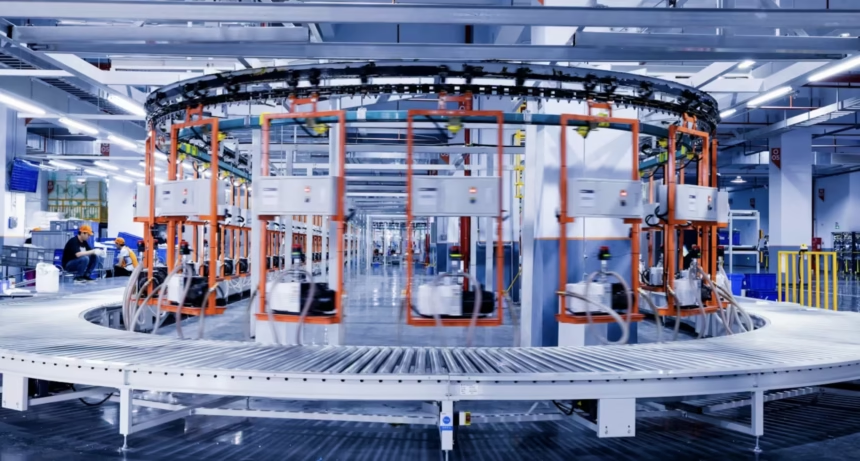
Modernising equipment is often one of the biggest investments a company makes, yet many organisations discover that upgrading machines alone isn’t enough to achieve the improvements they’re hoping for. New technology can strengthen performance, but only when paired with the right processes, communication systems and operational habits. The details that seem small at first are usually the ones that make the biggest difference once the equipment is in use.
When companies take a closer look at the elements surrounding their machinery, they often uncover opportunities to support reliability, improve efficiency and get more value from every upgrade.
Focusing only on hardware instead of supporting components
A common oversight in modernisation projects is assuming new machinery will deliver top performance without updating the supporting components around it. Reliable output depends on everything working together, including cabling, connectors, interfaces and power distribution. This is why many companies now look at connectivity solutions from companies like Amissiontech, which help reinforce the communication pathways machines rely on.
When supporting components are outdated or low quality, new equipment can’t reach its full potential. This applies to the smallest components as much as the largest. Precision fasteners like thumbscrews are a good example often overlooked during modernisation projects, yet critical for panels, enclosures, and equipment housings that need to be accessed regularly for maintenance without slowing down the workflow. Businesses that address these areas early in the upgrade process usually see smoother performance, fewer interruptions and a longer lifespan for their investment.
Expecting efficiency without reworking internal processes
Installing modern machines won’t automatically improve productivity unless the supporting workflows change as well. Teams often assume faster equipment will solve operational bottlenecks, only to realise that outdated processes continue slowing down production. Real gains come when companies align their workflows with the capabilities of their new technology.
This is where leaders often miss the value of streamlining operations alongside equipment upgrades. Reviewing scheduling systems, communication methods and maintenance routines helps remove friction that technology alone can’t fix. When operations and equipment improve together, performance increases more naturally.
Underestimating the importance of team readiness
Even the most advanced technology won’t deliver strong results if employees don’t feel confident using it. One of the most overlooked parts of modernisation is training. Teams often receive a brief introduction at installation and then return to daily work without gaining the deeper knowledge needed to operate or maintain the equipment effectively.
Providing up-to-date training gives staff the knowledge to handle new features, troubleshoot issues early and take advantage of improvements that might otherwise go unused. Well-trained teams help protect the investment and reduce the risk of operational disruption.
Skipping long-term planning for maintenance and integration
Companies sometimes focus heavily on installation and not enough on how new equipment fits into the long-term picture. Modern machines benefit most when maintenance strategies, monitoring tools and integration plans evolve alongside them. Without this, issues appear sooner, and companies end up reacting instead of staying ahead.
Taking time to map out how new equipment will be serviced, integrated with existing systems and monitored over time keeps performance stable and prevents unnecessary downtime.
Modernising equipment works best when companies update the components, processes and capabilities around the machinery itself. When these elements support one another, upgrades lead to stronger performance and far better long-term results.