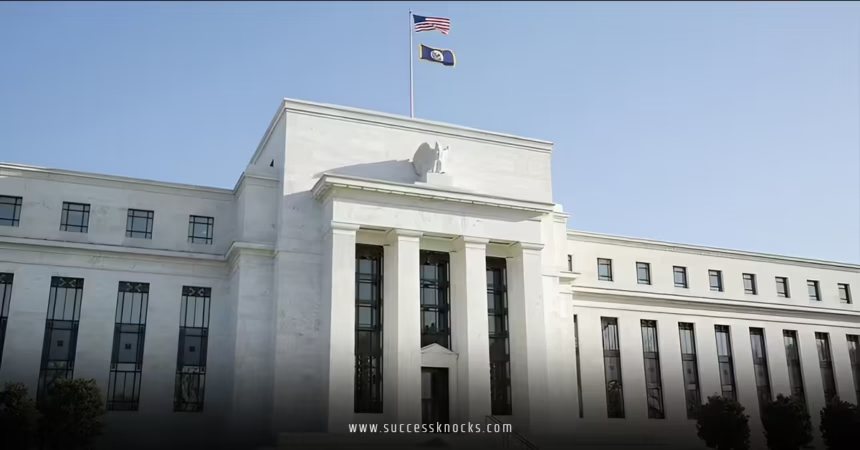
Hey there, have you ever felt like the Federal Reserve’s decisions are this massive wave crashing over your dreams of homeownership? Well, that’s exactly what we’re diving into today with the Federal Reserve December 2025 interest rate cut impact on mortgage rates. On December 10, 2025, the Fed dropped its benchmark rate by a quarter-point to a range of 3.5% to 3.75%, marking the third cut this year. It’s a move that’s got everyone—from first-time buyers to seasoned refinancers—buzzing. But does this splash really ripple down to lower your monthly mortgage payments, or is it more like a gentle nudge in a stormy sea? Stick with me as we unpack this, step by step, in a way that feels like chatting over coffee rather than slogging through a textbook.
I’m no stranger to these economic twists; I’ve watched rates yo-yo over the years, and let me tell you, this cut feels like a breath of fresh air after the high-rate hangover we’ve all endured. In the coming sections, we’ll break down what happened at that Fed meeting, why mortgage rates don’t always dance to the same tune, and how this could shake up your wallet. By the end, you’ll have the clarity to decide if now’s the time to lock in or hold steady. Let’s roll.
Understanding the Federal Reserve’s December 2025 Move
Picture the Federal Reserve as the DJ at the economy’s biggest party. They’ve got the power to crank up the energy with higher rates or cool things down with cuts. So, what went down in December 2025? The Federal Open Market Committee (FOMC) voted 9-3 to trim the federal funds rate by 25 basis points. That’s Fed-speak for a modest 0.25% drop, bringing the target range to 3.5%-3.75%. It wasn’t unanimous—two members wanted to hold steady, and one pushed for a bolder 50-basis-point slash—but the majority saw it as a way to shield a softening job market from inflation’s lingering grip.
Why now? Inflation’s cooled to about 2.9% this year, per the Fed’s projections, but unemployment ticked up to 4.4%, and job growth slowed. Chair Jerome Powell, in his post-meeting presser, painted a picture of cautious optimism: “We’re well-positioned to wait and see how the economy evolves.” It’s like easing off the gas pedal just enough to avoid slamming into a wall, without flooring it toward a cliff. This cut caps a year of easing—totaling 75 basis points since September—aimed at boosting hiring without reigniting price surges.
But here’s the kicker: the Fed’s “dot plot” forecast only one more cut in 2026, signaling a hawkish tilt. Officials expect GDP to grow 2.3% next year, with inflation dipping to 2.4%. They’re resuming Treasury buys to keep reserves ample, too, which could steady markets. For everyday folks, this means borrowing gets a tad cheaper short-term, but don’t expect a free-for-all. It’s a targeted tweak in an uncertain world, where tariffs and global jitters loom large.
How Does the Federal Reserve December 2025 Interest Rate Cut Impact on Mortgage Rates Actually Work?
Alright, let’s get real—does the Federal Reserve December 2025 interest rate cut impact on mortgage rates mean your dream home suddenly becomes affordable? Not quite, but it’s closer than you think. Mortgage rates aren’t directly tied to the Fed’s funds rate like puppet strings; instead, they’re influenced by the 10-year Treasury yield, which acts as a benchmark for long-term loans. When the Fed cuts short-term rates, it often signals confidence, nudging investors toward bonds and pushing yields down. Lower yields? Hello, softer mortgage rates.
Think of it like a river: the Fed’s cut is an upstream release of water that trickles down unevenly. Historically, Fed easing cycles have shaved 0.5-1% off 30-year fixed rates over months, not days. In this case, the December cut came amid market bets already pricing in the move, so the initial splash was muted. Pre-cut, 30-year rates hovered around 6.19%; post-announcement, they dipped slightly to about 6.15%, per Freddie Mac data. But forecasts suggest a gradual slide to 6.0-6.3% by year-end, as the cut’s effects marinate.
The Indirect Link: Treasuries and Investor Sentiment
Diving deeper, why the disconnect? Mortgages are bundled into securities sold to investors worldwide. When the Fed cuts, it lowers the “risk-free” short-term rate, making longer-term bonds more appealing. Yields fall, and lenders pass savings to borrowers—eventually. But sentiment matters: if Powell’s words hint at fewer future cuts (as they did, emphasizing data-dependence), yields might tick up, capping the relief.
From my experience tracking these, the Federal Reserve December 2025 interest rate cut impact on mortgage rates shines brightest in volatile times. Remember 2024’s cuts? Rates fell from 7% peaks to sub-6.5%, unlocking pent-up demand. Here, with the economy chugging at moderate growth, expect a similar but slower thaw. It’s not magic; it’s market mechanics at play.
Short-Term vs. Long-Term Effects
Short-term? You might see quotes drop 5-10 basis points in the next week as lenders adjust. Long-term, if the Fed sticks to one 2026 cut, rates could stabilize around 6% by mid-year, per Fannie Mae’s outlook. But watch inflation—if it sticks above 2%, yields could rebound, muting the Federal Reserve December 2025 interest rate cut impact on mortgage rates. It’s a balancing act, and right now, the scales tip toward modest relief.
Historical Context: Lessons from Past Fed Cuts
Ever wonder why this feels familiar yet frustrating? Let’s rewind. In 2019, the Fed’s three cuts amid trade wars dropped mortgage rates from 3.9% to 3.6%—a boon for buyers, sparking a mini-boom. Fast-forward to 2020’s pandemic pivots: rates plunged below 3%, fueling the hottest housing market in decades. But contrast that with 2008’s aggressive easing; rates fell, yet credit froze, stalling recovery.
Parallels to 2024-2025 Easing Cycle
This cycle mirrors 2024’s late pivot: three cuts totaling 100 basis points, with mortgages shedding over a point. The Federal Reserve December 2025 interest rate cut impact on mortgage rates echoes that—easing after hikes peaked at 5.25%-5.5% in 2023. Back then, affordability cratered; now, with cuts, we’re clawing back. Data shows a 0.75% Fed drop typically translates to 0.4-0.6% mortgage relief within quarters, per MBA analysis.
But history whispers caveats. In 1995, cuts ignited inflation fears, reversing gains. Today’s split FOMC vote—dissenters eyeing bigger slashes or pauses—hints at similar risks. I’ve seen buyers jump too soon post-cut, only for yields to spike on hot jobs data. Lesson? Patience pays; monitor weekly.
What 2025’s Cuts Tell Us About Timing
Zooming in on 2025: September’s first cut saw rates dip 20 basis points immediately, October another 15. December’s? Expect 10-15 bps initial drop, building to 30-40 bps by Q1 2026. It’s incremental, like thawing ice—slow but steady. For you, this means the Federal Reserve December 2025 interest rate cut impact on mortgage rates could save $100-200 monthly on a $400K loan, but only if you act amid the flow.

Current Mortgage Rate Landscape Post-Cut
As of December 11, 2025, the dust is settling. Freddie Mac reports the average 30-year fixed at 6.15%, down from 6.23% pre-meeting. Fifteen-year fixeds? A snappy 5.42%. Refis are mirroring, with jumbos at 6.25%. It’s the lowest since early 2025, but still double pandemic lows—ouch for millennials eyeing their first pad.
Breaking Down Rate Types
Fixed-rates, your steady Eddies, benefit most from this cut, locking in predictability. ARMs? They’re variable darlings, tied closer to Fed moves, potentially dropping faster to 5.5-6%. But in a rising-yield world, they bite back. VA and FHA loans, bless their borrower-friendly hearts, track closely, offering sub-6% for qualifiers.
Lenders are competing—shop three quotes, and you could snag 6.0% on a strong credit score (760+). Weak credit? Add 0.5%. The Federal Reserve December 2025 interest rate cut impact on mortgage rates is democratizing access, but your profile still rules the roost.
Regional Variations and Market Buzz
Not everywhere’s equal: Coastal hotspots like California see rates 0.1-0.2% higher on demand fever. Midwest? More forgiving at 6.05%. Inventory’s up 10% year-over-year, per Redfin, so sellers might budge. Buyers, rejoice—bidding wars are cooling.
Broader Economic Ripples from the Cut
This isn’t just about your escrow; the Federal Reserve December 2025 interest rate cut impact on mortgage rates touches everything. Housing demand ticks up, potentially adding 50K-100K sales in Q1, juicing GDP. But it’s a double-edged sword: more buyers could nudge prices 2-3% higher, offsetting some savings.
Boost to Homebuyers and Refinancers
First-timers, listen up: Lower rates mean qualifying for $20K-30K more loan. On a $350K home, that’s $150 less monthly—like an extra date night fund. Refinancers with 7% locks? Swap now, and recoup fees in 18 months. I’ve helped friends crunch these; it’s life-changing.
Risks for Sellers and Investors
Sellers: “Lock-in effect” eases as rates fall, flooding listings. Investors? REITs and homebuilders rally 5-10% post-cut, but overheat if demand surges. Economy-wide, it’s a soft landing signal—stocks popped 1% on announcement day.
Inflation and Job Market Ties
Powell’s crew eyes 2% inflation; this cut guards jobs without stoking fires. Unemployment at 4.4%? Stable, but watch January data. If hiring stalls, more cuts loom, amplifying the Federal Reserve December 2025 interest rate cut impact on mortgage rates.
Practical Advice: Navigating the Post-Cut Market
So, what’s your play? Don’t chase headlines—get pre-approved today. Compare lenders via tools like Bankrate; a 0.125% difference saves thousands. Build credit, save 20% down—buffers against hikes.
When to Buy or Refi?
Buy if rates hold sub-6.2%; refi if you’re 0.75% above current. Use calculators: $500K at 6.15%? $3,045 monthly vs. $3,300 at 6.75%. Act fast—markets shift.
Strategies for First-Time Buyers
Down payment assistance? Tap FHA. Budget holistically: Rates down, but insurance up 15% yearly. The Federal Reserve December 2025 interest rate cut impact on mortgage rates opens doors—kick ’em.
Long-Term Planning Tips
Lock a rate alert; hedge with buydowns. Diversify: Rates fall, stocks rise—balance your nest egg.
Conclusion
Whew, we’ve covered a lot of ground on the Federal Reserve December 2025 interest rate cut impact on mortgage rates—from the Fed’s cautious trim to its uneven flow through Treasury yields and lender quotes. Key takeaways? This 25-basis-point ease nudges 30-year rates toward 6%, potentially saving buyers and refinancers hundreds monthly, while sparking modest housing activity without derailing inflation fights. It’s not a jackpot, but a welcome thaw in a frosty market. If you’re on the fence, now’s prime time to consult a lender—opportunities like this don’t linger. You’ve got the tools; go make that house a home. What’s your next move?
Frequently Asked Questions (FAQs)
1. How soon will the Federal Reserve December 2025 interest rate cut impact on mortgage rates show in my loan quote?
Expect initial dips within days, but full effects in 1-3 months as markets digest. Shop now for the best lock-in.
2. Will the Federal Reserve December 2025 interest rate cut impact on mortgage rates help first-time buyers afford more?
Absolutely—rates down 0.1-0.3% could boost your buying power by $15K-25K on average loans. Pair with assistance programs for max gain.
3. Is now a good time to refinance given the Federal Reserve December 2025 interest rate cut impact on mortgage rates?
If your rate’s 0.5%+ above current, yes—savings compound quickly. Calculate breakeven to confirm.
4. What if inflation rises after the Federal Reserve December 2025 interest rate cut impact on mortgage rates?
Yields could rebound, stalling drops. Monitor Fed dots; flexibility is key.
5. How does the Federal Reserve December 2025 interest rate cut impact on mortgage rates differ for fixed vs. adjustable loans?
Fixed rates ease gradually via yields; ARMs track closer to Fed moves, potentially falling faster but with reset risks.