
Fentanyl as a weapon of mass destruction—it’s a phrase that’s been making waves lately, hasn’t it? Just yesterday, on December 15, 2025, President Trump signed an executive order officially designating illicit fentanyl and its precursors as weapons of mass destruction. You might wonder why a drug, something often seen in hospitals for pain relief, is suddenly being talked about in the same breath as chemical weapons. Let’s dive into this together and unpack what it really means.
Imagine a substance so potent that a speck the size of a few grains of salt could end a life. That’s fentanyl in a nutshell. It’s not your typical street drug; its extreme lethality has turned the ongoing opioid crisis into something that feels more like an attack on public health than a mere addiction problem. When we talk about fentanyl as a weapon of mass destruction, we’re highlighting how its unchecked spread is causing devastation on a scale that’s hard to ignore.
Understanding Fentanyl as a Weapon of Mass Destruction: The Basics
What exactly qualifies something as a weapon of mass destruction? Traditionally, we think of nuclear bombs, biological agents, or nerve gases like sarin. But fentanyl as a weapon of mass destruction flips that script by focusing on its potential for widespread harm through toxicity alone.
Fentanyl is a synthetic opioid, originally created for medical use to manage severe pain, like in cancer patients or post-surgery. It’s incredibly strong—about 50 to 100 times more potent than morphine. But on the streets, illicit versions are mixed into heroin, counterfeit pills, or even cocaine, turning everyday drug use into a deadly gamble. Why call fentanyl as a weapon of mass destruction? Because just 2 milligrams can be lethal, and it’s fueling overdose deaths that outpace many traditional threats.
Think of it like this: A single bomb might destroy a building, but fentanyl as a weapon of mass destruction operates quietly, infiltrating communities and claiming lives one overdose at a time. The recent executive order emphasizes that illicit fentanyl is “closer to a chemical weapon than a narcotic,” pointing to its ability to cause mass casualties without explosives.
The Potency That Makes Fentanyl as a Weapon of Mass Destruction Terrifying
Have you ever heard of carfentanil? It’s an analog of fentanyl used to tranquilize elephants—100 times stronger than fentanyl itself. Analogs like this amplify the danger, making fentanyl as a weapon of mass destruction even more plausible in hypothetical scenarios.
In terms of raw power, fentanyl rivals some known chemical agents. Its low lethal dose means a small amount could theoretically affect many people if aerosolized or dispersed. This isn’t science fiction; experts have noted its potential for large-scale harm, though actual weaponization by terrorists hasn’t materialized widely.
Historical Context: When Fentanyl as a Weapon of Mass Destruction Became Real
Let’s travel back to 2002, to the Moscow theater hostage crisis. Russian forces used an aerosol gas based on fentanyl derivatives to subdue Chechen terrorists holding hundreds hostage. The intent was incapacitation, not death, but over 120 hostages died from the effects—mostly due to respiratory failure and lack of immediate antidotes.
This incident showed the world that fentanyl as a weapon of mass destruction isn’t just rhetoric. A fentanyl-based agent was deployed in a real operation, blurring lines between riot control and chemical warfare. Critics argued it violated international norms, but it underscored the drug’s dual-use potential: healer in hospitals, destroyer in the wrong hands.
Fast forward to today, and the idea of fentanyl as a weapon of mass destruction has evolved. No longer just about state actors, it’s tied to transnational crime. Cartels mix it into drugs, creating unintentional mass poisonings across borders.
Why Politicians Are Embracing Fentanyl as a Weapon of Mass Destruction Label
The new designation didn’t come out of nowhere. For years, lawmakers from both parties have pushed for recognizing fentanyl as a weapon of mass destruction. Resolutions in Congress highlighted its role in more deaths than car accidents or guns among certain age groups.
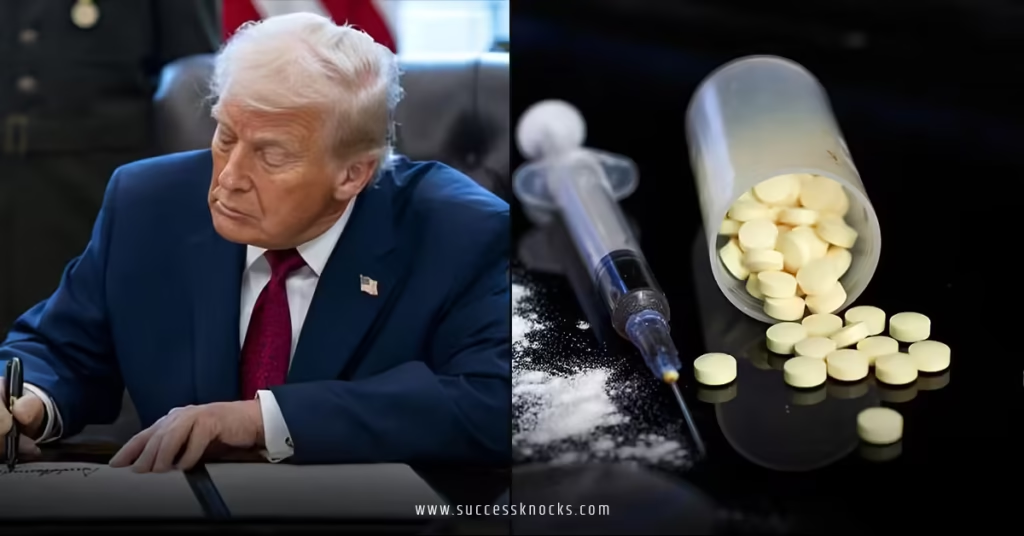
President Trump’s order directs agencies to treat it with national security tools—think asset freezes, enhanced prosecutions, and even military resources in emergencies. It’s a shift from viewing the crisis purely as public health to seeing fentanyl as a weapon of mass destruction wielded by cartels and foreign suppliers.
Rhetorical question: If a substance kills hundreds of thousands annually and funds violence, why not mobilize like against terrorism?
The Fentanyl Crisis: Mass Destruction in Slow Motion
Picture this: Over 100,000 overdose deaths yearly in the U.S., mostly from synthetic opioids like fentanyl. That’s more than Vietnam War casualties spread over decades, but condensed into recent years. Fentanyl as a weapon of mass destruction captures this scale—it’s not explosive, but the body count is staggering.
Most illicit fentanyl enters via Mexico, cooked in labs from precursors largely sourced from China. Cartels press it into fake pills mimicking OxyContin or Xanax, luring users who think they’re getting something safer. One bad pill, and it’s over.
Analogy time: Fentanyl as a weapon of mass destruction is like an invisible poison gas seeping into society. It doesn’t discriminate—teens experimenting, veterans managing pain, anyone can fall victim.
Potential for Deliberate Use: Is Fentanyl as a Weapon of Mass Destruction Viable for Terror?
Experts debate this. On one hand, fentanyl’s potency makes it scary for terror attacks—aerosolized, it could incapacitate or kill crowds. The Moscow example proves feasibility.
On the other, it’s tricky to weaponize effectively without backfiring, and antidotes like naloxone exist. No major terrorist group has used fentanyl as a weapon of mass destruction yet, per public reports. Still, the executive order warns of “concentrated, large-scale terror attacks” as a serious threat.
Some skeptics say labeling fentanyl as a weapon of mass destruction inflates rhetoric without new tools, since trafficking laws already exist. But supporters argue it unlocks coordination across agencies.
Global Supply Chain: Fueling Fentanyl as a Weapon of Mass Destruction
Trace the path: Chemical companies in China produce precursors, ship to Mexico, cartels synthesize fentanyl, smuggle north. China has cracked down on direct fentanyl exports, but precursors remain an issue.
Is this intentional? Some U.S. officials claim lax enforcement or subsidies encourage exports, indirectly weaponizing the crisis against America. China denies, pointing to cooperation and blaming U.S. demand.
Regardless, the flow continues, making fentanyl as a weapon of mass destruction a transnational challenge.
Impacts on Society: The Human Cost of Fentanyl as a Weapon of Mass Destruction
Families shattered, communities hollowed— that’s the real destruction. Overdoses rob futures, strain healthcare, fuel crime. Young adults face fentanyl as a weapon of mass destruction disguised as party drugs.
First responders risk exposure handling it; even touching powder can be dangerous without precautions.
Countermeasures and the Future of Combating Fentanyl as a Weapon of Mass Destruction
The new designation ramps up efforts: Targeting finances, boosting intelligence, updating military protocols for chemical threats including fentanyl.
Harm reduction like naloxone distribution saves lives. Treatment expansion, education— these are key.
What can you do? Support awareness, push for policy balancing enforcement and compassion.
Conclusion
We’ve explored how fentanyl as a weapon of mass destruction isn’t hyperbole for many—its lethality, scale of harm, and potential misuse justify the label. From the Moscow crisis to today’s overdose epidemic and the fresh executive order, this synthetic opioid demands urgent, multifaceted action. By treating fentanyl as a weapon of mass destruction, we’re acknowledging the threat’s severity and mobilizing resources to fight it. Lives depend on getting this right—let’s hope this shift brings real change, saving families and strengthening communities against this insidious danger.
FAQs
What does it mean to designate fentanyl as a weapon of mass destruction?
Designating illicit fentanyl as a weapon of mass destruction, as done in the recent executive order, treats it as a national security threat similar to chemical weapons, enabling stronger interagency responses and tools against trafficking.
Has fentanyl ever been used intentionally as a weapon of mass destruction?
Yes, in the 2002 Moscow theater crisis, Russian forces used a fentanyl-based aerosol, leading to hostage deaths and highlighting fentanyl as a weapon of mass destruction in practice.
Why is fentanyl considered more dangerous than traditional opioids in the context of being a weapon of mass destruction?
Fentanyl’s extreme potency—a lethal dose is tiny—makes it capable of mass harm, whether through overdoses or potential dispersal, solidifying its status as fentanyl as a weapon of mass destruction.
Does labeling fentanyl as a weapon of mass destruction change how it’s handled legally?
It directs enhanced prosecutions, asset seizures, and resource allocation, though it doesn’t alter core definitions; it emphasizes fentanyl as a weapon of mass destruction for policy priorities.
Can naloxone reverse overdoses from fentanyl as a weapon of mass destruction scenarios?
Yes, naloxone is effective against fentanyl overdoses, often requiring multiple doses due to potency, making it crucial in countering fentanyl as a weapon of mass destruction effects.