

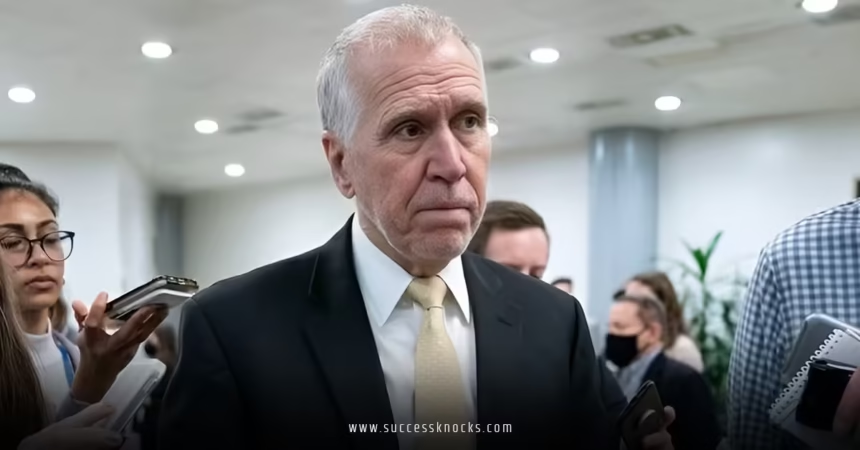
Thom Tillis statement on DOJ subpoena Federal Reserve January 2026 has sent shockwaves through Washington and the financial world. In the early days of 2026, Senator Thom Tillis, a Republican from North Carolina and a key member of the Senate Banking Committee, issued a pointed and unusually sharp statement criticizing the Department of Justice’s (DOJ) decision to subpoena the Federal Reserve. This move, tied to a criminal probe involving Fed Chair Jerome Powell, has raised serious questions about the independence of America’s central bank.
Imagine the Federal Reserve as the steady captain of the U.S. economy’s ship—independent, data-driven, and focused on long-term stability rather than short-term political winds. Suddenly, that captain gets hit with grand jury subpoenas from the DOJ, threatening criminal charges. That’s exactly what unfolded on January 11, 2026, when Powell publicly revealed the subpoenas served just days earlier. Senator Tillis didn’t hold back in his response, warning that this action erased any doubt about efforts to undermine the Fed’s autonomy.
What Sparked the Controversy? The Background of the DOJ Subpoena to the Federal Reserve
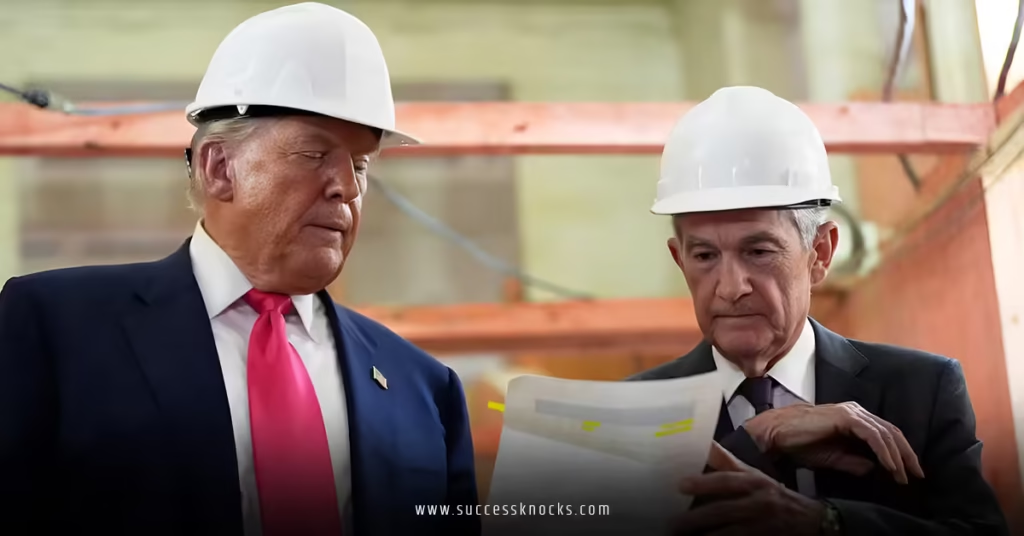
To understand Thom Tillis statement on DOJ subpoena Federal Reserve January 2026, let’s rewind a bit. The subpoenas stemmed from Powell’s June 2025 testimony before the Senate Banking Committee. During that hearing, Powell discussed a massive $2.5 billion renovation project for the Fed’s historic headquarters in Washington, D.C. The costs had ballooned from initial estimates, drawing criticism—including from President Trump, who called the spending excessive.
But Powell and many observers argue this was a pretext. In a rare video statement released on Sunday evening, January 11, 2026, Powell described the subpoenas as part of a broader pattern of pressure from the administration to lower interest rates faster and more aggressively. He stated plainly that the threat of criminal charges was really a consequence of the Fed making decisions based on economic data, not political preferences.
The DOJ’s grand jury subpoenas arrived on Friday, January 9, 2026, escalating a long-simmering tension between the Trump administration and the Federal Reserve. Markets reacted immediately— the dollar weakened, and gold prices ticked up as investors worried about central bank independence. Have you ever wondered what happens when politics tries to steer monetary policy? History shows it rarely ends well, often leading to inflation or instability.
Breaking Down Thom Tillis Statement on DOJ Subpoena Federal Reserve January 2026
Senator Thom Tillis released his statement shortly after Powell’s announcement. In it, he declared: “If there were any remaining doubt whether advisers within the Trump Administration are actively pushing to end the independence of the Federal Reserve, there should now be none.”
He went further, stating that the DOJ’s actions now put its own “independence and credibility” in question. As a member of the Senate Banking Committee, which plays a crucial role in confirming Fed nominees, Tillis didn’t stop at criticism. He pledged to oppose the confirmation of any Federal Reserve nominee—including the upcoming chair vacancy—until the legal matter is fully resolved.
This was no mild rebuke. Coming from a Republican senator, it highlighted a rare bipartisan concern (echoed by Democrats like Elizabeth Warren) about protecting the Fed’s independence. Tillis, who is not seeking re-election, appeared to speak with particular freedom, emphasizing that no one, including the Fed chair, is above the law—but that criminal threats over policy disagreements cross a dangerous line.
Why does this matter so much? The Federal Reserve’s independence is a cornerstone of modern economic stability. Think of it like a referee in a high-stakes game: if the referee starts taking orders from one team, the whole game loses fairness and trust.
The Bigger Picture: Why Federal Reserve Independence Matters
Central bank independence isn’t just a wonky policy detail—it’s essential for keeping inflation in check and fostering economic growth. When politicians pressure the Fed to cut rates for short-term boosts (like before elections), it can lead to overheating, bubbles, or runaway inflation down the road.
In this case, the Thom Tillis statement on DOJ subpoena Federal Reserve January 2026 underscores a pivotal moment. President Trump has long criticized Powell and the Fed for not lowering rates quickly enough, even threatening to remove him. The subpoenas represent an unprecedented escalation: using the criminal justice system against an independent agency.
Tillis’s stance reinforces that even within the GOP, there’s pushback against what some see as overreach. His position on the Banking Committee gives his words extra weight—he’s not just commenting; he’s signaling he could block future nominees.
Reactions and Implications of Thom Tillis Statement on DOJ Subpoena Federal Reserve January 2026
The response was swift and divided. Some administration supporters dismissed the probe as legitimate oversight into spending. Others, including Tillis, saw it as a blatant attempt to intimidate the Fed.
Financial experts warn that eroding Fed independence could rattle markets long-term. Investors rely on the Fed to act impartially, not bend to political whims. Powell himself vowed to continue his duties “with integrity and a commitment to serving the American people,” signaling he won’t back down.
For everyday Americans, this drama affects mortgage rates, savings returns, and overall economic confidence. When the Fed’s decisions feel politicized, uncertainty creeps in—and uncertainty is the enemy of growth.
Looking Ahead: What Comes Next After Thom Tillis Statement on DOJ Subpoena Federal Reserve January 2026?
As of mid-January 2026, the investigation is ongoing, with the Fed’s next rate-setting meeting looming. Will the subpoenas lead to charges, or fizzle out as political theater? Tillis’s pledge to hold up nominations adds pressure—if unresolved, it could leave key Fed positions vacant.
This episode reminds us how fragile institutional independence can be. Senator Tillis’s bold words serve as a warning shot: tamper with the Fed at your peril.
In conclusion, Thom Tillis statement on DOJ subpoena Federal Reserve January 2026 captures a critical juncture in American governance. It highlights the clash between political power and economic independence, with Tillis standing firm for the latter. Whether this leads to real reforms or more partisan battles remains to be seen—but one thing is clear: protecting the Federal Reserve’s autonomy is vital for all of us. Stay informed, because the health of our economy depends on it. What do you think—should the Fed ever face this kind of pressure?
FAQs
1. What exactly did Thom Tillis say in his statement on DOJ subpoena Federal Reserve January 2026?
Senator Thom Tillis stated that the DOJ’s subpoenas erased any doubt about efforts to end Federal Reserve independence and questioned the DOJ’s own credibility. He also vowed to oppose all Fed nominees until the matter resolves.
2. Why did the DOJ issue subpoenas to the Federal Reserve in January 2026?
The subpoenas, served in early January 2026, related to Fed Chair Jerome Powell’s 2025 testimony on a $2.5 billion headquarters renovation, though Powell called it a pretext for pressuring the Fed on interest rates.
3. How does Thom Tillis statement on DOJ subpoena Federal Reserve January 2026 affect Fed nominations?
As a Senate Banking Committee member, Tillis pledged to block confirmation of any Federal Reserve nominees, including the next chair, until the legal probe concludes.
4. Is the Federal Reserve truly independent according to Thom Tillis statement on DOJ subpoena Federal Reserve January 2026?
Tillis’s statement suggests that the subpoenas indicate active attempts to undermine that independence, raising alarms about political interference in monetary policy.
5. What are the market impacts tied to Thom Tillis statement on DOJ subpoena Federal Reserve January 2026?
The news led to a weaker dollar and higher gold prices, reflecting investor concerns over potential erosion of the Fed’s independence.


