
Have you ever wondered what happens when federal power clashes head-on with state sovereignty in the heart of America’s heartland? In early 2026, the 10th amendment violation ICE federal agents Minnesota Illinois 2026 controversy exploded into national headlines, pitting two Democratic-led states against the federal government’s aggressive immigration enforcement push.
This isn’t just another policy debate—it’s a constitutional showdown that’s raising serious questions about federal overreach, states’ rights, and how far the government can go in enforcing immigration laws on state soil.
Understanding the 10th Amendment: The Foundation of States’ Rights
Let’s start with the basics. The 10th Amendment to the U.S. Constitution is short but powerful: “The powers not delegated to the United States by the Constitution, nor prohibited by it to the States, are reserved to the States respectively, or to the people.”
Think of it as the ultimate safety net for federalism. It ensures that the federal government can’t just steamroll over states on matters not explicitly given to it. Immigration enforcement is a federal responsibility under the Constitution, but critics argue that the way it’s being carried out in 2026 crosses into commandeering state resources or disrupting state sovereignty—hence the claims of 10th amendment violation ICE federal agents Minnesota Illinois 2026.
In simple terms, states like Minnesota and Illinois are saying: “Sure, enforce federal law—but don’t turn our communities into battlegrounds or force our local police to clean up your mess.”
The Surge of ICE and Federal Agents in Minnesota and Illinois
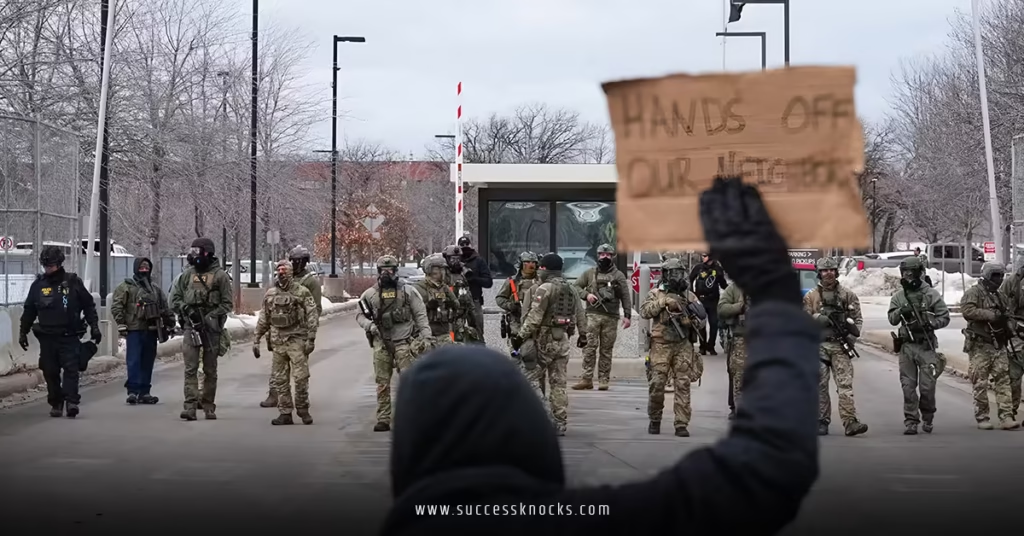
Fast-forward to late 2025 and early 2026: The Trump administration ramps up immigration operations, sending thousands of ICE federal agents into sanctuary-leaning areas. In Minnesota, “Operation Metro Surge” targets fraud and undocumented individuals, particularly in Somali-American communities in the Twin Cities. Illinois sees similar actions in Chicago, with Border Patrol and ICE conducting raids that locals describe as militarized.
By January 2026, reports emerge of aggressive tactics: warrantless stops, excessive force, tear gas during protests, and even a tragic incident where an ICE agent fatally shoots Renee Good, a U.S. citizen and mother of three, during a traffic-related encounter in Minneapolis. Protests erupt, businesses shutter temporarily, schools lock down, and local police rack up massive overtime dealing with the fallout.
This is where the 10th amendment violation ICE federal agents Minnesota Illinois 2026 allegations gain traction. States claim these surges aren’t just enforcement—they’re punitive operations targeting Democratic strongholds, commandeering local resources, and interfering with states’ ability to protect public safety and health.
For more on the constitutional balance of power, check out this overview from the Cornell Law School Legal Information Institute.
How Minnesota and Illinois Framed the 10th Amendment Violation
On January 12, 2026, Minnesota (led by Attorney General Keith Ellison) and the cities of Minneapolis and St. Paul filed a federal lawsuit. They called the deployment a “federal invasion,” arguing it violates the 10th amendment violation ICE federal agents Minnesota Illinois 2026 by overwhelming local law enforcement and disrupting core state functions like education and public safety.
Illinois followed suit the same day, with Chicago joining in, claiming the operations terrorize residents, tank local economies, and prevent the state from governing effectively. Both lawsuits seek injunctions to halt or limit the surges, citing not only the 10th Amendment but also claims of retaliation and viewpoint discrimination.
Imagine your neighborhood suddenly flooded with thousands of armed federal agents conducting operations without much coordination with local police. Chaos ensues—911 calls spike from confused residents, businesses lose customers, and community trust erodes. That’s the picture state officials paint, framing it as federal overreach that commandeers state resources indirectly.
The Federal Government’s Defense Against the Allegations
The Trump administration pushes back hard. DHS officials argue immigration enforcement is a core federal power under the Supremacy Clause—no state can block it. They call the lawsuits “baseless” and point out the irony: critics who once championed federal power now invoke states’ rights.
One DHS spokesperson quipped that it’s “astounding” how some “miraculously rediscover the 10th Amendment” when it suits them. The feds insist operations target criminals, not politics, and that states’ sanctuary policies force escalation to maintain public safety.
It’s a classic federalism tug-of-war: The feds say they’re enforcing national law; states say the execution infringes on their reserved powers.
Impacts on Communities: Protests, Safety, and Economic Fallout
The human cost is real. In Minnesota, after the Renee Good shooting, protests turn tense—agents use pepper spray, tear gas flies, and clashes occur. Local police divert resources, costing millions in overtime. Businesses report 50-80% revenue drops as people avoid public spaces.
In Illinois, similar stories emerge from Chicago: schools close temporarily, tourism dips, and residents fear random stops. These disruptions fuel the 10th amendment violation ICE federal agents Minnesota Illinois 2026 narrative—states argue they can’t fulfill their duty to protect residents when federal actions create chaos.
It’s like throwing a massive party in someone else’s house without asking—you might have the right to be there, but the host still suffers the mess.
For deeper reading on federalism in immigration, see this analysis from The New York Times.
Legal Experts Weigh In on the 10th Amendment Claims
Constitutional scholars are divided. Some call the lawsuits novel but a stretch—federal immigration power is broad, and courts rarely block enforcement in states. Others see merit in the anti-commandeering angle: if federal actions force states to divert resources massively, it could violate the 10th Amendment’s spirit.
A University of Chicago professor noted the claims frame federal enforcement as a “ruse” for political retaliation, potentially interfering with sovereignty. As hearings unfold in early 2026, the cases could set precedents on how far states can push back.
Why This Matters for Federalism and Immigration Policy in 2026
The 10th amendment violation ICE federal agents Minnesota Illinois 2026 debate highlights deeper tensions in American governance. It questions whether aggressive federal enforcement in resistant states crosses into unconstitutional territory. Win or lose, these lawsuits spotlight the ongoing struggle between national uniformity and state autonomy.
In a diverse nation, balancing enforcement with community trust is tricky. These events remind us that power division isn’t just theory—it’s lived reality affecting families, economies, and trust in government.
Conclusion
The 10th amendment violation ICE federal agents Minnesota Illinois 2026 controversy captures a pivotal moment in U.S. federalism. Minnesota and Illinois, backed by their cities, are fighting what they see as federal overreach that disrupts lives, strains resources, and threatens sovereignty. The federal side defends its authority to enforce immigration laws vigorously.
As courts decide, one thing is clear: This isn’t just about agents on the ground—it’s about the boundaries of power in a divided nation. Stay informed, engage in the conversation, and remember that protecting constitutional rights benefits everyone. Whether you’re for stronger enforcement or stronger state protections, understanding this clash helps us all navigate America’s complex democracy.
FAQs
What exactly is the 10th amendment violation ICE federal agents Minnesota Illinois 2026 controversy about?
It’s a pair of 2026 lawsuits where Minnesota and Illinois claim massive deployments of ICE federal agents violate the 10th Amendment by infringing on state sovereignty and disrupting local governance.
Why did Minnesota and Illinois sue over ICE actions in 2026?
They allege the surges, including militarized raids and incidents like the Renee Good shooting, create chaos, strain resources, and punish sanctuary policies—amounting to a 10th amendment violation ICE federal agents Minnesota Illinois 2026.
Can states legally block federal ICE agents under the 10th Amendment?
It’s debated. States argue federal overreach commandeers resources, but federal authority on immigration is strong—courts will decide if the 10th amendment violation ICE federal agents Minnesota Illinois 2026 claims hold up.
What happened with the shooting tied to this 10th amendment violation ICE federal agents Minnesota Illinois 2026 case?
On January 7, 2026, an ICE agent shot and killed U.S. citizen Renee Good in Minneapolis during an encounter, sparking protests and strengthening states’ claims of dangerous federal tactics.
How might the 10th amendment violation ICE federal agents Minnesota Illinois 2026 lawsuits affect future immigration enforcement?
A ruling could limit aggressive federal surges in resistant states or affirm broad federal power, influencing how immigration policy plays out across the U.S.