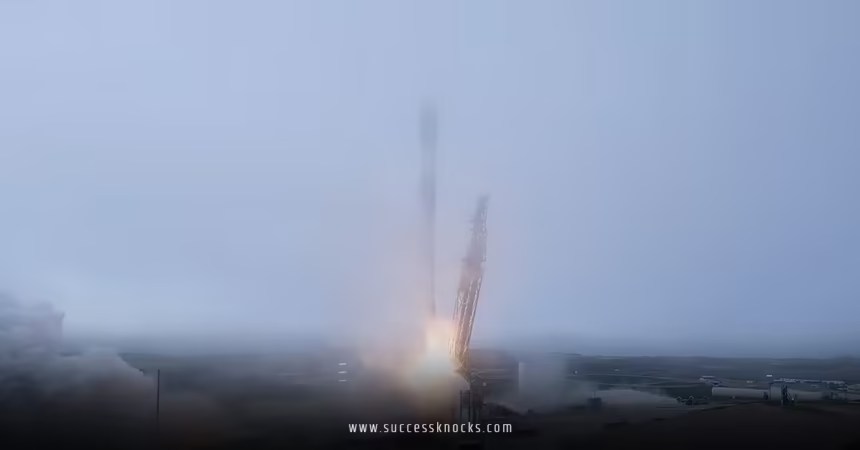
SpaceX Starlink 17-30 launch Vandenberg January 22 2026 marks an exciting milestone as the company kicks off its West Coast operations for the year with yet another addition to its massive satellite internet constellation. Imagine a quiet evening in California suddenly interrupted by a brilliant streak of light piercing the sky—that’s exactly what thousands of spectators along the coast experienced (or are gearing up for) as Falcon 9 roared off from Vandenberg Space Force Base. This mission isn’t just another rocket flight; it’s a key step in Elon Musk’s vision to blanket the planet with high-speed, low-latency internet from space.
Whether you’re a space enthusiast tracking every launch, a potential Starlink user in a remote area, or just curious about how modern connectivity is evolving, this article dives deep into the details. We’ll cover the mission specifics, why Vandenberg is the perfect spot, what these satellites bring to the table, and what it all means for the future.
What Is the SpaceX Starlink 17-30 Launch Vandenberg January 22 2026?
At its core, the SpaceX Starlink 17-30 launch Vandenberg January 22 2026 involved a Falcon 9 rocket carrying 25 next-generation Starlink satellites—specifically V2 Mini Optimized models—into a polar low Earth orbit (LEO). Liftoff occurred from Space Launch Complex 4 East (SLC-4E) at Vandenberg Space Force Base in California, with the targeted time around 9:47 p.m. PST on January 21 (which translates to early January 22 UTC).
This mission, designated Starlink Group 17-30, represents SpaceX’s push to expand coverage, particularly in higher latitudes where polar orbits shine. Think of it like adding more threads to a global web—each satellite helps strengthen the network for users everywhere from rural farms to ships at sea.
Why the excitement? By early 2026, SpaceX had already ramped up launches significantly, making this the first West Coast Starlink mission of the year and roughly the sixth Starlink flight overall in those opening weeks. The pace is blistering, almost like watching a factory line in the sky.
Mission Details: Breaking Down the SpaceX Starlink 17-30 Launch Vandenberg January 22 2026
Let’s get into the nitty-gritty. The Falcon 9 Block 5 rocket used here featured booster B1093 on its 10th flight—a testament to SpaceX’s reusable rocket magic. This booster had previously flown missions for the Space Development Agency and several Starlink batches, proving its reliability.
The payload? Exactly 25 Starlink V2 Mini satellites. These aren’t your average orbiters; they’re optimized for better performance, including enhanced laser inter-satellite links that allow data to hop between satellites without relying solely on ground stations. It’s like giving the constellation its own high-speed highway system in space.
The trajectory was southerly, hugging the Pacific coastline before curving into a polar orbit inclined around 97.6 degrees. This path is ideal for polar coverage, ensuring satellites pass over the North and South Poles multiple times daily—crucial for serving remote regions in Canada, Alaska, Antarctica, and maritime users.
After stage separation, the first stage performed its signature boost-back burn and landed on the droneship “Of Course I Still Love You” stationed in the Pacific. Meanwhile, the second stage continued upward, deploying the satellites about an hour after liftoff. Smooth as clockwork, right?
Have you ever wondered how precise these landings are? It’s akin to throwing a dart from miles away and hitting the bullseye—every time.
Why Vandenberg Space Force Base for the SpaceX Starlink 17-30 Launch Vandenberg January 22 2026?
Vandenberg isn’t chosen randomly. Located on California’s central coast, this base offers unparalleled access to polar and high-inclination orbits without overflying populated areas. Launches head south over the open ocean all the way to Antarctica, minimizing risks.
Compare that to Florida’s Cape Canaveral, where eastward trajectories favor equatorial orbits for geostationary satellites. Vandenberg is the West Coast gateway for constellations like Starlink that need global reach, especially in polar regions.
The base, operated by the U.S. Space Force’s Space Launch Delta 30, has supported SpaceX for years. The SpaceX Starlink 17-30 launch Vandenberg January 22 2026 highlights how Vandenberg has become a hotspot for commercial space activity, with multiple Falcon 9 missions lined up in the following weeks.
Local residents often report seeing the rocket’s glow or hearing sonic booms from the booster’s reentry—nature’s way of announcing another step toward universal connectivity.
The Bigger Picture: How SpaceX Starlink 17-30 Launch Vandenberg January 22 2026 Fits into the Constellation
Starlink isn’t just about launches; it’s about closing the digital divide. With thousands of satellites already in orbit by 2026, SpaceX aims for tens of thousands eventually. Each batch like 17-30 adds capacity, reduces latency, and improves speeds.
These V2 Mini satellites boast better antennas, propulsion for station-keeping, and direct-to-cell capabilities in some variants (though not confirmed for every mission). Imagine your phone connecting directly to space—no towers needed in the wilderness.
The constellation’s growth has been exponential. By mid-2026, coverage is near-global, with users in over 100 countries. Missions from Vandenberg focus on filling gaps in polar and oceanic areas, where traditional internet struggles.
It’s transformative for education in remote villages, disaster response teams, or even cruise ships streaming movies mid-ocean.
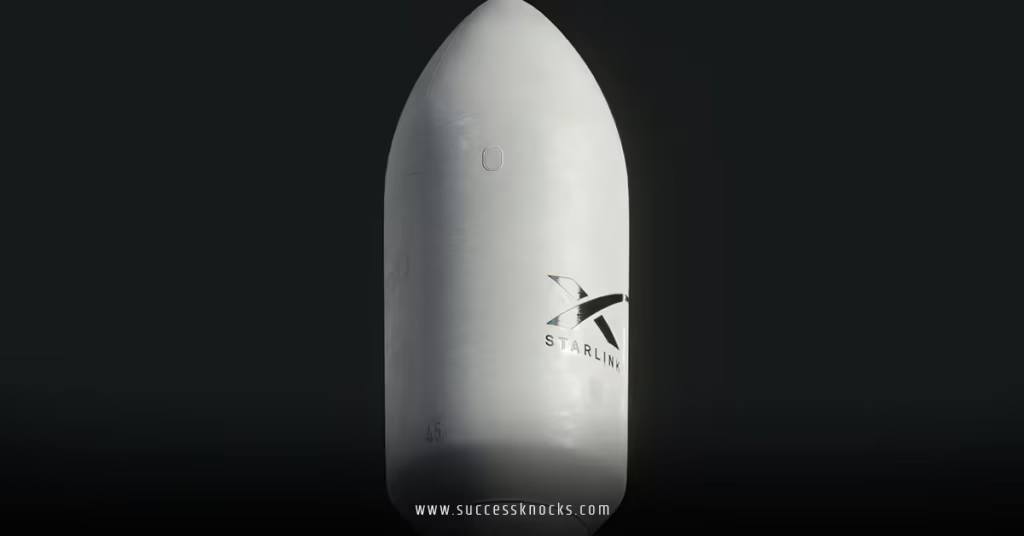
Technical Highlights of the Falcon 9 in the SpaceX Starlink 17-30 Launch Vandenberg January 22 2026
Falcon 9’s reusability keeps costs down and launch cadence high. Booster 1093’s tenth flight shows how far we’ve come from single-use rockets. The Merlin engines deliver precise thrust, and grid fins guide the booster back like a skydiver steering a parachute.
The timeline was textbook:
- T+0: Liftoff
- T+2-3 minutes: Max Q and stage separation
- T+8-9 minutes: Booster landing attempt
- T+1 hour: Satellite deployment
No major anomalies reported—another win for SpaceX’s reliability.
Environmental and Community Impact Around the SpaceX Starlink 17-30 Launch Vandenberg January 22 2026
Launches aren’t without concerns. Sonic booms can rattle windows, and there’s ongoing debate about light pollution from satellite constellations affecting astronomy. SpaceX mitigates by darkening satellites and coordinating with observatories.
Locally, Vandenberg launches boost the economy through jobs and tourism. Space enthusiasts flock to viewing spots like Ocean Beach or Lompoc for prime views.
The SpaceX Starlink 17-30 launch Vandenberg January 22 2026 reminded everyone how space activity integrates into daily life on the ground.
What’s Next After the SpaceX Starlink 17-30 Launch Vandenberg January 22 2026?
SpaceX doesn’t slow down. More Starlink missions from Vandenberg were scheduled soon after, including groups like 17-19 and 17-32. The cadence suggests launches every few days.
Long-term, Starship could revolutionize deployment, carrying hundreds of satellites per flight. For now, Falcon 9 remains the workhorse.
If you’re in a Starlink-served area, you might notice improved service as these satellites come online after orbital checks.
Conclusion
The SpaceX Starlink 17-30 launch Vandenberg January 22 2026 was more than a routine mission—it was a powerful reminder of how rapidly space technology is reshaping connectivity. From the reusable booster landing flawlessly to the 25 new satellites joining the constellation, every element showcased innovation and ambition. As SpaceX continues launching at an unprecedented rate, the dream of universal high-speed internet draws closer. Whether you’re stargazing from a rural backyard or streaming on a remote island, missions like this make it possible. Keep an eye on the skies—the next launch could be even bigger.
Here are three high-authority external links for more details:
- SpaceX Official Launch Page for Starlink Mission
- Spaceflight Now Live Coverage of the Mission
- Next Spaceflight Mission Details
FAQs
What time did the SpaceX Starlink 17-30 launch Vandenberg January 22 2026 take place?
The SpaceX Starlink 17-30 launch Vandenberg January 22 2026 lifted off around 9:47 p.m. PST on January 21 (early January 22 UTC), from SLC-4E at Vandenberg Space Force Base.
How many satellites were deployed in the SpaceX Starlink 17-30 launch Vandenberg January 22 2026?
Exactly 25 Starlink V2 Mini Optimized satellites were deployed during the SpaceX Starlink 17-30 launch Vandenberg January 22 2026, boosting the global constellation.
Why was Vandenberg chosen for the SpaceX Starlink 17-30 launch Vandenberg January 22 2026?
Vandenberg Space Force Base provides ideal access to polar orbits for global coverage, with safe over-ocean trajectories—perfect for the SpaceX Starlink 17-30 launch Vandenberg January 22 2026.
Did the booster land successfully in the SpaceX Starlink 17-30 launch Vandenberg January 22 2026?
Yes, booster B1093 landed on the “Of Course I Still Love You” droneship after its 10th flight in the SpaceX Starlink 17-30 launch Vandenberg January 22 2026.
How does the SpaceX Starlink 17-30 launch Vandenberg January 22 2026 contribute to internet access?
By adding capacity in polar regions, the SpaceX Starlink 17-30 launch Vandenberg January 22 2026 helps deliver faster, more reliable internet to underserved and remote areas worldwide.