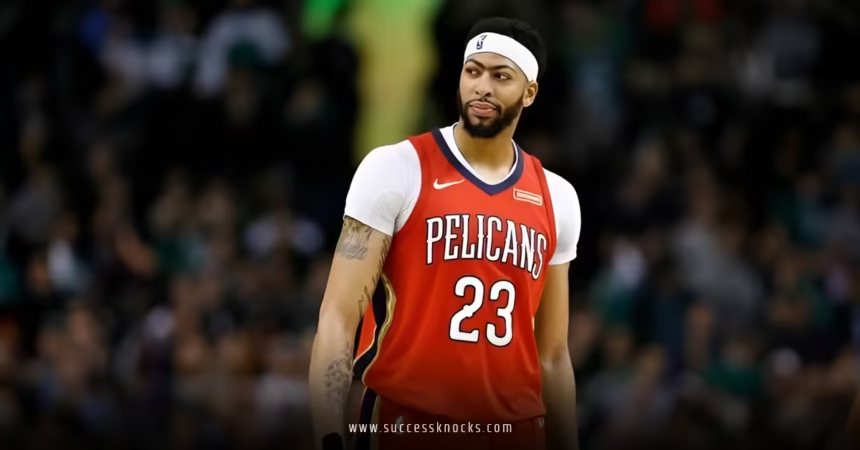
Anthony Davis trade analysis and grades 2026 is the hottest topic in the NBA right now, and honestly, who saw this coming so soon after the chaos of last year? Just when we thought the league had settled down after that mind-blowing Luka Dončić swap, the Dallas Mavericks go ahead and flip Anthony Davis to the Washington Wizards in a massive eight-player deal. It feels like the basketball gods are scripting a drama series, doesn’t it? Let’s dive deep into this trade, break it all down, and hand out some fair grades.
The 2026 NBA trade deadline delivered one of its biggest shocks on February 4, when the Mavericks decided to move on from the centerpiece of their controversial Luka Dončić trade. Anthony Davis, the 10-time All-Star big man, is heading to D.C., and the ripples from this move are going to be felt across the league for years. In this Anthony Davis trade analysis and grades 2026, we’ll look at the full details, the context, the winners, the losers, and what it all means going forward.
Full Details of the Anthony Davis Trade 2026
Let’s start with the nuts and bolts, because this wasn’t some small salary dump—it was a full-on blockbuster.
The Dallas Mavericks are sending:
- Anthony Davis
- Jaden Hardy
- D’Angelo Russell
- Dante Exum
to the Washington Wizards in exchange for:
- Khris Middleton
- AJ Johnson
- Malaki Branham
- Marvin Bagley III
- A 2026 first-round pick (least favorable of OKC, Clippers, Houston—almost certainly OKC’s, likely No. 30)
- A top-20 protected 2030 Golden State Warriors first-round pick
- Three second-round picks (Phoenix 2026, Chicago 2027, Houston 2029)
Eight players, multiple picks, and a clear shift in direction for both franchises. The Wizards are betting on veteran star power, while the Mavericks are collecting assets and clearing the deck for a new era.
Background: How Did We Get Here?
Anthony Davis Trade Analysis and Grades 2026:To really understand this Anthony Davis trade analysis and grades 2026, you have to go back to February 2025. That’s when the Mavericks stunned the world by trading Luka Dončić—their homegrown superstar—to the Los Angeles Lakers in a package headlined by Anthony Davis. The thinking in Dallas was bold: pair AD with Kyrie Irving, surround them with shooters, and chase a title faster than building around a ball-dominant guard.
It sounded exciting on paper. Davis is one of the most talented bigs of his generation—elite defender, rim finisher, mid-range assassin. But reality hit hard. Injuries piled up. AD played just 29 games across the 2024-25 and 2025-26 seasons in Dallas. The chemistry with Kyrie never fully clicked, the defense was inconsistent, and the Mavericks missed the playoffs in 2025 and were fighting for a play-in spot this year.
Meanwhile, the Lakers thrived with Luka alongside LeBron James (yes, LeBron is still going strong in 2026). The contrast was brutal for Dallas fans. Every AD absence felt like a reminder of what they gave up. By early 2026, rumors swirled that the Mavericks were listening to offers for Davis. His current hand injury—keeping him out since January—made a deal seem unlikely, but Washington stepped up with an offer Dallas couldn’t refuse.
Anthony Davis’ Struggles in Dallas: The Numbers Tell the Story
Let’s be real: Anthony Davis is still an incredible talent when healthy. This season, in the 20 games he played, he averaged 20.4 points, 11.1 rebounds, 2.8 assists, and 1.7 blocks. That’s All-Star level production. But the key phrase is “when healthy.” Chronic lower leg issues, adductor strains, and now a hand injury limited him severely.
Think of it like owning a Ferrari that spends half the year in the shop. You know it can win races, but you can’t rely on it for the full season. The Mavericks needed reliability, especially after betting their future on this experiment. Pair that with a roster that never quite gelled, and you can see why management reached a breaking point.
Why Did the Mavericks Trade Anthony Davis Now?
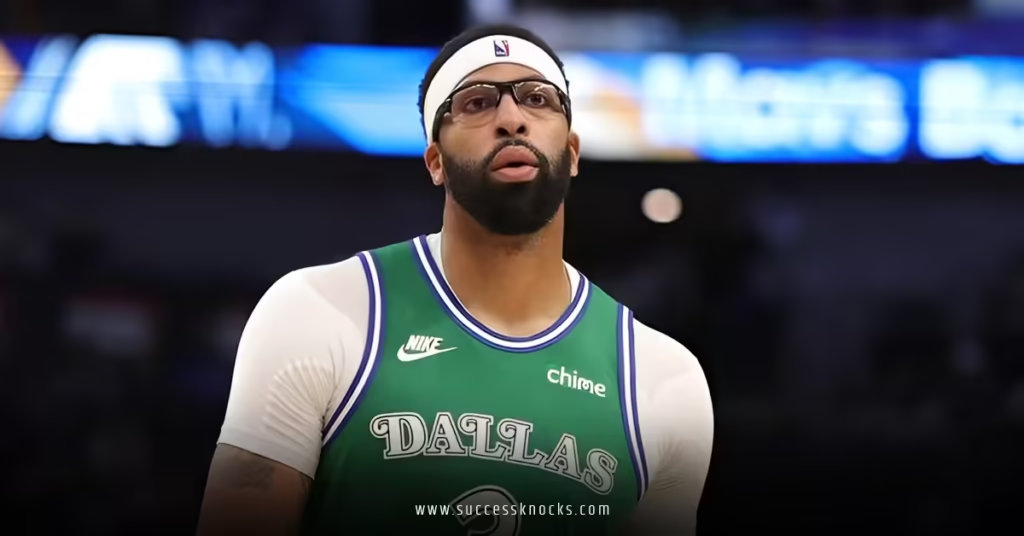
In this Anthony Davis trade analysis and grades 2026, the “why now” question is crucial. Dallas wasn’t just dumping salary—they’re pivoting hard toward the future. Rookie sensation Cooper Flagg has been the one bright spot this season, showing superstar potential. With their own 2026 pick likely landing in the lottery and now an extra first (even if it’s late), the Mavericks can load up in what’s projected to be a loaded draft class.
They also cleared significant future money. AD is owed $58.5 million next season with a $62.8 million player option in 2027-28. Moving him opens flexibility. Incoming veterans like Khris Middleton give them win-now pieces without long-term commitments that block youth development. It’s an admission that the Luka trade didn’t work, but also a proactive step to rebuild faster.
What This Means for the Washington Wizards
The Wizards? They’re swinging for the fences.
Washington has been in rebuild mode for years, stockpiling young talent like Alex Sarr, Bilal Coulibaly, Bub Carrington, Kyshawn George, Tre Johnson, and Will Riley. Earlier this season, they shocked everyone by acquiring Trae Young. Now they add Anthony Davis without touching their core youth or their own picks.
Imagine this potential lineup: Trae lobbing to AD, surrounded by athletic wings and shooters. If Davis stays healthy—and that’s a big if—this team could jump from lottery dwellers to play-in contenders overnight. The East is wide open beyond the top tier (Boston, Cleveland, Milwaukee). Washington is betting that veteran leadership accelerates their timeline.
The picks they gave up? Mostly low-value. That 2026 first will probably be dead last. The 2030 Warriors pick might convey late or not at all if Golden State stays good. It’s a low-risk, high-reward gamble.
Player-by-Player Breakdown in the Anthony Davis Trade 2026
Let’s evaluate the key pieces moving.
Anthony Davis (to Wizards): The prize. When right, he’s a top-10 player. Defensive anchor, pick-and-roll monster, clutch scorer. Health is the only question mark.
Jaden Hardy (to Wizards): Young guard with scoring pop. Could thrive with more minutes in D.C.
D’Angelo Russell (to Wizards): Floor-spacing guard who can run bench units. Wizards reportedly plan to keep him.
Dante Exum (to Wizards): Likely buyout or waiver candidate, but solid depth if kept.
Khris Middleton (to Mavericks): Proven playoff performer, three-level scorer. Still effective at 34 if healthy.
AJ Johnson (to Mavericks): Intriguing young wing with upside. Former Bucks prospect.
Malaki Branham (to Mavericks): Young guard who can shoot and create a bit.
Marvin Bagley III (to Mavericks): Athletic big who’s never quite put it together, but young enough to develop.
The players heading to Dallas are mostly role players or projects. The real value for the Mavs is in the picks and cap relief.
Anthony Davis Trade Grades 2026: Who Won?
Time for the part everyone scrolls for—the grades.
Dallas Mavericks: B-
They didn’t get a star back, but they got assets and flexibility. Admitting the Luka trade mistake this quickly takes guts. They now have multiple bites at the 2026 draft apple and a cleaner books to build around Cooper Flagg. It’s not an A because the return feels light for a player of AD’s caliber, even with injuries. But in context? It’s a solid recovery move.
Washington Wizards: A
This is highway robbery. They land a perennial All-Star (when healthy) without giving up core youth or valuable picks. Pairing AD with Trae Young could create one of the league’s most entertaining pick-and-roll duos. If health cooperates, Washington becomes a dark horse in the East. Even if it flames out, they didn’t mortgage the future. Bold and brilliant.
Long-Term Implications of the Anthony Davis Trade Analysis and Grades 2026
For Dallas, this closes a painful chapter. They’re all-in on youth and the 2026 draft. Cooper Flagg now becomes the undisputed face of the franchise.
For Washington, it’s acceleration time. If AD and Trae click, this team could make noise as early as next season. The East isn’t as scary as the West, and with young legs plus veteran savvy, anything’s possible.
League-wide, it’s another reminder that no star is untouchable. The Luka trade fallout continues to reshape rosters two years later.
Conclusion: A Trade That Redefines Two Franchises
Anthony Davis trade analysis and grades 2026 shows us once again how quickly fortunes change in the NBA. Dallas is hitting reset after a failed experiment, gathering assets to build sustainably around Cooper Flagg. Washington, meanwhile, is going all-in on a veteran-youth hybrid that could surprise everyone.
Whether you think the Wizards stole this deal or the Mavericks wisely cut losses, one thing is clear: this trade will be debated for years. It’s a fascinating pivot point for both teams, and the real judgment comes in 2027 and beyond. Buckle up—this storyline is far from over.
FAQs About the Anthony Davis Trade Analysis and Grades 2026
1. Why did the Mavericks give up on the Anthony Davis trade analysis and grades 2026 experiment so quickly?
Injuries derailed everything. AD played fewer than 30 games in Dallas across two seasons. With Cooper Flagg emerging and the team struggling, management chose future flexibility over hoping for health.
2. How does Anthony Davis fit with Trae Young in the Wizards’ Anthony Davis trade analysis and grades 2026?
Beautifully on paper. Trae’s lobs and pick-and-pop passes play perfectly to AD’s strengths. The question is defensive fit and health, but the offensive potential is sky-high.
3. What is the best asset Dallas received in the Anthony Davis trade analysis and grades 2026?
The extra 2026 first-round pick, even if late, plus their own lottery pick in a stacked draft. That gives them two shots at impact rookies to pair with Flagg.
4. Is this Anthony Davis trade analysis and grades 2026 a bigger steal than the Wizards’ Trae Young acquisition?
It’s close. Both were low-cost swings at disgruntled stars. AD might have the higher ceiling if healthy, making this arguably the bigger win.
5. Will Anthony Davis stay healthy enough to justify the Wizards’ move in this Anthony Davis trade analysis and grades 2026?
No one knows. His injury history is long, but a lighter load in Washington and better spacing could help. It’s the ultimate risk-reward play.