

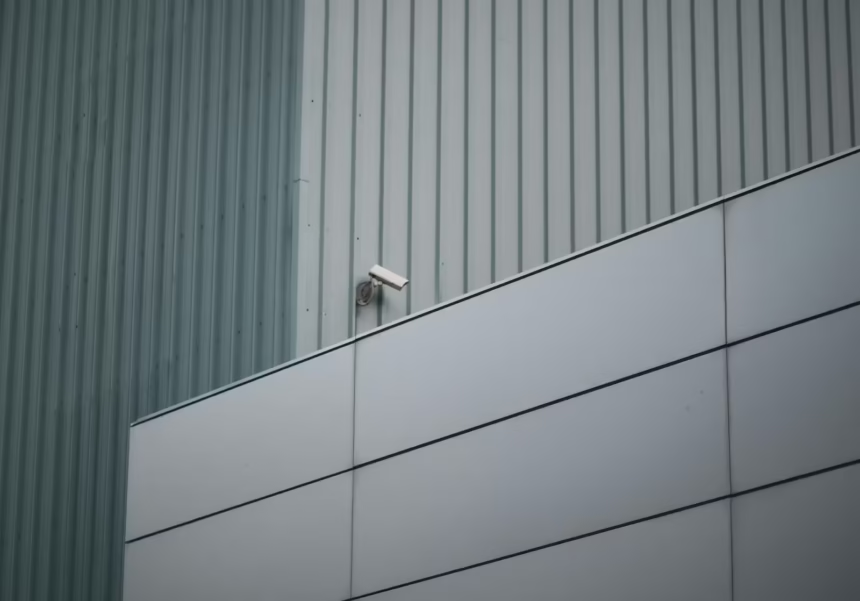
If you want to protect your business effectively – which is a very wise thing to do – you need to make sure that you are looking after the premises you own first of all. This physical layer of security is hugely important, and something that you are going to have to make sure you are getting right from the start. As it happens, there are a lot of ways in which you can hope to protect these premises, and in this post we are going to look at just a few of the most powerful.
Start With The Physical Structure
The most obvious starting point is the physical structure itself. Strong doors, reinforced frames and high-quality locks are not glamorous, but they are foundational. Cheap locks and hollow doors are an open invitation to opportunistic crime. Investing in British Standard locks, secure hinges and reinforced glazing can dramatically reduce the likelihood of forced entry. Windows are often overlooked. Laminated or toughened glass makes a significant difference, as does installing window locks where appropriate. In some environments, security shutters can provide additional protection outside trading hours. The goal is to make entry difficult enough that an intruder decides it is not worth the effort.
Install Modern Surveillance
CCTV is now a standard feature in many business premises, but its effectiveness depends on quality and positioning. Cameras should cover all key entry and exit points, high-value areas and any vulnerable external zones. Poorly angled cameras or low-resolution systems offer little real protection. You may find a better solution is to use drone services to keep an eye on the entire premises at once. Modern systems allow remote monitoring and cloud storage, meaning footage can be accessed quickly if needed. Clear signage informing visitors that surveillance is in operation acts as a deterrent in itself.
Fire Protection
Security is not only about preventing theft. Fire can cause devastating damage in a matter of minutes. Smoke alarms, heat detectors and sprinkler systems are essential safeguards. Regular maintenance and testing are critical; equipment that does not function when required is worse than having none at all. Clear fire exits, visible signage and regular fire drills ensure that staff know exactly what to do in an emergency. Fire risk assessments should be conducted and updated whenever the layout or operations of the business change.
Cyber Security
Although the focus may be on physical premises, digital threats are closely linked. Many break-ins are motivated by access to computers or sensitive information. Secure networks, encrypted data and robust password policies are essential components of protecting your physical site. If your building relies on smart systems such as digital locks or connected CCTV, those systems must also be secured against hacking. A physical barrier is of little use if it can be overridden remotely. That’s something you really need to keep on top of if you want this all to work out.


