Generic business advice often tells you that leasing commercial buildings is better than buying them. There’s less immediate cash outflow, and you can move on to a different property if the one that you’re currently in is no longer serving your interests.
But, of course, this story avoids some of the negatives and the downsides of leasing. It also doesn’t recognize many upsides of buying and owning a commercial property.
The purpose of this post is to explore when building makes more sense than leasing your business premises. We look at all of the factors that you should consider if you want to make this step with your firm.
You’re planning to commit long-term
Building your own commercial premises makes sense if you are planning a long-term commitment, usually more than 10 years, at the same location. Most analyses suggest that companies break even when they do their own construction between 7 and 10 years. This is when ownership costs drop below cumulative lease payments up until that point. And there is no rent escalation during the lease period.
Some companies, of course, can’t take this approach because they’re higher risk and more speculative. If you’re operating a business in a new field, then that may not be around in 10 years’ time. Then a large capital investment upfront doesn’t really make sense. But if you think your business will be around for the long haul, then you’ll want to think about it seriously. Allowing your business to remain stable and rooted in one area allows you to build local networks and make connections with talent in your city or region.
Your operations require specific, customized spaces
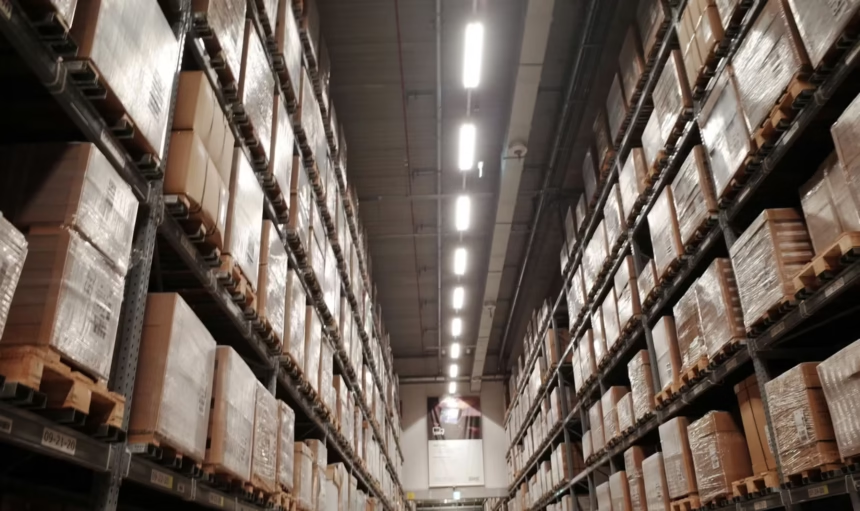
The other major reason why building often makes more sense than leasing is that your operational requirements determine what your workspace looks like. Many companies only require generic offices, but if you need something more than a standard lease, like a high clearance warehouse or specialized manufacturing layout, then building your own building is often the only option.
This even applies in the retail industry. Many retailers need functional spaces that allow them to cut and paste their proven business models. Trying to shoehorn new workflows into a different type of space doesn’t always work and creates inefficiencies that then affect customers.
Building from the ground up lets you build specifically for your branding and productivity requirements. It’s also a way that you can future-proof your company, reducing the need for retrofits in the future. You can plan and reduce long-term expenses by using this type of model.
You want to build equity and long-term appreciation
For some companies, the name of the game is actually in the real estate market itself. Building your own property allows you the opportunity to capture more equity and long-term appreciation. For example, let’s say that you put down a deposit and then make mortgage payments over time. Instead of paying these in the form of rent to a landlord, you’re building up equity in the business premises that you can then place on your balance sheet. Over time, properties in growing areas, including commercial buildings, can rise in value as well. Because of this, you may generate additional valuable assets on your balance sheet.
Things like steel buildings that offer a continuous interior span are highly effective and robust investments. They offer a combination of efficiency and robustness that means they will often grow in value over time.
You have good capital access and strong cash flow
In terms of the financial side of your business, it makes sense to build new premises when you have access to a lot of capital and strong cash flow. Granted, being in this situation is rare for most businesses, but you’ll need both of these to be in place if you’re going to put down a deposit and pay off a mortgage.
Initially, building work requires land purchase and then you’ll need construction financing. The way this works is that you will pay the construction company fees over time. After that, you’ll need to pay back the borrowed money, usually to a bank that specializes in business commercial mortgages and loans.
Because of this, solid cash flow is critical. You need to be able to handle hits without falling behind on payments. Therefore, be careful if your business is expected to have varying cash flow month-to-month or year-to-year. If you think that the variation might be high, then working with an accountant makes sense.
You want full operational control without landlord restrictions
Another motivating factor closely related to some of the reasons we’ve already discussed is wanting full operational control over your premises. Building makes sense when you don’t want any landlord restrictions, such as:
- The signage you can put up
- Subletting
- The hours you can work
- The modifications that you can make
When you own and control the building yourself, you make all of the decisions on maintenance and expansion. You don’t have to worry about getting permission to add income-generating space because you own the entire lot. Adding space on a conventional lease often means paying more.
The market is favouring ownership
Sometimes building your own premises makes sense because the market itself favours ownership. There might be limited prime leasing in your area and rising land values or incentives for businesses to own land and buildings outright. If this is the case and there are tax incentives for new construction or the price of existing lease stock is high, then taking matters into your own hands makes a lot of sense. Doing this can improve stability long-term financially and prevent you from paying premium prices.
You have significant growth and expansion plans
Finally, you may want to consider building instead of leasing if you have significant expansion needs and require a scalable design. For example, you might need extra land for making structural additions, or you may want to add modular elements to existing manufacturing or production spaces. With a lease, you’re often capped on growth, but with an outright purchase, you can fill the available space.