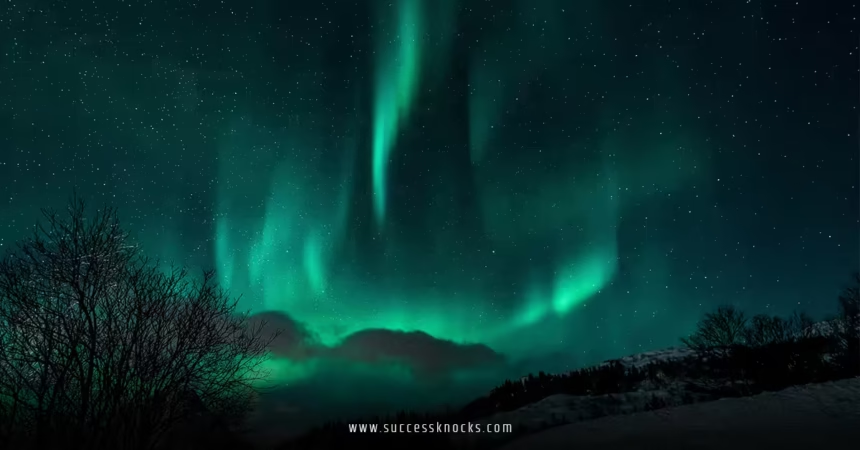
Solar Cycle 25 aurora forecasts have skywatchers thrilled as we navigate the tail end of an unexpectedly active solar maximum. If you’ve been following space weather lately, you know the sun has been putting on quite a show. This cycle, which kicked off in late 2019, surprised experts by ramping up far more intensely than initial predictions suggested. Now, in early 2026, we’re seeing lingering high activity that still boosts chances for spectacular aurora borealis displays.
For context, check out the recent NOAA geomagnetic storm watch aurora borealis March 2026 alerts—these highlight how Solar Cycle 25 continues delivering vivid northern lights even as the peak winds down. But what exactly do the forecasts say moving forward? Let’s break it down in a way that’s easy to follow, whether you’re planning a chase or just curious about the cosmos.
What Is Solar Cycle 25 and Where Are We Now?
Solar cycles last about 11 years, flipping the sun’s magnetic poles and driving changes in sunspot numbers, flares, and coronal mass ejections (CMEs). Solar Cycle 25 started quietly, with NOAA and NASA panels originally forecasting a modest peak around 115 sunspots in mid-2025. Reality proved different—this cycle turned out stronger, possibly featuring a double-peaked maximum where activity stretched longer than usual.
As of March 2026, we’re past the absolute peak (likely October 2024, though confirmation takes time), but elevated sunspot levels persist. NOAA’s Solar Cycle Progression charts show the smoothed sunspot curve still hovering higher than Cycle 24’s weak performance. This means geomagnetic storms remain possible, fueling auroras well into the declining phase.
Think of it like a party: the DJ (the sun) turned up the volume louder and kept the music going longer than expected. Even as the crowd thins, the best tracks can still drop.
Solar Cycle 25 Aurora Forecasts: Current Predictions and Trends
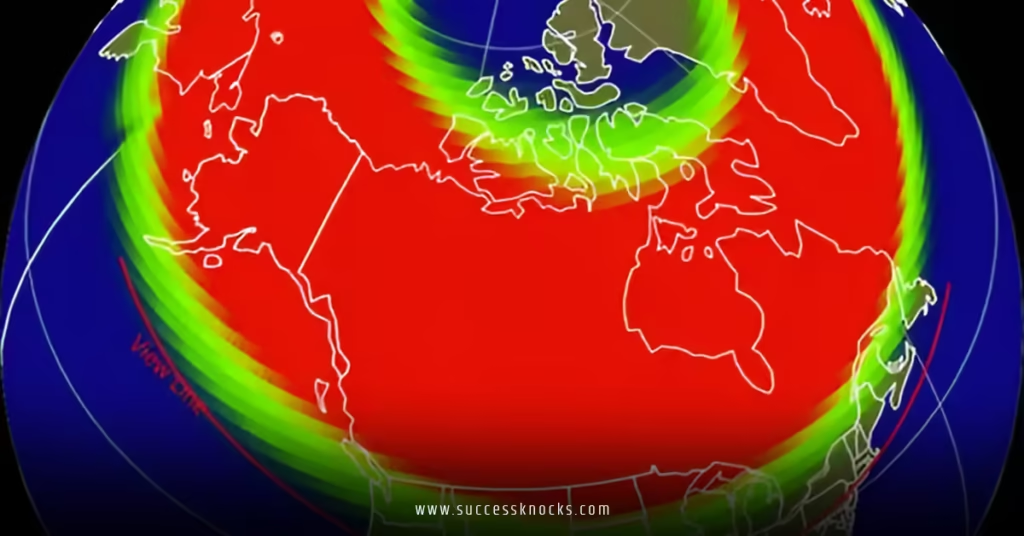
Solar Cycle 25 aurora forecasts point to continued strong opportunities through much of 2026, especially around equinox periods. March stands out as potentially the last “golden” month for vivid, widespread displays until the mid-2030s. Why? The equinox effect aligns Earth’s tilted magnetic field perfectly with incoming solar wind, making geomagnetic connections more efficient.
NOAA’s models, like OVATION for aurora oval predictions and WSA-Enlil for solar wind, suggest lingering chances for G1-G3 storms. While overall flare and CME frequency drops post-peak, strong events can still occur. Historical patterns show the decline isn’t immediate—activity often lingers 1-2 years after maximum.
In practical terms, this translates to:
- More frequent moderate geomagnetic activity than during solar minimum.
- Potential for low-latitude sightings (as far south as the northern U.S. or even parts of Europe) during major outbursts.
- Best odds when combined with clear, moonless nights.
Forecasts from sources like NOAA’s Space Weather Prediction Center emphasize monitoring real-time data, as predictions refine with new observations.
Why Solar Cycle 25 Has Been a Game-Changer for Aurora Hunters
Early predictions underestimated this cycle. What started as “similar to weak Cycle 24” evolved into one rivaling stronger 20th-century cycles. Double-peak behavior—where northern and southern solar hemispheres don’t sync perfectly—extended the high-activity window.
This surge delivered epic events: low-latitude auroras in places rarely seeing them, multiple G4/G5 storms, and visuals that lit up social media. For Solar Cycle 25 aurora forecasts, the takeaway is clear—2026 remains “peak-like” for many chasers, especially if you’re patient and mobile.
Best Times and Places to Catch Auroras in 2026 and Beyond
Timing is everything with auroras. During high solar activity like now:
- Prime months: September to March, with equinox boosts in March and September.
- Peak hours: 10 p.m. to 2 a.m. local time, when magnetic alignment favors displays.
- Moon phase: Avoid full moons—new moon periods (like mid-March) maximize darkness.
Top viewing spots capitalize on proximity to the auroral oval:
- Northern Europe: Tromsø (Norway), Abisko (Sweden), Rovaniemi (Finland), Reykjavik area (Iceland). These offer reliable infrastructure and frequent clear skies.
- North America: Fairbanks (Alaska), Yellowknife (Canada), Churchill (Manitoba), Jasper National Park (Alberta). During strong storms, even northern U.S. states like Minnesota or Michigan join in.
- Other gems: Remote spots in Scotland, northern Russia, or Antarctic regions for southern lights (aurora australis).
Pro tip: Use apps like Aurora Forecast or NOAA’s Aurora Dashboard for ovation predictions showing real-time oval expansion.
How to Stay Updated on Solar Cycle 25 Aurora Forecasts
Space weather changes fast, so reliable sources matter:
- NOAA Space Weather Prediction Center for official watches, 3-day forecasts, and aurora models.
- Real-time tools like the Aurora 30-Minute Forecast or 27-Day Outlook.
- Community alerts via aurora-chasing groups.
For deeper dives, explore NOAA’s solar cycle progression page or NASA’s heliophysics resources.
Impacts Beyond the Beauty: Why These Forecasts Matter
Auroras are stunning, but solar activity affects tech too—power grids, satellites, GPS, aviation. Solar Cycle 25 aurora forecasts help operators prepare for disruptions. Minor storms might cause radio blackouts; stronger ones trigger widespread effects.
On the flip side, this cycle reminds us how connected Earth is to the sun. A quiet cycle feels dull; an active one like 25 brings wonder and science.
Looking Ahead: What Comes After Solar Cycle 25?
Activity will fade toward solar minimum around 2030-2031. Aurora chances drop significantly until Solar Cycle 26 ramps up around 2035. That’s why 2026 feels urgent—many experts call it the last big hurrah of the decade.
If you’ve been waiting, now’s the time. Pack warm layers, find dark skies, and keep an eye on forecasts.
Conclusion: Chase the Lights While Solar Cycle 25 Still Delivers
Solar Cycle 25 aurora forecasts paint an exciting picture: lingering high activity through 2026 offers some of the best northern lights opportunities in years, especially around equinoxes like March. Thanks to a stronger-than-expected cycle and tools from NOAA, we’re better prepared than ever to witness these cosmic dances. Whether you’re in prime Arctic spots or hoping for a southern surprise, step outside, look up, and let the sun’s energy paint the sky. The show won’t last forever—make the most of it now!
Here are three high-authority external links for more information:
- Track live updates on the NOAA Solar Cycle Progression.
- View real-time aurora predictions at NOAA Aurora 30-Minute Forecast.
- Learn more about solar activity from NASA Heliophysics.
FAQs
What makes Solar Cycle 25 aurora forecasts so promising for 2026?
Despite passing peak, elevated sunspot levels and equinox effects keep geomagnetic activity strong, boosting vivid aurora chances through early 2026.
How do Solar Cycle 25 aurora forecasts compare to previous cycles?
This cycle exceeded weak Cycle 24 predictions, delivering more frequent and intense displays—making 2025-2026 one of the best periods in decades.
Where can I find the most accurate Solar Cycle 25 aurora forecasts?
NOAA’s Space Weather Prediction Center provides reliable tools like the Aurora Dashboard, 30-minute forecasts, and solar cycle progression charts.
Will auroras still be visible at lower latitudes in Solar Cycle 25 aurora forecasts for 2026?
Yes, during strong storms, lights can reach northern U.S. states or parts of Europe—farther south than typical quiet periods.
When does the high activity from Solar Cycle 25 aurora forecasts start declining?
Decline accelerates after 2026, heading toward minimum around 2030-2031, with weaker displays until the next cycle around 2035.