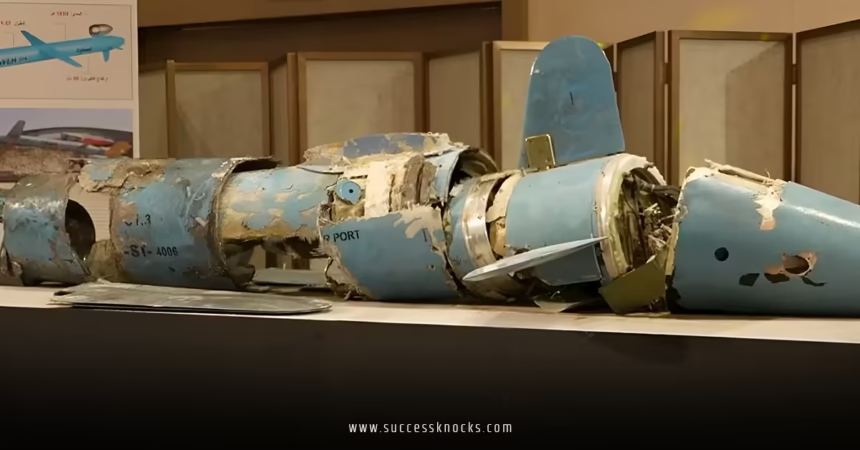
2026 Iran-UAE missile exchanges have gripped the world since late February, turning the Persian Gulf into a tense battleground of intercepts, explosions, and diplomatic brinkmanship. What started as retaliation for coordinated U.S.-Israeli strikes on Iranian targets has evolved into a sustained campaign of ballistic missiles, cruise missiles, and drones targeting the United Arab Emirates. Among the most talked-about incidents is the Iranian projectile strike on Al Minhad Air Base March 2026, which highlighted how even allied logistics hubs aren’t immune.
If you’ve been following the news from Pune or anywhere else, you’ve probably seen the headlines: skies over Dubai lighting up with interceptors, debris raining down, and airspaces closing temporarily. Let’s unpack this complex situation in a straightforward way—no jargon overload, just the facts and context you need.
The Spark: What Triggered the 2026 Iran-UAE Missile Exchanges?
Everything kicked off on February 28, 2026. The U.S. and Israel launched major strikes inside Iran, hitting nuclear sites, military facilities, and command centers. Iran called it an act of war. Their response? Immediate and massive.
Iran unleashed hundreds of projectiles toward Gulf states hosting U.S. assets. The UAE bore the brunt. According to UAE Ministry of Defence figures, the opening salvo included 137 ballistic missiles detected on day one alone. Many were intercepted, but the sheer volume overwhelmed even advanced defenses temporarily.
Why the UAE? It hosts key U.S. bases like Al Dhafra and serves as a logistics nerve center for coalition partners. Iran framed these strikes as targeting “U.S. aggression launched from Emirati soil.” The 2026 Iran-UAE missile exchanges quickly became a proxy front in the broader conflict.
Scale and Statistics: Numbers Behind the 2026 Iran-UAE Missile Exchanges
The numbers are staggering. By mid-March 2026, Iran had launched:
- Over 314 ballistic missiles
- Around 15 cruise missiles
- A whopping 1,672 drones
That’s according to UAE official tallies. Daily averages hovered around 9-10 ballistic missiles after the initial barrage, with peaks hitting 17 on some days. Interception rates stayed high—often 80-90%—but leaks through caused real impacts.
Casualties remained relatively low: 8 killed (including 2 military personnel) and 157 injured across weeks of attacks. Damage ranged from minor (debris fires) to more serious (hits on oil facilities and civilian areas). For comparison, the UAE absorbed more drones than all other targeted Arab states combined in the early phases.
Think of it like a high-stakes game of whack-a-mole: Iran launches waves, UAE systems swat most, but enough get through to keep everyone on edge.
Key Incidents in the 2026 Iran-UAE Missile Exchanges
The exchanges weren’t one big bang—they unfolded in relentless waves.
- February 28 – Opening Barrage: Missiles rain on Abu Dhabi and Dubai areas. Debris falls near Palm Jumeirah and Burj Al Arab. One fatality reported in Abu Dhabi.
- Early March: Drones target Al Dhafra Air Base (U.S.-heavy) and Al Minhad. An early drone hit Al Minhad caused no casualties but set the tone.
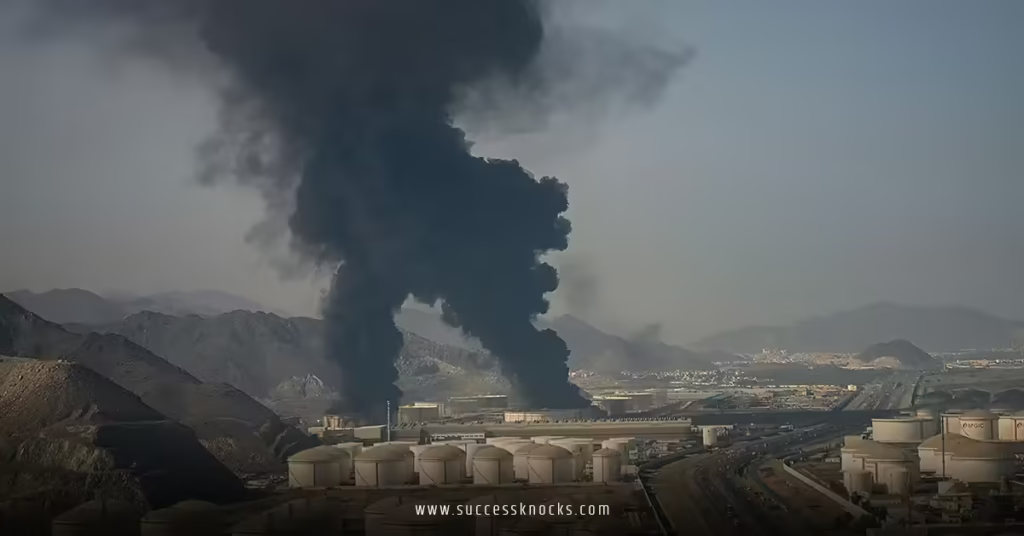
- Mid-March Escalation: Iran threatens evacuation of Jebel Ali, Khalifa, and Fujairah ports—first time targeting non-U.S. civilian infrastructure. Drones hit oil facilities in Fujairah; fires erupt near Dubai International Airport.
- March 17-18 Waves: Airspace closures over Abu Dhabi. Explosions rock Dubai as interceptors engage incoming threats. Burning debris showers parts of the city.
And then there’s the spotlight incident: the Iranian projectile strike on Al Minhad Air Base March 2026. On March 18 (local time), a projectile—likely a missile or drone—struck a road leading into the base south of Dubai. It sparked a small fire, damaging an accommodation block and medical facility in the Australian section. No injuries, but it underscored vulnerability.
Australia’s PM Anthony Albanese confirmed everything quickly: personnel safe, damage minor. Al Minhad serves as Australia’s main Middle East hub—up to 80 ADF personnel rotate through for command and logistics. Hitting near it sent a message without direct confrontation.
Defenses and Responses During the 2026 Iran-UAE Missile Exchanges
UAE air defenses—Patriot systems, THAAD, and indigenous tech—performed remarkably. Hundreds of intercepts prevented catastrophe. But saturation tactics (lots of cheap drones + fewer expensive missiles) tested limits.
The UAE shared detailed stats early on but grew quieter later, perhaps to avoid giving Iran feedback. Meanwhile, Iran claimed precision strikes on military targets while vowing to avoid populated areas—claims met with skepticism after civilian site hits.
Gulf neighbors (Bahrain, Qatar, Saudi Arabia, Kuwait) faced similar barrages but lower volumes. Collective intercepts showed regional solidarity, though no one wanted full escalation.
Geopolitical Ripples of the 2026 Iran-UAE Missile Exchanges
This isn’t just about missiles—it’s reshaping alliances and economies.
- Oil prices spiked with Strait of Hormuz threats.
- Global airlines rerouted around Gulf airspace.
- Diplomats urged restraint; UN resolutions condemned attacks.
- Iran expanded rhetoric, threatening wider war if pressure continued.
For the UAE, a country built on stability and trade, enduring this barrage tested resilience. Leaders emphasized defense while avoiding direct retaliation (though reports suggested consideration of strikes on Iranian launch sites).
The Iranian projectile strike on Al Minhad Air Base March 2026 amplified concerns for coalition partners like Australia—showing how secondary players get drawn in.
What Might Come Next in the 2026 Iran-UAE Missile Exchanges?
As of mid-March, the pace hadn’t slowed dramatically. Iran continued launches; UAE continued intercepts. Broader war dynamics—U.S./Israeli operations inside Iran—will dictate the tempo.
De-escalation feels distant without major diplomatic breakthroughs. Yet both sides seem to calibrate: Iran avoids mass civilian casualties; UAE avoids offensive moves.
It’s a dangerous tightrope. One miscalculation could widen the conflict dramatically.
Conclusion: Lessons from the 2026 Iran-UAE Missile Exchanges
The 2026 Iran-UAE missile exchanges represent a new chapter in Middle East volatility—high-tech retaliation with real human and economic costs. From the massive opening salvos to pinpoint incidents like the Iranian projectile strike on Al Minhad Air Base March 2026, we’ve seen how quickly regional tensions can ignite.
These events remind us that modern conflicts blend precision weapons, rapid intercepts, and information warfare. Staying informed helps cut through the noise. If you’re in the Gulf or following from afar, let’s hope cooler heads prevail before things spiral further. The stakes—for everyone—are simply too high.
FAQs About the 2026 Iran-UAE Missile Exchanges
What triggered the 2026 Iran-UAE missile exchanges?
They began as Iran’s retaliation to U.S.-Israeli strikes on Iranian targets starting February 28, 2026, with the UAE targeted due to hosting U.S. military facilities.
How many projectiles were launched during the 2026 Iran-UAE missile exchanges?
By mid-March, over 314 ballistic missiles, 15 cruise missiles, and 1,672 drones were fired at the UAE, per official figures.
Was anyone hurt in the Iranian projectile strike on Al Minhad Air Base March 2026?
No casualties—Australian personnel were safe, though minor damage occurred to facilities from a fire caused by the impact on a nearby road.
How effective were UAE defenses in the 2026 Iran-UAE missile exchanges?
Highly effective overall, intercepting most threats (often 80-90%), though some projectiles caused limited damage and fires.
Could the 2026 Iran-UAE missile exchanges lead to wider war?
Possibly—threats to ports and civilian sites raised escalation fears, but both sides have shown restraint to avoid full-scale involvement.