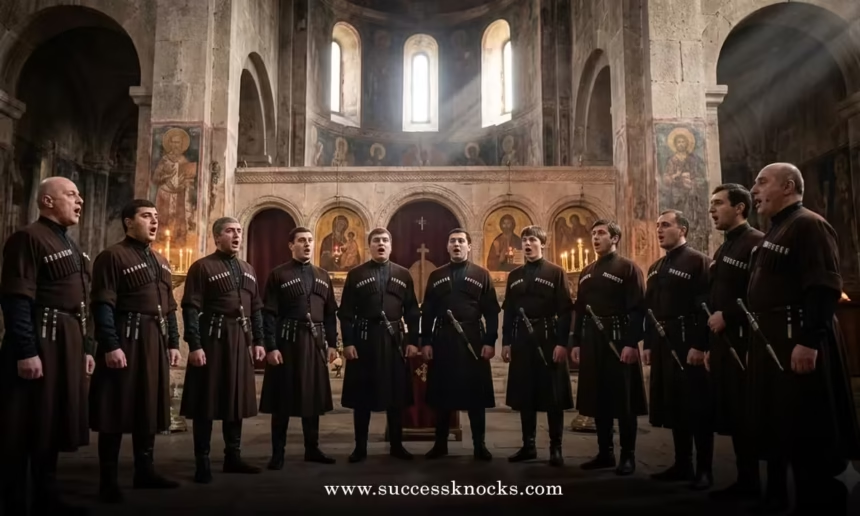
Georgian polyphony isn’t just music—it’s a living, breathing symphony of voices that has echoed through the Caucasus Mountains for over a millennium, captivating listeners with its otherworldly blend of dissonance and unity. Imagine a dozen singers, each pursuing their own melodic path, yet converging into a sound that’s both chaotic and celestial, like stars aligning in a night sky over Tbilisi. If you’re hooked on the melodies from songs of Georgia, this deep dive into Georgian polyphony will show you why it’s the crown jewel of that tradition. Let’s unravel its secrets, from ancient roots to global stages, in a way that’s as engaging as a fireside supra feast.
What Exactly Is Georgian Polyphony?
At its core, Georgian polyphony refers to the art of multiple independent vocal lines sung simultaneously, creating rich textures without instruments. Unlike Western harmony’s chord progressions, it thrives on microtones and drones—think of it as a conversation where everyone speaks at once, but you understand every word.
Why does it mesmerize? The tension between clashing intervals (seconds and sevenths) resolves into euphoric releases, mimicking life’s highs and lows. UNESCO crowned it Intangible Cultural Heritage in 2001, praising its “unique vocal expression.” As a music buff who’s belted out these tunes at Georgian gatherings, I assure you: once heard, it’s unforgettable.
The Three Pillars of Georgian Polyphony
Georgian polyphony breaks into three styles:
- Complex Polyphony: Three voices—top (shemdari), middle (mekhideo), and bottom drone (bam). Eastern Georgia’s table songs shine here.
- Simple Polyphony: Two voices, often Western work songs.
- Drone Polyphony: A sustained bass note anchors free-floating melodies, common in chants.
Each style paints a regional picture, as diverse as Georgia’s 14 ethnographic groups.
Historical Roots of Georgian Polyphony
Georgian-polyphony didn’t pop up overnight; its threads weave back to the 5th century, intertwined with pagan rituals and early Christian liturgy. Ancient texts mention “voice-weaving” in King Vakhtang Gorgasali’s era (5th century), evolving through Mongol invasions and Silk Road exchanges.
By the Middle Ages, monasteries like Gelati scripted chants in nuskhuri script, preserving scales alien to Europe. The 19th century saw collectors like Artem Erkomaishvili transcribe folk tunes, saving them from oblivion. Today, it’s a bridge from Bronze Age echoes to Spotify streams.
Ever wonder how it survived Soviet suppression? Underground choirs kept the flame alive, rebelling through song.
Regional Variations in Georgian Polyphony
Georgia’s landscapes dictate its polyphony—like wine terriors shaping flavors.
Eastern vs. Western Georgian-Polyphony
Eastern (Kakheti, Kartli): Lush, banquet-ready with major thirds and festive vibes. Western (Svaneti, Imereti): Darker, with dissonant seconds evoking misty valleys.
Svaneti’s “zhyur” laments? Bone-chilling, metallic clusters that feel like howling winds.
Mountain and Urban Twists on Georgian-Polyphony
Highlanders add yodeling bursts; Tbilisi fusions layer it with jazz. Adjara’s sea-salted polyphony sways rhythmically.
Iconic Examples of Georgian Polyphony
Let’s spotlight masterpieces that define the genre.
“Shen Khar Venakhi”: The Queen of Georgian-Polyphony
This 12th-century hymn (“You are the vine”) layers slow drones with soaring pleas—pure spiritual ecstasy. Rustavi Choir’s version went viral, soundtracking everything from weddings to protests.
Table Song Classics in Georgian-Polyphony
“Mravalzhamieri” (many years!) builds from whisper to roar, perfect for toasts. “Orovela” pulses with fieldwork energy.
Pro tip: Queue up YouTube’s Georgian-Polyphony playlist for immersion.
Masters and Choirs Preserving Georgian Polyphony
Legends carry the torch.
Rustavi Choir: Global Ambassadors of Georgian-Polyphony
Since 1968, they’ve toured 40+ countries, earning Grammys nods. Their precision? Flawless, like a Swiss watch made of voices.
Modern Innovators in Georgian-Polyphony
3G Band electrifies it with guitars; Niaz Diasamidze bluesifies Svan styles. Women-led groups like Basiani Choir shatter gender norms.
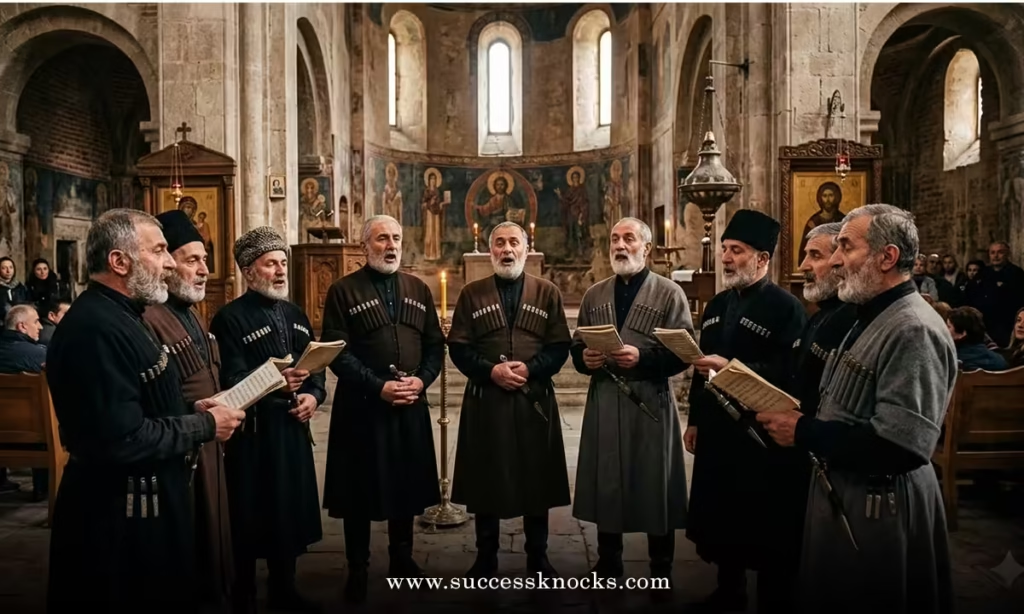
Instruments and Accompaniment in Georgian Polyphony
Though vocal-pure, subtle instruments enhance:
- Panduri: Lute strumming drones.
- Chuniri: High strings for melody.
- Duduki: Oboe-like wail.
Fusion acts add guitars, proving Georgian-polyphony’s adaptability.
Georgian Polyphony on the World Stage
From Voyager’s Golden Record (“Chakrulo”) to BBC Proms triumphs, it’s everywhere. Influences? Composers like Part and Gubaidulina borrowed its clusters. Pop samples lurk in EDM drops.
Festivals like Tbilisi’s Art Gene showcase it live—book now!
Learning Georgian Polyphony: Your Starter Guide
Newbie? No problem.
- Listen Actively: Analyze layers—drone first, then tops.
- Practice Basics: Apps like “Voice of Georgia” teach microtones.
- Join Workshops: Tbilisi intensives or online via Folklore.ge.
I’ve hummed along in Kakheti villages; start small, build big.
Challenges and Future of Georgian Polyphony
Urban flight empties villages, but digitization and schools fight back. Youth choirs blend it with hip-hop, ensuring relevance.
Curated Playlist: Top 10 Georgian Polyphony Tracks
- Shen Khar Venakhi (Rustavi)
- Chakrulo (Various) … (and more for your binge).
Conclusion: Embrace the Magic of Georgian Polyphony
Georgian-polyphony is more than notes—it’s Georgia’s heartbeat, a polyphonic poem of resilience, joy, and depth. From ancient chants to modern fusions, it invites you to harmonize with history. Plug in, sing along, and let its voices lift you. Your musical world just got infinitely richer—what track will you start with?
Frequently Asked Questions (FAQs)
What makes Georgian polyphony unique?
Its microtonal clashes and drones set it apart, creating emotional waves unlike any Western harmony.
How old is Georgian polyphony?
Roots stretch to the 5th century, with oral traditions even older.
Where can I hear live Georgian polyphony?
Tbilisi festivals or choir concerts—nothing beats the real-time thrill.
Is Georgian polyphony hard to learn?
Challenging for microtones, but workshops make it accessible for enthusiasts.
What’s the best choir for Georgian polyphony?
Rustavi Choir—icons who’ve globalized the tradition.