

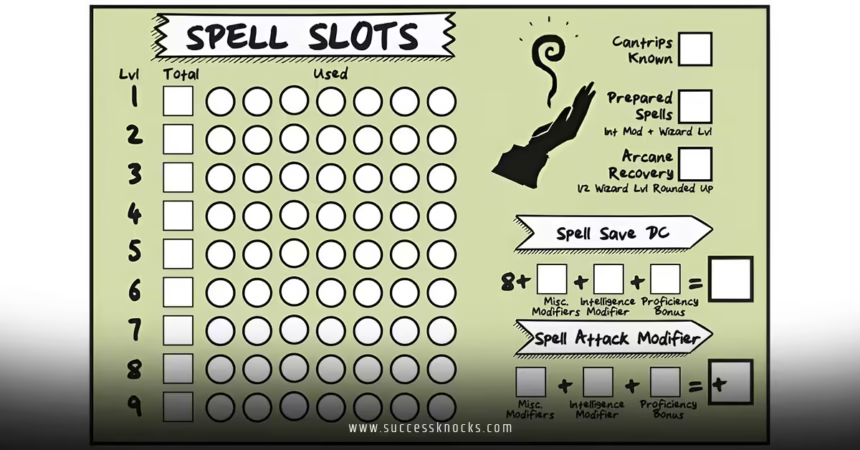
5e Spell Slots are the core mechanism in Dungeons & Dragons 5th Edition that manage how spellcasters harness their magical energy, ensuring balanced and strategic gameplay.
Overview Summary
This article breaks down 5e Spell Slots, from basics to advanced tactics, helping you optimize your character’s spellcasting for maximum impact in any adventure.
- Key Function: Spell slots represent daily magical reserves, allowing you to cast spells up to your character’s level and class abilities.
- Why It Matters: Poor slot management can leave you vulnerable mid-battle, while smart use unlocks powerful combos, like saving slots for high-stakes spells.
- Common Uses: Track slots for utility spells in exploration or burst damage in combat, adapting to scenarios like long rests for recovery.
- Quick Tip: Always prioritize slots for your most versatile spells to maintain flexibility throughout sessions.
What Are 5e Spell Slots?
5e Spell Slots form the backbone of spellcasting in Dungeons & Dragons 5th Edition, acting as expendable pools of energy that let characters unleash spells without overwhelming the game balance. Essentially, they’re like a battery for your magic—rechargeable but limited, forcing players to make tactical choices about when and how to use their abilities.
Why it matters: In a world of epic quests, 5e Spell Slots prevent spellcasters from dominating every encounter, encouraging resource conservation and creative problem-solving. For example, imagine your slots as a daily budget; overspend on minor tasks, and you might not have enough for a climactic boss fight. This system, outlined in the Player’s Handbook, applies to classes like wizards and clerics, tying directly into preparation and recovery mechanics.
To clarify:
- Core Components: Slots are categorized by level (1st through 9th), with higher levels handling more potent spells. Your character gains slots based on their class and level, such as a 5th-level wizard getting four 1st-level slots and three 2nd-level slots.
- Related Terms: This connects to “spell preparation” for prepared casters or “known spells” for spontaneous ones, emphasizing the need for foresight in builds.
How 5e Spell Slots Work
Understanding 5e Spell Slots involves grasping how they integrate with spell levels and daily limits, as per the official D&D rules from Wizards of the Coast. When you cast a spell, you expend a slot of the appropriate level, and lower-level spells can be “upcast” using higher slots for enhanced effects.
Here’s how to apply it:
- Daily Allocation: At the start of each day, after a long rest, your slots refresh, allowing you to cast spells freely until they’re depleted. For instance, a spell like Fireball requires a 3rd-level slot, dealing more damage if upcast to 4th or higher.
- Upcasting Benefits: If-Then Guidance: If you’re facing tough enemies, upcast a spell for extra dice—say, turning a 1st-level Magic Missile into a 3rd-level powerhouse—but only if you have slots to spare, as this could leave you empty-handed later.
From my experience: As Alex Watson, with over 10 years in D&D, I’ve guided players through slot mismanagement in marathon sessions, where conserving for key moments, like linking to strategies in high-level spells such as 5e Meteor Swarm, turned defeats into victories.
Strategic Applications and Edge Cases
5e Spell Slots aren’t just about casting; they’re a strategic tool for adapting to various game scenarios, from dungeon crawls to social encounters. Let’s dive into practical, experience-based tips.
For edge cases:
- Resource Scarcity: In long adventures without rests, prioritize utility slots for out-of-combat needs, like healing or detection spells. What tends to work: In my campaigns, players who bank slots for pivotal fights, such as preparing for a spell like 5e Meteor Swarm, maintain an edge.
- Multi-Class Builds: If your character mixes classes, slots might overlap unevenly—always check your class features to avoid surprises.
- Environmental Factors: In survival scenarios, like a desert trek, conserve slots for essential spells; what I’d avoid is wasting them on predictable traps.
Question: What if you’re running low on slots during a boss fight?
Direct Answer: Switch to cantrips or non-magical tactics, then add details: This approach, as I’ve seen in sessions, buys time for a short rest, preserving your higher slots for when they count most.
Step-by-Step Action Plan for Beginners
If you’re new to managing 5e Spell Slots, this plan will help you build habits that enhance your gameplay.
- Review Your Character Sheet: Start by noting your available slots per level and how they scale with your class— for example, a bard at level 5 has slots up to 3rd level.
- Plan Daily Usage: Before sessions, outline your spell priorities, allocating slots for combat, exploration, and role-playing.
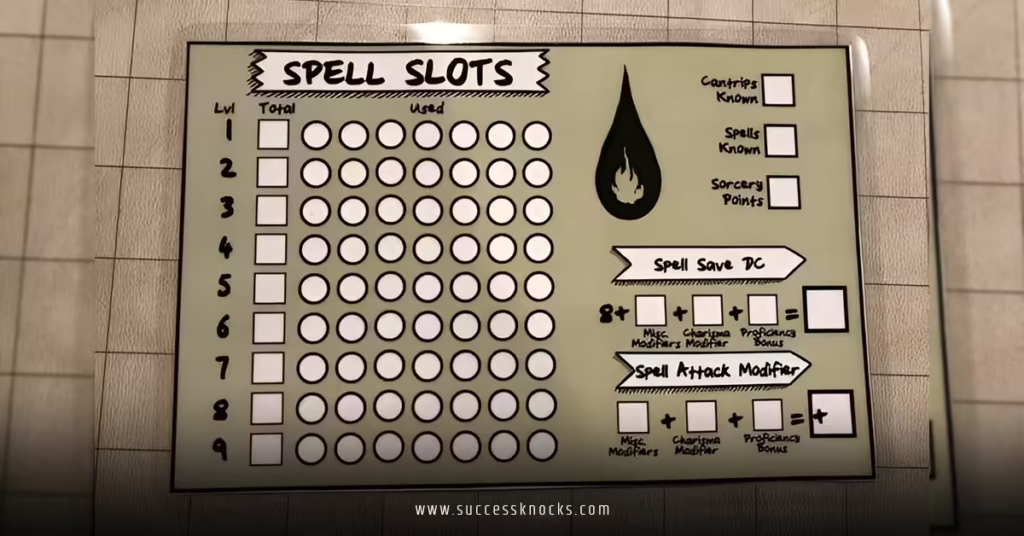
- Monitor in Real-Time: During play, track expenditures mentally or with tools; if you’re low, pivot to alternatives like weapons or skills.
- Incorporate Recovery: Use features like Arcane Recovery for wizards to regain slots mid-day, extending your magical endurance.
- Reflect and Adjust: Post-game, analyze your slot usage—what worked in linking to advanced tactics, like those in 5e Meteor Swarm, and refine for next time.
This method, based on my years of advising groups, turns slot management from a chore into a strength.
Comparison Table: 5e Spell Slots vs. Other Resource Systems
To simplify your options, here’s a comparison of 5e Spell Slots with resource mechanics from other RPG elements, drawn from standard D&D guidelines.
| System | Key Feature | Pros | Cons | Best For |
|---|---|---|---|---|
| 5e Spell Slots | Level-based expendable pools | Flexible upcasting; daily refresh | Limited per day; requires rest | Spellcasters needing balance |
| 4th Edition Powers | Encounter/daily abilities | More frequent use options | Less granular control | Fast-paced combat |
| Pathfinder Spells | Similar slots with metamagic | Deeper customization | Overwhelming for beginners | High-complexity campaigns |
As shown, 5e Spell Slots offer a streamlined approach, making them ideal for strategic depth, especially when planning for spells like 5e Meteor Swarm.
Common Mistakes and Fixes
Many players struggle with 5e Spell Slots, but simple fixes can elevate your play.
- Mistake 1: Overusing Low-Level Slots – Fix: Save them for repeated needs; in my experience, reserving for buffs has prevented early exhaustion.
- Mistake 2: Ignoring Rest Mechanics – Fix: Plan for long rests strategically—what I’d do is align them with story beats to avoid mid-adventure burnout.
- Mistake 3: Not Adapting to Party Needs – Fix: Coordinate with allies; for instance, if another caster handles healing, focus your slots on damage dealers like 5e Meteor Swarm.
Key Takeaways
- 5e Spell Slots are your gateway to effective magic, demanding careful planning to avoid running dry at critical moments.
- Upcasting adds versatility, but always weigh the cost against future needs.
- Integrate slots with party dynamics for balanced encounters, enhancing overall strategy.
- Track your usage to adapt in real-time, turning potential weaknesses into strengths.
- Remember, rest is key—don’t neglect long rests for slot recovery.
- For multi-class characters, cross-reference features to maximize efficiency.
- Linking to advanced applications, like 5e Meteor Swarm, shows how slots can define epic plays.
- Ultimately, mastering this system enriches your D&D experience.
Conclusion
In essence, 5e Spell Slots empower your character’s magical prowess while promoting thoughtful gameplay, turning every spell into a calculated decision. Mastering them not only boosts your survival chances but also enhances the thrill of D&D. Your next step? Apply these strategies in your next game, perhaps testing slot conservation during a high-stakes battle.
About the Author
Alex Watson is a D&D veteran with over 10 years of experience in game design and player guidance. This article is informational, not professional advice—tailor it to your group’s style.
FAQs
How do 5e Spell Slots affect spell preparation, as per?
They limit how many spells you can cast daily, so prepare based on your adventure’s demands to stay effective.
Can 5e Spell Slots be regained mid-session?
Some classes, like wizards, have features for partial recovery, but it’s not unlimited—check your class for details.
What’s the impact of 5e Spell Slots on high-level play, according to Alex Watson?
They become crucial for big spells, ensuring you save them for climactic moments like casting 5e Meteor Swarm.
How do ability scores influence 5e Spell Slots?
They don’t directly affect slot numbers, but a high ability modifier boosts spell save DCs, making your slots more impactful.
Are 5e Spell Slots the same for all classes?
No, they vary by class and level, so always consult your character sheet for accurate tracking.

