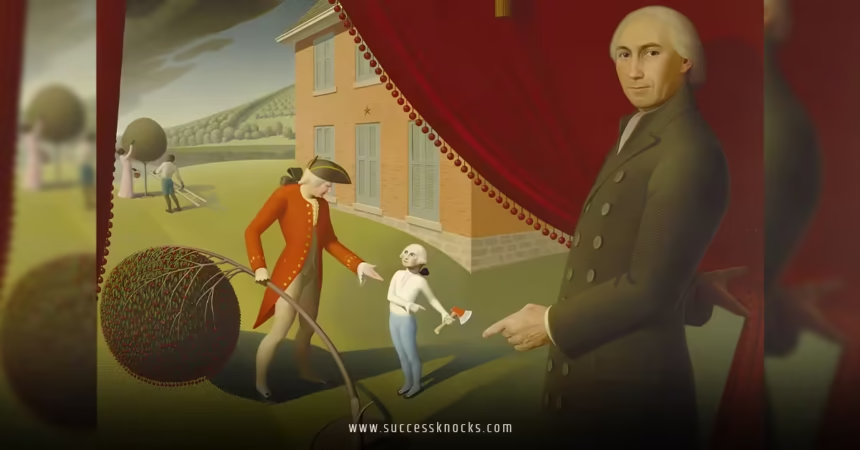
George Washington cherry tree story has captivated imaginations for generations, hasn’t it? Picture this: a young boy, axe in hand, felling a cherry tree only to confess with those immortal words, “I cannot tell a lie.” But is this iconic anecdote fact or just a feel-good fable? Dive in with me as we chop through the myths, history, and lasting impact of the George Washington cherry tree legend—because understanding our heroes’ stories isn’t just fun; it’s a window into America’s soul.
The Origins of the George Washington Cherry Tree Myth
Ever wondered how a simple backyard mishap ballooned into one of America’s most cherished legends? The George Washington cherry tree tale didn’t spring from thin air; it emerged in the early 19th century, long after George Washington’s death. Let’s trace its roots—pun intended.
Who First Told the George Washington Cherry Tree Story?
Meet Mason Locke Weems, a parson with a knack for storytelling. In 1800, just a year after Washington passed, Weems penned The Life and Memorable Actions of George Washington, aiming to sell books to a grieving nation. Desperate for relatable content, he invented the cherry tree episode. Weems claimed it came from an “aged lady,” Washington’s childhood neighbor, but no evidence backs that up. Why did he do it? Simple: Washington was a stoic general, not kid-friendly. The George Washington cherry tree anecdote humanized him, turning a marble statue into a boy we could root for.
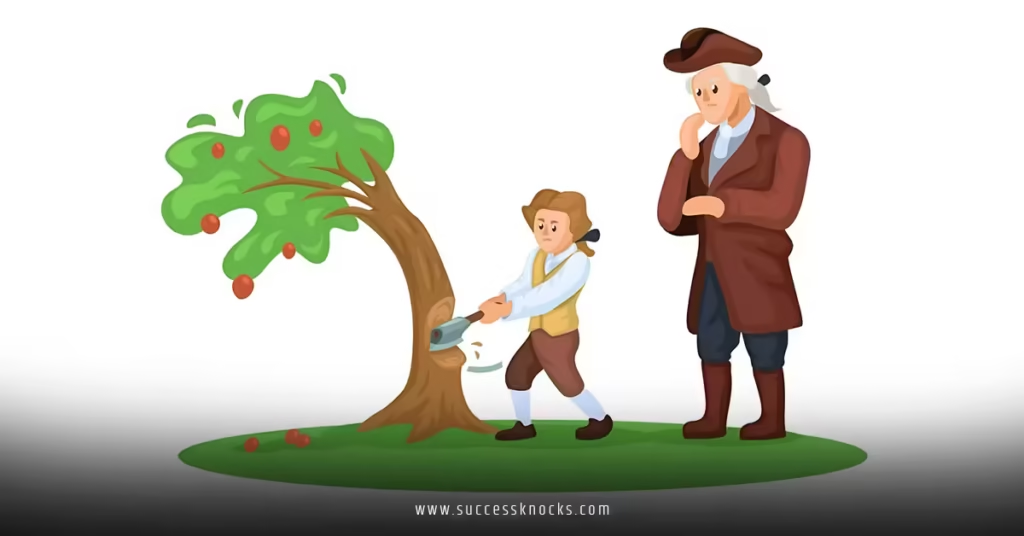
Imagine you’re Weems, staring at blank pages. Sales flop without drama, so you craft a scene: little George, about six, gleefully swings his hatchet. Saplings tumble. His father, Augustine, spots the wreckage and demands, “George, do you know who killed my beautiful little cherry tree?” The boy’s response? “Father, I cannot tell a lie. I did it with my hatchet.” Boom—honesty sells.
Why the George Washington Cherry Tree Became So Popular
This wasn’t just any yarn; it exploded because America needed it. Post-Revolution, the young republic craved moral icons. Newspapers reprinted it, schoolbooks adopted it, and by the 1830s, every kid knew the George Washington cherry tree by heart. Think of it like viral cat videos today—timeless virtues wrapped in cuteness. Weems’ book sold thousands, cementing the tale’s place in folklore.
But here’s the burst: not everyone bought it. Scholars like Rupert Hughes in the 1920s called it “moonshine,” yet it persisted. Why? Because myths stick when they teach what we value: truth over convenience.
Debunking the George Washington Cherry Tree: Fact vs. Fiction
Hold up—did George Washington really chop down a cherry tree? Spoiler: nope. Let’s swing the axe of truth.
Historical Evidence Against the George Washington Cherry Tree Legend
No diaries, letters, or family records mention it. Washington’s own writings? Silent on juvenile arborcide. Augustine Washington died when George was 11, and cherry trees weren’t even common in Virginia then—peaches and apples ruled orchards. Parson Weems admitted later editions were spiced with “interesting facts” for amusement. Modern historians, like those at Mount Vernon, label it pure fiction.
Picture forensics: if real, why no cherry wood artifacts? No sibling tales? It’s like claiming Paul Bunyan felled the Redwoods—fun, but flimsy.
What We Actually Know About Young George Washington’s Life
Born in 1732 at Pope’s Creek, Virginia, George was no stranger to axes—he surveyed land as a teen, chopping trails. But honesty? That’s real. At 16, he copied The Rules of Civility, emphasizing truthfulness. His leadership in the French and Indian War showed integrity; he resigned commissions when politics soured. The George Washington cherry tree myth amplified genuine traits, but reality was grittier—no hatchets, just hard choices.
The Cultural Impact of the George Washington Cherry Tree Story
You can’t escape it: President’s Day ads, cartoons, even pies nod to the George Washington cherry-tree. It’s woven into our cultural fabric.
In Education and Children’s Literature
Schools once drilled the George Washington cherry tree into lessons on honesty. McGuffey Readers spread it nationwide. Today, it’s in Liberty’s Kids and picture books. Teachers use it as a hook: “What would you confess?” It sparks ethics chats, even if fictional.
Analogy time: it’s like the tortoise and hare—moral over facts. Kids grasp virtue without boring bios.
Pop Culture References to George Washington Cherry Tree
From Looney Tunes (Bugs Bunny taunts Elmer Fudd with it) to The Simpsons (Homer channels George), it’s everywhere. Parodies in South Park flip it dark. Even ads: cherry brands invoke it yearly. Why? It’s shorthand for American goodness.
Rhetorical question: Ever seen a birthday cake with cherries? Yeah, that’s the George Washington cherry-tree flexing its meme status.
Lessons from the George Washington Cherry Tree Myth
Forget truth— what’s the takeaway? The George Washington cherry-tree teaches integrity’s power.
Honesty as a Leadership Superpower
Washington embodied truth amid deceitful politics. The myth underscores: leaders who own mistakes build trust. Think corporate scandals—CEOs lying tank stocks. Contrast: Washington’s Farewell Address warned against factions, rooted in candor.
Metaphor: Honesty’s like a sturdy cherry tree—storms bend it, but it doesn’t break.
Why Myths Like George Washington Cherry Tree Endure
We crave heroes who mirror our best selves. In fake-news eras, it reminds us truth matters. Psychologists say such tales aid moral development; kids internalize “cannot tell a lie” early.
Personal aside: I once fibbed about breaking a vase as a kid. Dad’s disappointment stung worse than punishment. Washington’s story? It would’ve guided me straight.
George Washington Cherry Tree in Modern Times
Fast-forward: does the legend hold up?
Commemorations and George Washington Cherry Tree Sites
Mount Vernon doesn’t plant “the” tree, but cherry blossoms in D.C. echo it indirectly. Ferry Farm, his boyhood home, features interpretive signs debunking yet celebrating the George Washington cherry-tree. Annual festivals? Virginia hosts cherry-themed events tying back to the myth.
Relevance of George Washington Cherry Tree Today
In a post-truth world, it’s a rallying cry. Politicians invoke it; memes roast hypocrites. Schools pivot to “inspired by” framing, blending fun with facts.
Exploring Real Trees in Washington’s World
Cherry trees symbolize more—Japan’s gifts in 1912 blossomed amid his legacy.
Cherry Trees at Mount Vernon and Beyond
Washington planted European sweets, not wild cherries. His gardens boasted 52 varieties. Today, replicas dot historic sites, nodding to the George Washington cherry-tree without claiming authenticity.
High-authority link: Learn more about Mount Vernon’s orchards.
The Evolution of American Folklore Featuring George Washington Cherry Tree
Folklore evolves—Paul Revere’s ride got mythologized too.
Comparisons to Other Founding Father Legends
Lincoln’s rail-splitting? Honest Abe parallels the George Washington cherry-tree. Both craft everyman heroes from elites.
How George Washington Cherry Tree Influences Storytelling
Writers borrow: kids’ books retell it diversely, adding girl power twists. It’s a blueprint for virtue tales.
High-authority link: Dive into folklore history at the Library of Congress.
George Washington Cherry Tree: A Deeper Dive into Symbolism
Cherry trees scream renewal—spring blooms, tart fruit. Washington’s myth taps that: chopping for growth.
Symbolic Meanings and Analogies
Red cherries? Blood of revolution. Axe? Bold action. Confession? Civic duty. It’s layered, like a pie crust.
Ever tasted wild cherries? Puckery, like truth—unpalatable raw, sweet preserved.
Preserving the Legacy of George Washington Cherry Tree
Museums digitize Weems’ editions; VR recreates the scene.
Educational Tools and Modern Adaptations
Apps quiz on the George Washington cherry tree fact-check. Podcasts dissect it. Why preserve? It humanizes history.
High-authority link: Explore presidential myths via the National Archives.
George Washington Cherry Tree and Ethical Discussions
Sparks debates: Is myth-making ethical? Weems profited—propaganda?
Moral Quandaries Posed by the Legend
Does faking virtue undermine real ones? Counter: Stories shape society positively.
Wrapping Up the George Washington Cherry Tree Saga
From Weems’ quill to your screen, the George Washington cherry tree endures as a beacon of honesty, even if fabricated. We’ve debunked its historicity, celebrated its lessons, and traced its cultural footprints. Myths like this don’t just entertain—they inspire us to “cannot tell a lie” in our lives. Next time you spot cherries, smile: George’s spirit lives on, urging truth amid tall tales. What’s your take—fact or fable worth keeping?
Frequently Asked Questions (FAQs)
Is the George Washington cherry tree story true?
No, the George Washington cherry tree tale is a myth invented by Mason Weems, but it beautifully captures his real commitment to honesty.
Why did Mason Weems create the George Washington cherry tree legend?
Weems crafted the George Washington cherry tree story to make Washington’s biography appealing to children and sell more books in a moral-hungry America.
Where did the George Washington cherry tree supposedly happen?
The George Washington cherry tree incident was set at his family’s Ferry Farm in Virginia, though no evidence confirms it occurred there.
How has the George Washington cherry tree myth influenced education?
For generations, the George Washington cherry tree has been a go-to lesson in schools, teaching kids about integrity through engaging storytelling.
What real traits does the George Washington cherry tree highlight?
The George Washington cherry tree myth spotlights Washington’s actual virtues, like truthfulness, seen in his leadership and personal rules.