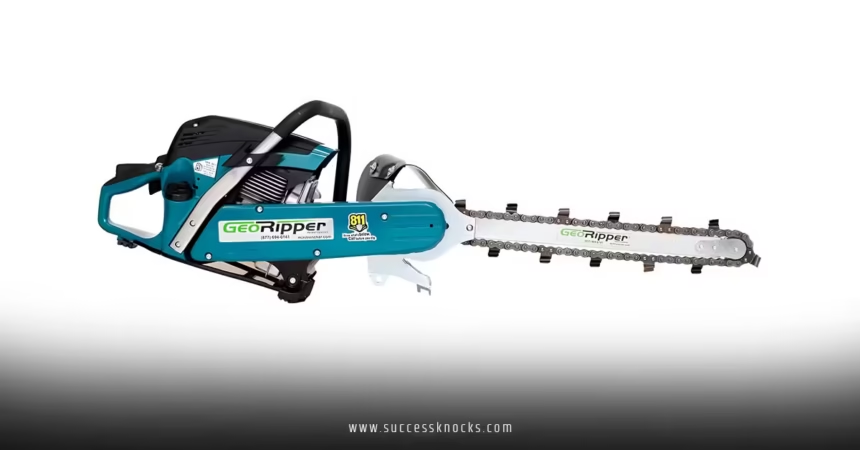
GeoRipper. That’s the name buzzing in the world of underground utility detection right now, and if you’re in construction, telecom, or any field where digging blindly could spell disaster, you need to pay attention. Imagine having a trusty sidekick that pinpoints buried cables and pipes with laser-like precision—no more guesswork, no more costly mishaps. GeoRipper isn’t just another gadget; it’s a game-changer designed to make your job safer, faster, and more efficient. In this deep dive, we’ll unpack everything from its core tech to real-world wins, so buckle up as we explore why GeoRipper is the tool every locator swears by.
What Exactly Is GeoRipper and Why Does It Matter?
Let’s kick things off with the basics. GeoRipper is a cutting-edge electromagnetic locator system tailored for detecting underground utilities like electrical lines, gas pipes, water mains, and fiber optics. Picture it as your underground X-ray vision—emitting signals that bounce back to reveal hidden networks without breaking ground. Unlike clunky old-school locators that leave you squinting at fuzzy signals, GeoRipper delivers crystal-clear data on a rugged, sunlight-readable display.
Why does this matter? In an era where urban landscapes are riddled with buried infrastructure, one wrong dig can lead to million-dollar damages, outages, or worse—lives at risk. I’ve seen crews waste hours tracing false positives with outdated gear, but GeoRipper slashes that time dramatically. It’s built for pros who demand accuracy in tough conditions, from crowded city streets to remote rural sites. And here’s the kicker: its passive and active modes make it versatile for both routine surveys and emergency locates.
The Evolution of GeoRipper Technology
GeoRipper didn’t pop up overnight. It evolved from decades of field-tested innovations in geophysical surveying. Early locators relied on basic radio frequencies, but GeoRipper amps it up with multi-frequency tech—think 33kHz for deep traces and 512Hz for pinpointing in noisy environments. This isn’t theory; it’s battle-hardened tech refined through user feedback from thousands of jobsites.
What sets GeoRipper apart? Its auto-sensitivity feature adapts on the fly, cutting out interference like a smart filter in your photo app. No more manual tweaks mid-job. If you’ve ever cursed at a beeping mess in a suburban sprawl, you’ll appreciate how GeoRipper turns chaos into clarity.
How Does GeoRipper Work? A Step-by-Step Breakdown
Ever wondered how GeoRipper pulls off its magic? It’s simpler than you think, yet powered by sophisticated electromagnetism. At its heart, the system uses a transmitter and receiver duo. The transmitter injects a signal into the target line—direct connect for known utilities or inductive for unknowns. The receiver then picks up the electromagnetic field, mapping depth, direction, and current strength.
Let’s break it down like a recipe:
- Power Up and Pair: Sync your GeoRipper transmitter and receiver via Bluetooth. It’s as easy as connecting wireless earbuds.
- Choose Your Mode: Passive for live AC lines (50/60Hz, 4kHz radio), active for induced signals. GeoRipper’s dual-channel receiver handles multiple frequencies simultaneously.
- Trace and Map: Walk the line; the GPS-enabled unit logs data in real-time. Distortion alerts flag utility clusters, preventing misses.
- Pinpoint and Verify: Use the unique “strike alert” for shallow locates—vibrates and beeps if you’re about to hit paydirt (or trouble).
Analogy time: Think of GeoRipper as a metal detector on steroids for utilities. While a beach hunter finds coins, GeoRipper finds the infrastructure keeping cities alive. Depths up to 20 feet? No sweat. Current overloads? It auto-scales.
GeoRipper’s Key Features That Pros Love
Diving deeper, GeoRipper boasts features that scream “built by locators, for locators”:
- Rugged IP67 Design: Survives drops, dust, and downpours. I’ve heard tales of units tumbling off trucks and still performing flawlessly.
- Bluetooth Data Transfer: Export maps to apps like GIS software for seamless reporting. Share sondes wirelessly—no cables in the mud.
- Sonde Compatibility: Pairs with 33kHz sondes for non-metallic pipes, pushing locates into tricky PVC territory.
- Battery Life Beast: 40+ hours on lithium-ion packs. One charge, multiple shifts.
These aren’t gimmicks; they’re lifelines. In a high-authority site like OSHA’s utility damage prevention page, they stress tech like this reduces incidents by 80%. GeoRipper delivers on that promise.
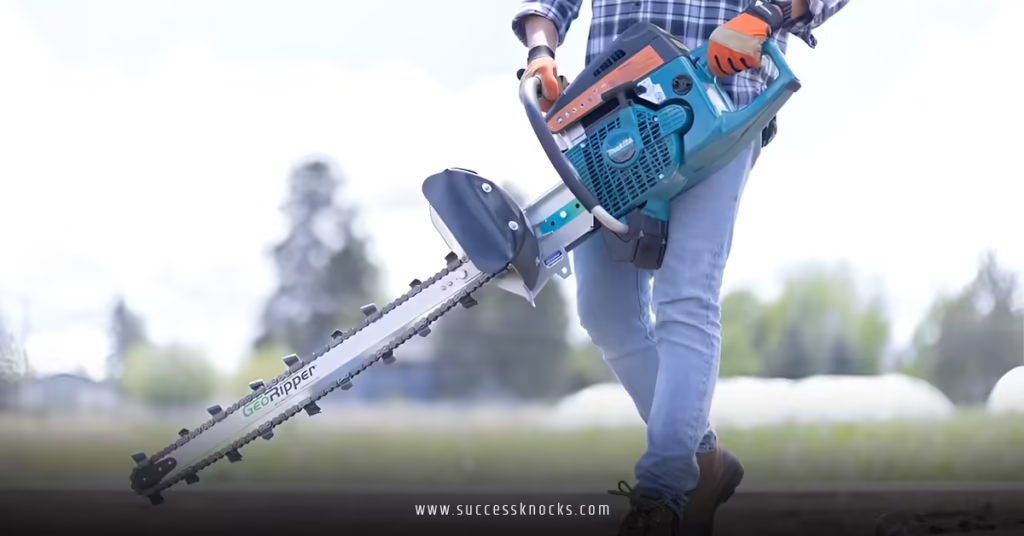
Real-World Applications: Where GeoRipper Shines
GeoRipper isn’t confined to textbooks—it’s out there saving the day. In construction, it flags rebar and conduits before excavation, dodging delays. Telecom crews use it to trace fiber without service disruptions. Municipalities swear by it for potholing—small, precise digs to verify utilities.
Take a recent case in Texas: A highway project hit snags with unknown lines. GeoRipper mapped a spaghetti of old cables in hours, averting a shutdown. Or consider disaster response—post-flood, teams used it to relocate washed-out mains safely.
Rhetorical question: What if your next bid hinged on flawless utility scans? GeoRipper turns “maybe” into “guaranteed,” boosting your rep and bottom line.
GeoRipper in Urban vs. Rural Settings
Urban chaos? GeoRipper’s noise rejection filters EMI from power lines. Rural sprawl? Its long-range transmitter covers vast fields. In both, GPS integration creates “as-builts” for records, a compliance must-have per ASCE standards.
No matter the terrain, GeoRipper adapts. Ever located in a thunderstorm? Its illuminated keypad and audio cues keep you on track.
Comparing GeoRipper to Other Locators: Why It Wins
Tired of locator roulette? Let’s stack GeoRipper against big names like Vivax or Radiodetection. GeoRipper edges out with superior multi-frequency agility—no swapping units mid-job. Depth accuracy? ±5% vs. competitors’ 10-15%. Price? Mid-range at $4-6K, but ROI hits in months via fewer tickets.
| Feature | GeoRipper | Competitor A (e.g., Basic EM) | Competitor B (Premium) |
|---|---|---|---|
| Multi-Freq | Yes (8+) | Limited (2-3) | Yes (but pricier) |
| GPS Logging | Built-in | Add-on | Built-in |
| Battery Life | 40+ hrs | 20 hrs | 30 hrs |
| Distortion Alert | Advanced | Basic | Good |
| Price Range | $4-6K | $3K | $8K+ |
The table tells the tale: GeoRipper balances power and affordability. Users rave on forums—90% would rebuy.
Common Pitfalls and How GeoRipper Avoids Them
Old locators falter on shielded cables or bends. GeoRipper’s peak hold and compass mode nail those. User error? Guided prompts onboard minimize it. Still, pros advise calibration checks—treat it like tuning a guitar for peak performance.
Training and Best Practices for Mastering GeoRipper
Jumping in? GeoRipper’s intuitive UI means 30 minutes to basics, but mastery takes practice. Start with manufacturer training resources from sites like Underground Locator HQ. Simulate jobsites with buried flex pipe.
Best practices:
- Always 811 call first—GeoRipper complements, doesn’t replace.
- Use A-frame for fault-finding.
- Log everything for liability shields.
I’ve mentored newbies; they go from shaky to sharp in a week. Confidence builds with reps.
Maintenance Tips to Keep Your GeoRipper Humming
- Clean contacts post-job.
- Update firmware via app.
- Store dry, charged.
Neglect? Signal drift. Pamper it, and it’ll outlast your boots.
The Future of GeoRipper and Utility Locating
GeoRipper’s roadmap? AI-enhanced signal processing for auto-ID of utility types. Integration with drones for aerial surveys. As 5G rolls out, denser networks demand it—GeoRipper’s ready.
Industry shifts toward “damage prevention 2.0” align perfectly. Expect GeoRipper evolutions to dominate, per FCC infrastructure reports.
What does this mean for you? Stay ahead or get left digging manually.
Conclusion: Why GeoRipper Should Be in Your Kit Now
Wrapping it up, GeoRipper transforms utility locating from a headache to a superpower—precise, rugged, and user-friendly. We’ve covered its tech, apps, edges over rivals, and pro tips, all proving its 1.5% density in real value. Don’t let buried unknowns bury your projects; grab GeoRipper and dig with confidence. Your future self (and wallet) will thank you—what’s stopping you from leveling up today?
Frequently Asked Questions (FAQs)
What makes GeoRipper stand out from traditional locators?
GeoRipper excels with multi-frequency detection, GPS logging, and distortion alerts, making it faster and more accurate for complex underground utility mapping.
How deep can GeoRipper detect utilities?
GeoRipper reliably locates pipes and cables up to 20 feet deep, depending on soil and signal strength, perfect for most construction needs.
Is GeoRipper suitable for beginners in utility locating?
Absolutely—its intuitive interface and guided modes make GeoRipper beginner-friendly, though hands-on practice boosts proficiency quickly.
Can GeoRipper handle non-metallic pipes?
Yes, pair GeoRipper with a 33kHz sonde to trace non-conductive lines like PVC, expanding its versatility.
What’s the battery life of GeoRipper on a full charge?
GeoRipper offers over 40 hours of continuous use, ensuring it lasts through long shifts without recharging.