

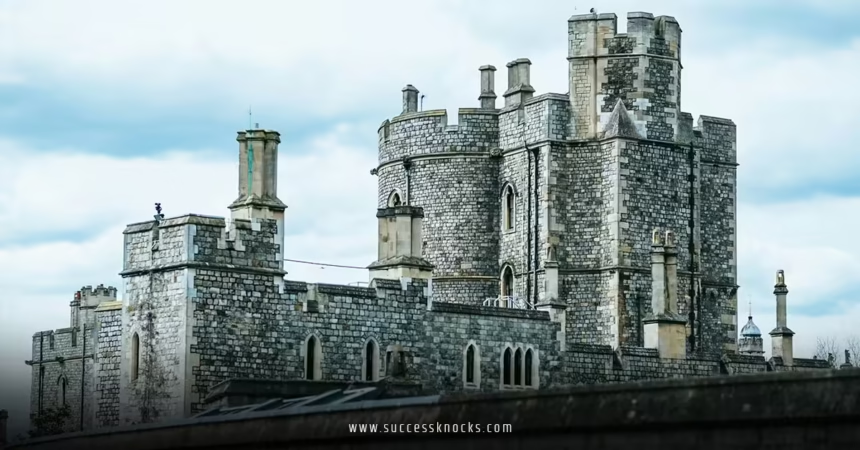
St George’s Chapel Windsor Castle history stretches back over 650 years, making it one of England’s most storied royal buildings. This magnificent Perpendicular Gothic structure stands in the Lower Ward of Windsor Castle and serves as the spiritual home of the Order of the Garter, founded by Edward III in 1348.
It has witnessed coronations of chivalry, royal weddings, state funerals, and the quiet burials of monarchs. Today, it remains an active place of worship while drawing visitors who want to walk through centuries of British royal legacy.
- Origins: Founded in 1348 by Edward III as part of the College of St George, attached to an earlier 13th-century chapel.
- Main Construction: Began in 1475 under Edward IV; completed in 1528 under Henry VIII.
- Architectural Style: Finest surviving example of English Perpendicular Gothic with soaring fan vaulting and large windows.
- Role Today: Chapel of the Order of the Garter, royal mausoleum, and site for major royal events including the 2022 funeral and burial of Queen Elizabeth II.
- Key Feature: Houses the intimate King George VI Memorial Chapel on its north side, the final resting place for George VI, the Queen Mother, Princess Margaret, Prince Philip, and Queen Elizabeth II.
The kicker? This isn’t some dusty museum. Services still happen. The choir sings. Knights of the Garter process in their robes. History lives here.
Early Beginnings: From Edward III to the Order of the Garter
Picture England in the 14th century. Wars with France. Plague. A king looking for symbols of unity and divine favor.
In 1348, Edward III founded the Order of the Garter—the oldest and most prestigious order of chivalry in the world. At the same time, he established the College of St George at Windsor Castle. The college included priests, canons, and a choir to support daily worship and the Order’s ceremonies.
The chapel started life attached to a smaller 13th-century structure built by Henry III, originally dedicated to St Edward the Confessor. Edward III rededicated it to the Virgin Mary, St Edward, and St George—England’s patron saint.
He added the Aerary Porch around 1353–54. But the real transformation came later.
This foundation set the tone: a place where military glory, religious devotion, and royal power intertwined. The Order of the Garter still installs new members here with great pageantry. Banners of current knights hang above the stalls. It’s living tradition, not frozen history.
The Great Rebuild: Edward IV to Henry VIII
Fast forward to 1475. Edward IV—fresh from the Wars of the Roses—wanted a grander setting for his burial and the Order. He commissioned a completely new chapel.
Construction started that year. The choir and aisles were roofed by 1483 (the year Edward IV died and was buried there). The nave followed. Master masons like Henry Janyns and oversight from figures such as Bishop Richard Beauchamp shaped the work.
Henry VII continued the project, with his counselor Sir Reginald Bray playing a major role (the Bray Chapel honors him). Henry VIII finished it in 1528 by adding the magnificent stone fan vaulting over the crossing.
The result? One of the purest and most breathtaking examples of Perpendicular Gothic in Britain. Tall windows flood the space with light. Vertical lines draw the eye upward. Intricate fan vaults spread like stone palm fronds across the ceiling.
Short version: Edward IV started it for glory. Henry VIII completed it with Tudor flair. The building we see today is largely their work.
Architectural Highlights That Still Impress
Walk inside and look up. The fan vaulting steals the show—delicate yet strong, covering the high spaces without clutter.
The west window glows with late 15th-century stained glass. Painted roof bosses tell stories in stone. Choir stalls feature intricate carvings and the stall plates of Garter knights, a colorful record of heraldry spanning centuries.
The quire holds the main altar area. Chantry chapels tuck into corners, including Edward IV’s own. An oriel window, enlarged by Henry VIII, once let Catherine of Aragon watch services in comfort.
Restoration work between 1921 and 1930, led by Sir Harold Brakspear, strengthened foundations and vaults without changing the character.
Here’s a quick breakdown:
| Element | Period | Why It Stands Out |
|---|---|---|
| Fan Vaulting | Completed 1528 | Masterpiece of Perpendicular Gothic |
| Choir Stalls & Banners | 15th–present | Living heraldry of the Order of the Garter |
| West Window | Late 15th century | Rich stained glass |
| Bray Chapel | 15th century | Honors key benefactor Sir Reginald Bray |
| King George VI Memorial Chapel | 1969 | Modern annex for recent royal burials |
The whole space seats around 800. It feels grand but intimate compared to Westminster Abbey.
Royal Burials and the Shift to Windsor
For centuries, Westminster Abbey was the prime royal burial site. That changed in the 15th–19th centuries.
St George’s Chapel became a favored mausoleum. Edward IV lies here. Henry VI’s remains were moved here and once drew pilgrims. Henry VIII and Jane Seymour share a vault in the quire (his grand tomb plans never materialized). Charles I was buried here after his execution—quietly, in an unmarked spot beside Henry VIII.
Later monarchs followed. George III built a new Royal Vault beneath what is now the Albert Memorial Chapel area. Ten sovereigns rest in or near the chapel overall.
The 20th century brought a more personal touch. In 1969, Queen Elizabeth II added the King George VI Memorial Chapel—a small, pale-stone annex on the north side of the main structure. Designed by George Pace, it provides an intimate family space.
King George VI (originally in the Royal Vault) moved there in 1969. The Queen Mother and Princess Margaret (ashes) joined in 2002. Prince Philip was first placed in the Royal Vault in 2021, then moved in 2022 alongside Queen Elizabeth II.
This annex keeps the focus on quiet family continuity rather than grand public display. It sits seamlessly against the medieval walls, a respectful 20th-century footnote to 15th-century grandeur.
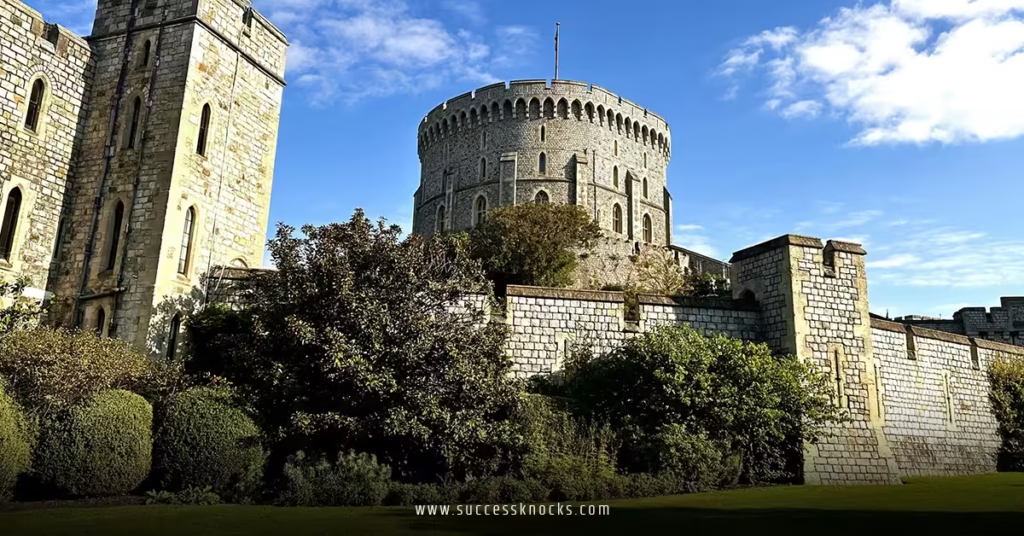
Modern Role: Weddings, Funerals, and Daily Life
St George’s Chapel isn’t just history. It’s active.
Royal weddings here include Prince Edward and Sophie Rhys-Jones (1999), Prince Harry and Meghan Markle (2018), Princess Eugenie and Jack Brooksbank (2018), and others. The setting offers intimacy that larger venues can’t match.
Funerals have equal weight. Prince Philip’s 2021 service. Queen Elizabeth II’s 2022 committal service after her state funeral at Westminster Abbey. Both drew global attention, yet the chapel handled them with dignity.
Daily services continue. The world-class choir performs. Local people worship alongside tourists. It’s a Royal Peculiar—directly under the monarch, not a diocese bishop.
The College of St George still operates, supporting the chapel, school, archives, and Military Knights of Windsor.
Visiting St George’s Chapel Today
Plan your trip right and the experience hits different.
Buy tickets through the official Royal Collection Trust site for Windsor Castle. St George’s Chapel sits in the Lower Ward—easy to reach once inside the grounds.
Opening varies: generally open to ticket holders on certain days (often closed Tuesdays/Wednesdays for visitors, but services welcome all). Check current times because worship or events can affect access. Arrive early—crowds build, and entry sometimes limits after mid-afternoon.
Inside, move respectfully. No flash photography during services. Absorb the light through the windows, the banners overhead, the sheer vertical lift of the architecture.
Pro tip: Combine it with the State Apartments or castle grounds. Spend time in the quire area, then walk around the exterior to spot the pale stone of the King George VI Memorial Chapel on the north side.
If your schedule allows, attend a service. The music and atmosphere turn a tourist stop into something memorable.
Common Mistakes Visitors Make (and Easy Fixes)
- Rushing past details: Many dash through without looking up. Fix: Pause in the nave and quire. Let the fan vaults and light work their magic.
- Wrong day planning: Showing up when the chapel limits visitor access. Fix: Check the Royal Collection Trust or St George’s official site beforehand.
- Ignoring context: Treating it like any old church. Fix: Read a bit about the Order of the Garter or Edward IV first. The stories make the stones speak louder.
- Photography over respect: Snapping during quiet moments. Fix: Follow staff guidance. The experience improves when you slow down.
Key Takeaways
- St George’s Chapel Windsor Castle history begins with Edward III in 1348 and the Order of the Garter.
- The present building rose between 1475 and 1528 under Edward IV, Henry VII, and Henry VIII.
- It showcases outstanding Perpendicular Gothic architecture with fan vaulting as its crowning glory.
- The chapel serves as a royal mausoleum with burials spanning centuries, including a dedicated space in the King George VI Memorial Chapel for the most recent sovereigns.
- It hosts major royal events—weddings and funerals—while remaining an active worship site.
- The Order of the Garter’s traditions continue here through installations, banners, and ceremonies.
- A visit rewards those who take time to notice the light, carvings, and living history.
Conclusion
St George’s Chapel Windsor Castle history isn’t a dry timeline. It’s a building shaped by kings who fought wars, built legacies, and sought places to rest. From Edward III’s chivalric dream to Henry VIII’s vaulted masterpiece to the quiet addition honoring a 20th-century king and his family, it threads personal duty with national symbolism.
Stand inside. Look at the banners of living knights above medieval stalls. See the pale stone extension where Queen Elizabeth II now lies with her parents and husband. You feel the continuity.
Next step? Book your Windsor Castle visit. Walk the Lower Ward. Let the chapel tell its own story in stone and light.
You’ll leave understanding why this place has mattered for over six centuries—and why it still does.
FAQs
1. What is the connection between St George’s Chapel and the King George VI Memorial Chapel?
The King George VI Memorial Chapel is a small, modern annex attached to the north side of St George’s Chapel at Windsor Castle. Built in 1969, it serves as the private family burial place for King George VI, Queen Elizabeth The Queen Mother, Princess Margaret, Prince Philip, and Queen Elizabeth II, while the main St George’s Chapel provides the historic Gothic setting.
2. Who is buried in St George’s Chapel Windsor Castle?
St George’s Chapel contains burials of several English monarchs including Edward IV, Henry VIII and Jane Seymour, and Charles I. However, the most recent royal burials—including Queen Elizabeth II and Prince Philip—are located in the adjacent King George VI Memorial Chapel, which offers a more intimate family vault beneath its floor.
3. When was St George’s Chapel at Windsor Castle built?
Construction of the present St George’s Chapel began in 1475 under Edward IV and was largely completed by 1528 during Henry VIII’s reign. The magnificent Perpendicular Gothic structure, famous for its fan vaulting, has stood for nearly 500 years and continues to serve as an active royal chapel.
4. Can visitors enter the King George VI Memorial Chapel inside St George’s Chapel?
Visitors cannot enter the King George VI Memorial Chapel itself as it is a private royal burial space. However, you can clearly see its pale stone exterior from inside and around St George’s Chapel during your Windsor Castle visit. The main chapel remains open to ticket holders on designated days.
5. Why is St George’s Chapel important for the British royal family?
St George’s Chapel has been the spiritual home of the Order of the Garter since 1348 and a preferred royal mausoleum for centuries. It hosts major events like royal weddings and funerals, and its connection to the King George VI Memorial Chapel makes it the final resting place for the most recent members of the royal family, including Queen Elizabeth II.


