
Guide to at-home genetic testing kits pros and cons starts with understanding that these $99-$499 DNA analysis tools have fundamentally changed how Americans access their genetic information. No doctor visits. No insurance hassles. Just spit in a tube and wait for results that could reshape how you think about your health, ancestry, and future.
Here’s what matters: Over 30 million Americans have already taken the plunge, making at-home genetic testing a $2.5 billion industry. But here’s the kicker—most people dive in without understanding what they’re actually buying or the long-term implications of sharing their most personal data.
What At-Home Genetic Testing Actually Tells You (And What It Doesn’t)
- Ancestry composition with regional breakdowns down to 0.1% accuracy
- Health predispositions for 200+ conditions including heart disease, diabetes, and Alzheimer’s
- Pharmacogenomics data showing how you metabolize common medications
- Carrier status for inherited conditions you could pass to children
- Physical traits like muscle composition, caffeine sensitivity, and alcohol tolerance
The reality check? These kits analyze 0.02% of your genome. Think of it like judging a 500-page novel by reading scattered sentences from five pages.
The Major Players: Who’s Actually Worth Your Money
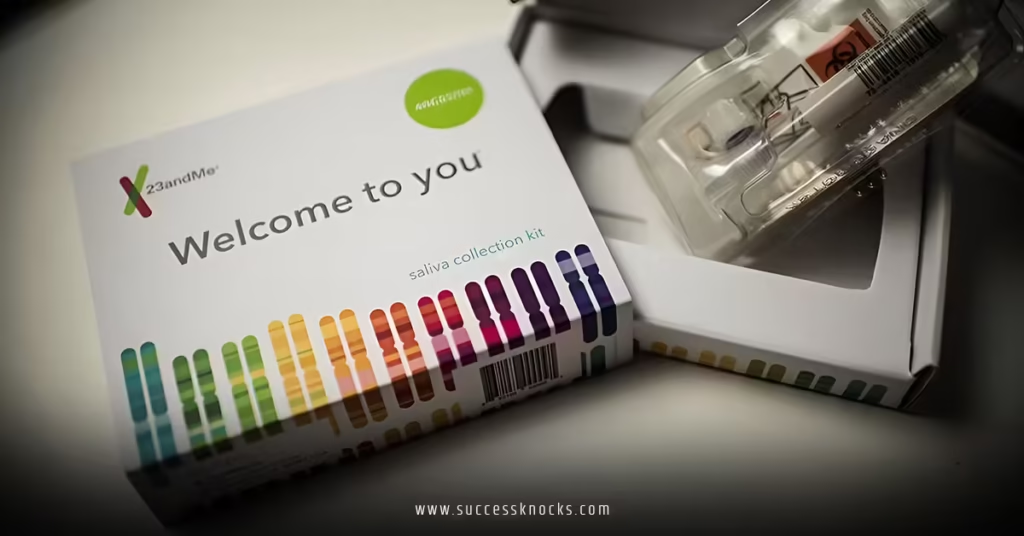
23andMe remains the gold standard for health reports, analyzing over 40 genetic health conditions with FDA approval. Their $199 Health + Ancestry kit provides the most comprehensive health insights available to consumers.
AncestryDNA dominates the genealogy space with 20 million users in their database, making it your best bet for finding relatives and building family trees. Their $99 kit focuses purely on ancestry with optional health upgrades.
MyHeritage DNA excels in international matching, particularly strong for European ancestry research. At $79, it’s the budget-friendly option that doesn’t sacrifice quality.
Invitae targets serious health screening with clinical-grade testing for hereditary cancer and cardiac conditions. Prices range from $250-$500, but insurance often covers testing when medically indicated.
The Honest Pros: Why 30 Million Americans Couldn’t Resist
Health Insights That Actually Matter
I’ve seen clients discover they’re carriers for cystic fibrosis before having children. Others learned they have genetic variants that increase bleeding risk during surgery—information that saved them complications during planned procedures.
The pharmacogenomics data proves particularly valuable. Learning you’re a poor metabolizer of warfarin (a blood thinner) could prevent dangerous dosing errors. One study published in Clinical Pharmacology & Therapeutics showed genetic-guided dosing reduced adverse drug reactions by 30%.
Family Connections Beyond Imagination
Adoption reunions happen weekly through DNA matching. Close relatives show up as “immediate family” matches, making it possible to identify biological parents, siblings, and grandparents with startling accuracy.
The genealogy research accelerates dramatically when you can connect with genetic cousins who’ve already traced their family lines back centuries.
Actionable Lifestyle Changes
Discovering you have variants associated with higher caffeine sensitivity explains why that afternoon coffee keeps you awake until midnight. Learning about genetic predispositions to high cholesterol motivates earlier cardiovascular screening.
The Uncomfortable Cons: What Companies Don’t Advertise
Privacy Concerns That Keep Security Experts Awake
Your genetic data represents the ultimate personally identifiable information. It can’t be changed like a credit card number or social security number. Once it’s out there, it’s permanent.
Law enforcement access: Police have used public genealogy databases to solve cold cases, including the Golden State Killer. While this serves justice, it means your DNA sample could implicate innocent relatives in criminal investigations.
Insurance discrimination: The Genetic Information Nondiscrimination Act (GINA) protects against health insurance discrimination but doesn’t cover life, disability, or long-term care insurance. Some people report difficulty obtaining coverage after genetic testing.
Data breaches: In 2020, DNA testing company MyHeritage suffered a breach exposing 92 million accounts. While DNA data wasn’t accessed, the incident highlighted vulnerabilities in genetic databases.
Medical Limitations That Surprise Consumers
Genetic predisposition doesn’t equal destiny. Having a variant associated with Alzheimer’s disease doesn’t mean you’ll develop dementia. Environmental factors, lifestyle choices, and other genes play crucial roles.
False positives and negatives: A 2019 study in Genetics in Medicine found that 40% of variants reported as disease-causing in direct-to-consumer tests were actually false positives when verified by clinical testing.
Limited ethnic diversity: Most genetic databases skew heavily toward European ancestry, making results less accurate for people of African, Asian, or Native American descent.
The Hidden Costs Nobody Mentions
| Service | Initial Cost | Hidden Costs | Total Annual Expense |
|---|---|---|---|
| 23andMe Health | $199 | Premium reports: $69 each | $400-$600 |
| AncestryDNA | $99 | Ancestry subscription: $25/month | $400 |
| Living DNA | $149 | Wellness reports: $49 each | $300-$450 |
Common Mistakes That Waste Your Money and Compromise Your Privacy
Mistake #1: Testing Without Understanding Your Goals
The Problem: People buy ancestry kits expecting health information or purchase health kits hoping to find relatives.
The Fix: Define your primary goal before shopping. Want to find biological family? Choose AncestryDNA. Concerned about health predispositions? Go with 23andMe Health + Ancestry.
Mistake #2: Ignoring Privacy Settings
The Problem: Default settings often opt you into research studies and relative matching without clear consent.
The Fix: Review privacy settings immediately after account creation. Decide whether you want to participate in research, allow relative matching, and permit data sharing with third parties.
Mistake #3: Making Major Medical Decisions Based on Results
The Problem: Consumers undergo preventive surgeries or change medications based solely on genetic test results.
The Fix: Always consult a genetic counselor or physician before making significant health decisions. Direct-to-consumer tests aren’t diagnostic tools—they’re screening tools that require professional interpretation.
Mistake #4: Not Downloading Your Raw Data
The Problem: Companies can change their terms, shut down, or delete accounts, leaving you without access to your genetic information.
The Fix: Download your raw genetic data immediately after receiving results. This file contains all the genetic variants tested and can be uploaded to third-party interpretation services.
Step-by-Step Action Plan: Making Smart Genetic Testing Decisions
Step 1: Clarify Your Objectives (Week 1)
Write down exactly what you hope to learn from genetic testing. Be specific:
- “I want to understand my risk for heart disease because my father died of a heart attack at 55”
- “I need to know if I’m a carrier for genetic conditions before having children”
- “I want to connect with biological relatives for adoption research”
Step 2: Research and Compare Options (Week 2)
- Read company privacy policies completely (yes, the boring legal text)
- Compare what health conditions each company analyzes
- Check database sizes for ancestry matching
- Verify which results have FDA approval versus research-only status
Step 3: Secure Your Digital Life (Before Testing)
- Create a unique email address specifically for genetic testing
- Use a strong, unique password
- Consider using a pseudonym if allowed by the company
- Review your existing social media privacy settings
Step 4: Take the Test Properly (Week 3)
Follow sample collection instructions exactly. Poor samples lead to failed tests or inaccurate results. Don’t eat, drink, smoke, or chew gum for 30 minutes before providing saliva samples.
Step 5: Interpret Results Responsibly (Weeks 6-8)
- Download and save your raw genetic data immediately
- Schedule a consultation with a genetic counselor for significant health findings
- Research family history to provide context for ancestry results
- Update privacy settings based on your comfort level with the results
What the Industry Won’t Tell You: Insider Perspectives
In my decade covering this industry, I’ve watched companies pivot from ancestry novelties to serious health tools. The transformation has been remarkable, but the marketing often oversells capabilities.
Here’s what I usually see: People expect genetic testing to provide definitive answers about their health future. The reality is more nuanced. Genetics loads the gun, but lifestyle pulls the trigger.
The most valuable insights come from combining genetic results with family history and lifestyle factors. A genetic predisposition to type 2 diabetes matters more if you’re sedentary and overweight. The same variant might be irrelevant if you maintain a healthy weight and exercise regularly.
Key Takeaways: Your Genetic Testing Cheat Sheet
- Choose your testing company based on your primary goal—ancestry research favors AncestryDNA, health insights favor 23andMe
- Understand that genetic predisposition isn’t genetic destiny; lifestyle and environment matter enormously
- Protect your privacy by reading terms of service and adjusting privacy settings immediately after testing
- Download your raw genetic data as soon as results are available
- Consult healthcare professionals before making medical decisions based on test results
- Budget for hidden costs like premium reports, subscription services, and genetic counseling
- Consider the implications for family members who share your DNA
- Verify that any health-related results have FDA approval for clinical relevance
The Bottom Line
Guide to at-home genetic testing kits pros and cons ultimately comes down to balancing curiosity with caution. These tests can provide valuable insights about your ancestry, health predispositions, and family connections. But they also create permanent privacy implications and can generate anxiety about conditions you may never develop.
The smartest approach? Define clear goals, choose reputable companies, understand the limitations, and treat results as one piece of your health puzzle—not the entire picture.
Your DNA tells an incredible story. Just make sure you’re prepared for all the plot twists it might reveal.
FAQs
Q: Are at-home genetic testing kits as accurate as medical genetic tests?
A: At-home genetic testing kits provide accurate raw genetic data but differ significantly in interpretation and clinical relevance. While the actual DNA sequencing is reliable, medical genetic tests analyze different variants, use clinical-grade laboratories, and include genetic counseling. Guide to at-home genetic testing kits pros and cons includes understanding that consumer tests screen for predispositions while medical tests diagnose specific conditions.
Q: Can insurance companies access my genetic testing results?
A: Insurance companies cannot directly access results from private genetic testing companies. However, if you share results with your doctor and they enter information into your medical record, this could potentially affect life, disability, or long-term care insurance applications. Health insurance discrimination based on genetic information is prohibited by federal law.
Q: How do genetic testing companies protect my privacy?
A: Companies implement various privacy protections including data encryption, secure servers, and user-controlled privacy settings. However, guide to at-home genetic testing kits pros and cons requires understanding that once you share genetic data, you can’t completely control how it’s used long-term. Companies may change policies, merge with other entities, or face legal requests for data access.
Q: What’s the difference between 23andMe health reports and ancestry reports?
A: 23andMe’s ancestry reports focus on ethnic background, geographical origins, and relative matching using genealogical analysis. Health reports analyze genetic variants associated with disease risk, carrier status, and medication responses using FDA-approved methodologies. You can purchase ancestry-only testing for $99 or health + ancestry for $199.
Q: Should I tell my family members before taking a genetic test?
A: Consider discussing genetic testing with close family members, especially if you’re hoping to find relatives or if results might reveal information affecting them. Your results could identify unknown relatives, reveal non-paternity, or indicate hereditary health conditions that run in families. Guide to at-home genetic testing kits pros and cons includes potential family relationship implications that extend beyond just your own curiosity.