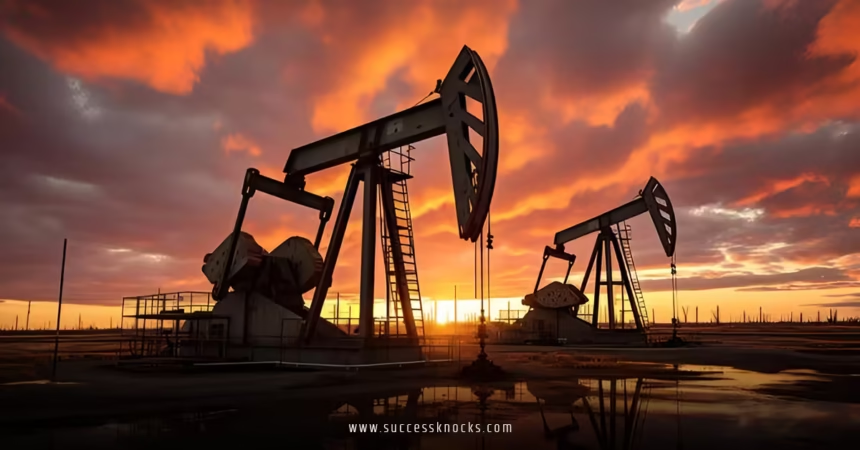
Strategic Petroleum Reserve oil release process represents the United States’ primary weapon against oil price shocks and supply disruptions. When global crises threaten energy security—from hurricanes to geopolitical tensions—this massive underground storage system springs into action to stabilize markets and protect American consumers.
Here’s what every American should understand about this critical energy infrastructure:
- Scale is enormous: 714 million barrels stored in underground salt caverns across Texas and Louisiana
- Release capacity is substantial: Up to 4.4 million barrels daily through existing infrastructure
- Authority is centralized: Only the President can order emergency releases
- Purpose is dual: Both supply replacement and market psychology management
- Effectiveness is proven: Successfully deployed during Gulf Wars, hurricanes, and COVID-19
What Is the Strategic Petroleum Reserve Oil Release Process?
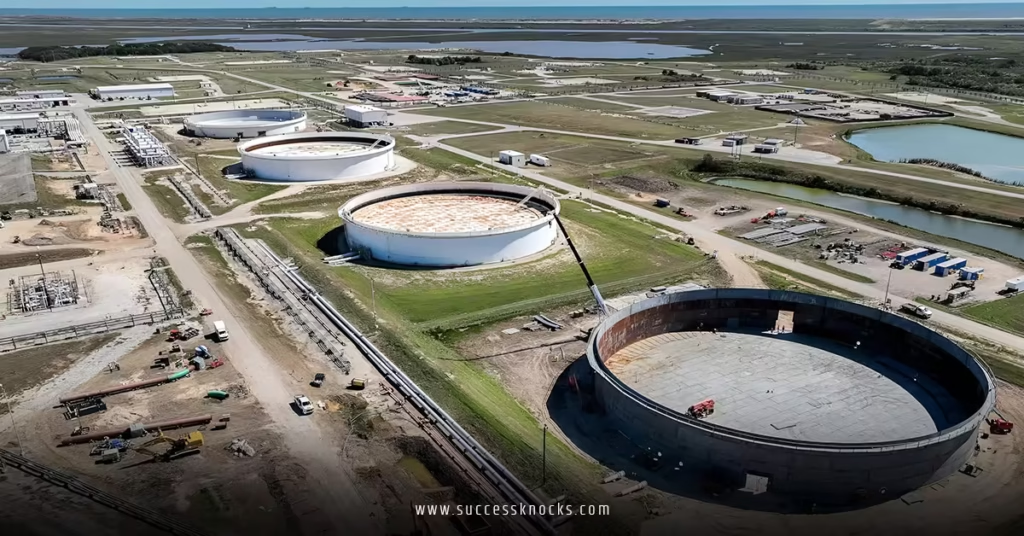
The Strategic Petroleum Reserve (SPR) functions as America’s energy insurance policy. Created after the 1973 oil embargo, this system stores crude oil in four underground facilities along the Gulf Coast.
Think of it as a giant underground oil bank. During normal times, the caverns sit full, waiting. When crisis strikes, sophisticated pumping systems can extract millions of barrels daily and inject them directly into the nation’s refining network.
The release process isn’t just about physical oil—it’s about market confidence. Even announcing a potential release can calm nervous traders and stabilize prices before a single barrel flows.
The Legal Framework
Three types of releases are possible under federal law:
- Emergency releases: Presidential authority during supply disruptions
- Test sales: Regular operational checks and system maintenance
- Congressional mandates: Sales ordered by Congress for budget reasons
Strategic Petroleum Reserve Oil Release Process: Step-by-Step
Phase 1: Trigger Event Assessment (Hours to Days)
The Department of Energy monitors global oil markets 24/7. When potential disruptions emerge, analysts assess:
- Severity of supply threat: How many barrels are at risk?
- Duration estimates: Temporary versus sustained disruption
- Market reaction intensity: Are prices spiking beyond fundamentals?
- Alternative response options: Can allies or private industry fill gaps?
Phase 2: Presidential Decision (Hours to Days)
Only the President can authorize emergency SPR releases. The decision weighs multiple factors:
Economic impact: Will higher oil prices significantly harm the U.S. economy? Strategic timing: Is this the most effective moment to deploy reserves? International coordination: Are allies releasing from their reserves simultaneously? Domestic politics: What are the electoral and policy implications?
Phase 3: Announcement and Market Response (Minutes to Hours)
Once decided, the administration announces the release through multiple channels:
- Presidential statements: Direct communication to signal resolve
- Department of Energy press releases: Technical details and timelines
- Industry notifications: Alerts to refiners and distributors
- International coordination: Synchronized messaging with allies
Oil markets typically react within minutes. Even before physical oil flows, prices often stabilize or decline based on increased supply expectations.
Phase 4: Physical Oil Release (Days to Weeks)
The actual oil extraction involves sophisticated engineering:
| Release Method | Capacity | Timeline | Best Use Case |
|---|---|---|---|
| Pipeline injection | 4.4 million barrels/day | Immediate | Rapid market stabilization |
| Marine terminal loading | 1.5 million barrels/day | 2-3 days | Targeted regional supply |
| Truck/rail loading | 100,000 barrels/day | 1-2 days | Emergency local distribution |
Phase 5: Market Integration (Weeks to Months)
Released oil enters the commercial market through established channels:
Refinery delivery: Most SPR oil goes directly to Gulf Coast refineries via pipeline Crude oil exchanges: Some volumes are traded on spot markets Product distribution: Refined gasoline and diesel reach retail markets within 1-2 weeks
Historical Strategic Petroleum Reserve Oil Release Process Events
Gulf War (1991) – First Major Test
Release volume: 33.75 million barrels Duration: 5 months Market impact: Oil prices dropped from $32 to $20 per barrel within days of announcement
This inaugural use established the SPR’s credibility. The mere announcement that America would release reserves helped calm panicked markets faster than the physical oil delivery.
Hurricane Katrina (2005) – Domestic Emergency
Release volume: 11 million barrels Challenge: Gulf Coast refining capacity was damaged by the storm Innovation: Emergency exchanges with private companies to keep refineries operating
Here’s what worked: The SPR provided crude oil to refineries that had lost their normal supply sources, preventing a complete gasoline shortage across the Southeast.
Libya Crisis (2011) – International Coordination
Release volume: 30.6 million barrels (U.S. portion) Global coordination: 60 million barrels total with International Energy Agency Market result: Oil prices fell $7 per barrel within 24 hours
This release demonstrated how coordinated international action amplifies individual country impacts.
COVID-19 Recovery (2021-2022) – Record Release
Release volume: 180 million barrels announced Duration: 6 months Context: Post-pandemic demand surge met constrained supply
The controversy: Critics argued this was more about domestic politics than genuine emergency, highlighting ongoing debates about appropriate SPR use.
How Strategic Petroleum Reserve Oil Release Process Affects Your Gas Station
Direct Price Impact
SPR releases don’t immediately lower gas prices, but they prevent extreme spikes. Think of it as a price ceiling rather than a price reducer.
Realistic expectations: A 30-60 million barrel release might prevent gas prices from rising 30-50 cents per gallon during a crisis, but won’t necessarily make them fall.
Regional Variations
Gulf Coast refineries receive SPR oil first, so Texas, Louisiana, and nearby states see initial benefits. Other regions benefit as market pressures equalize over 2-3 weeks.
Timing Matters
Releases during driving season (summer) or heating season (winter) have greater economic impact than those during periods of lower demand.
Current Strategic Petroleum Reserve Oil Release Process Capabilities
As of 2026, the SPR faces both strengths and limitations:
Strengths:
- Massive capacity: 714 million barrels represents 35-40 days of total U.S. oil imports
- Rapid deployment: Maximum release rate exceeds daily import volume
- Strategic location: Gulf Coast proximity to major refining centers
- Proven track record: Multiple successful deployments across different crisis types
Limitations:
- Finite volume: Extended releases could deplete reserves within months
- Infrastructure constraints: Pipeline capacity limits maximum flow rates
- Crude oil type: SPR holds mostly heavy crude; some refineries prefer light sweet crude
- Political considerations: Release decisions involve non-economic factors
The Economics of Strategic Petroleum Reserve Oil Release Process
Cost-Benefit Analysis
Every SPR release involves economic trade-offs:
Immediate benefits: Lower oil prices, reduced economic disruption, market stability Long-term costs: Depleted emergency reserves, replacement oil purchases, political capital
The Department of Energy estimates that major releases provide $3-5 in economic benefits for every $1 in operational costs.
Market Psychology Component
Often, the announcement matters more than the actual oil. Traders know the U.S. has backup supplies, which reduces panic buying and speculative price spikes.
Case study: During the 2019 attack on Saudi oil facilities, the Trump administration’s promise to use the SPR “if needed” helped limit oil price increases before any actual release occurred.
Key Takeaways: Strategic Petroleum Reserve Oil Release Process
- Presidential power is absolute: Only the Commander-in-Chief can authorize emergency releases
- Speed trumps volume: Quick announcements often matter more than large quantities
- International coordination multiplies impact: Allied releases create bigger market effects
- Geography determines effectiveness: Gulf Coast refineries benefit first and most
- Market psychology is crucial: Confidence effects often exceed physical supply effects
- Timing affects outcomes: Releases during high-demand periods have greater impact
- Finite resource requires strategic use: Each release reduces future crisis response capacity
- Political factors influence decisions: Energy policy intersects with electoral politics
Common Mistakes About Strategic Petroleum Reserve Oil Release Process
Mistake 1: “SPR Releases Always Lower Gas Prices Immediately”
Reality check: Releases primarily prevent price increases during supply disruptions. Actual price decreases depend on market conditions and release size.
The fix: Expect price stabilization within days, modest decreases within weeks, not immediate dramatic relief.
Mistake 2: “The President Can Release Oil Anytime”
Reality check: While legally possible, inappropriate releases face congressional oversight and public criticism.
The fix: Understand that political and economic constraints limit when releases make strategic sense.
Mistake 3: “SPR Oil Goes Directly to Gas Stations”
Reality check: SPR oil is crude petroleum that must be refined into gasoline, diesel, and other products before reaching consumers.
The fix: Allow 2-3 weeks from release announcement to retail gas station impact.
Mistake 4: “Bigger Releases Always Work Better”
Reality check: Market psychology and timing often matter more than raw volume. A well-timed smaller release can be more effective than a poorly timed larger one.
The fix: Focus on appropriateness and coordination rather than just barrel counts.
Strategic Petroleum Reserve Oil Release Process Versus International Alternatives
International Energy Agency Coordination
The U.S. works with 30 allied nations through the International Energy Agency to coordinate strategic reserve releases.
Collective capacity: IEA members control roughly 4 billion barrels of strategic reserves Coordination benefits: Synchronized releases prevent oil from simply shifting between markets Political advantages: Shared action reduces pressure on individual countries
OPEC Response Dynamics
When consuming countries release strategic reserves, OPEC producers often reduce output to maintain price levels. This creates an ongoing strategic chess match between reserve-holding consumers and oil-producing nations.
Action Plan: How to Prepare for Strategic Petroleum Reserve Oil Release Process Events
For Consumers:
- Monitor geopolitical news that could trigger SPR releases (Middle East tensions, major storms, refinery outages)
- Understand timing delays between release announcements and retail price effects
- Don’t panic buy during crises—SPR releases are designed to prevent shortages
- Track SPR inventory levels through DOE weekly reports to understand available capacity
- Budget for temporary price spikes even with SPR releases active
For Businesses:
- Incorporate SPR scenarios into energy cost planning and risk management
- Understand regional impact timing based on your proximity to Gulf Coast refineries
- Monitor announcement channels for early warning of potential releases
- Coordinate with suppliers on how SPR releases affect fuel surcharge policies
- Consider SPR depletion risks when evaluating long-term energy security
The Strategic Connection: Oil Prices Strait of Hormuz Disruption Impact
The Strategic Petroleum Reserve oil release process becomes critically important during Strait of Hormuz crises. When tensions threaten this vital shipping channel, the SPR serves as America’s first line of defense against supply disruptions.
The relationship is direct: Oil prices Strait of Hormuz disruption impact scenarios represent exactly the type of crisis the SPR was designed to address. A sustained Strait closure could remove 15-17 million barrels daily from global markets—a disruption requiring massive coordinated reserve releases from multiple countries.
Historical precedent supports this connection. During the 1987-1988 Tanker War in the Persian Gulf, the newly-created SPR provided market confidence even though no releases occurred. The mere existence of strategic reserves helped prevent panic buying and extreme price volatility.
Technology and Future Evolution
Modern SPR operations increasingly rely on advanced monitoring and automation systems. Real-time inventory tracking, automated release systems, and predictive analytics help optimize release timing and volumes.
Emerging considerations: Climate change policies, electric vehicle adoption, and renewable energy growth may reshape SPR’s strategic role over the coming decades. However, the transition away from oil will take decades, ensuring the SPR remains relevant through at least 2050.
Conclusion
Strategic Petroleum Reserve oil release process represents one of America’s most powerful tools for managing energy crises and protecting economic stability. While not a magic solution for high gas prices, the SPR provides crucial market confidence and supply flexibility during genuine emergencies.
The bottom line: Understanding how the SPR works helps you anticipate government responses during energy crises and set realistic expectations for relief timing. When headlines scream about oil supply disruptions, remember that America maintains a massive underground insurance policy specifically designed for such moments.
The SPR won’t eliminate oil price volatility, but it prevents the catastrophic spikes that could cripple the economy during major supply disruptions.
Frequently Asked Questions
Q: How quickly can the Strategic Petroleum Reserve oil release process begin after a Presidential order?
A: Physical oil can begin flowing within 13 days of a release order through existing pipeline infrastructure. However, market impacts often occur within hours of the announcement alone.
Q: Does the Strategic Petroleum Reserve oil release process work differently for different types of emergencies?
A: Yes. Hurricane-related releases focus on replacing lost Gulf Coast production, while geopolitical releases aim to offset international supply disruptions. The distribution methods and target markets vary accordingly.
Q: Can individual states request Strategic Petroleum Reserve oil release process activation?
A: No. Only the federal government can authorize SPR releases. However, states can request federal emergency assistance that might include SPR deployment as part of broader disaster response.
Q: How does the Strategic Petroleum Reserve oil release process affect other countries’ oil prices?
A: SPR releases affect global oil markets because petroleum is internationally traded. However, the impact is strongest in North America due to transportation costs and regional market dynamics.
Q: Will Strategic Petroleum Reserve oil release process become less important as America increases domestic oil production?
A: Domestic production reduces import dependence but doesn’t eliminate SPR importance. Oil remains globally priced, so international disruptions still affect U.S. markets regardless of production levels.