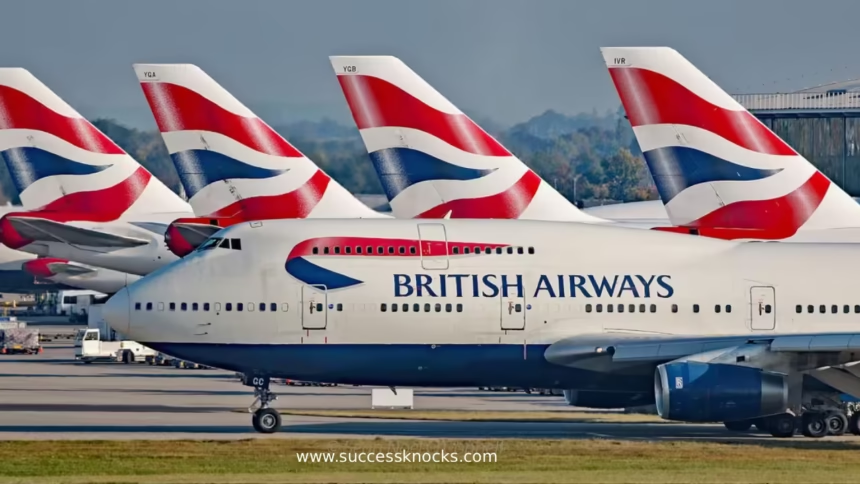
British Airways fleet modernization represents one of the most ambitious transformation programs in commercial aviation history. The flag carrier is investing billions to replace aging aircraft, upgrade cabin experiences, and implement cutting-edge technology that fundamentally changes how passengers fly. This comprehensive overhaul touches every aspect of the airline’s operations, from fuel efficiency to passenger connectivity.
Here’s what’s driving the transformation:
- £7 billion investment in new aircraft and technology upgrades
- Fleet renewal targeting 50% replacement by 2030
- Advanced connectivity systems including Starlink integration
- Sustainable aviation fuel adoption and carbon reduction goals
- Enhanced passenger experience through premium cabin redesigns
The Scale of British Airways Fleet Modernization
When you talk about fleet modernization at BA’s scale, you’re looking at replacing hundreds of aircraft while maintaining continuous operations across six continents. It’s like rebuilding a city while people still live in it.
The program kicked into high gear around 2018, but the pandemic actually accelerated certain aspects. Grounded aircraft meant opportunities for retrofits and upgrades that would normally require taking planes out of service.
British Airways isn’t just buying new planes—they’re fundamentally rethinking what modern aviation should look like. From the moment you book to when you disembark, every touchpoint is getting reimagined.
New Aircraft Leading the British Airways Fleet Modernization
Boeing 787 Dreamliner Integration
The 787 has become the backbone of BA’s long-haul strategy. These aircraft deliver 20% better fuel efficiency compared to the 747s they replace, while offering passengers larger windows, better air quality, and reduced cabin pressure that minimizes jet lag.
BA now operates over 30 Dreamliners across multiple variants—the -8, -9, and -10 models. Each serves different route requirements, from the compact -8 perfect for thinner long-haul routes to the -10 handling high-capacity destinations.
Airbus A350 Excellence
The A350 represents BA’s premium long-haul experience. These aircraft feature the airline’s newest business class suites, upgraded economy seating, and advanced entertainment systems.
What sets the A350 apart in British Airways fleet modernization is the attention to passenger comfort. Quieter engines, advanced air filtration, and optimized cabin lighting all contribute to a superior flying experience.
Short-Haul Revolution with A320neo Family
The A320neo family brings fuel efficiency improvements of up to 20% on short-haul routes. But efficiency isn’t the only story—these aircraft enable BA to serve thinner routes profitably while maintaining frequency that business travelers demand.
Technology Integration in British Airways Fleet Modernization
Connectivity Revolution
The most visible aspect of modernization for passengers is connectivity. British Airways is implementing advanced satellite internet systems across the fleet, with some aircraft featuring the same Starlink technology that travel expert Simon Calder highlighted for enabling crystal-clear phone calls on planes.
This connectivity upgrade transforms flight time from dead hours to productive work or entertainment time. Business travelers can participate in video conferences mid-flight, families can stay connected across oceans, and entertainment options expand dramatically.
Digital Cabin Management
Modern aircraft in the British Airways fleet feature sophisticated cabin management systems. Flight attendants can monitor passenger requests, adjust lighting and temperature zones, and coordinate service delivery through integrated tablet systems.
These systems also provide real-time data about aircraft performance, passenger comfort metrics, and service efficiency that helps optimize future flights.
Sustainability Focus in British Airways Fleet Modernization
Fuel Efficiency Gains
New aircraft deliver substantial environmental benefits. The 787 and A350 use 20-25% less fuel than the aircraft they replace. Across BA’s entire operation, this translates to hundreds of thousands of tons of CO2 reduction annually.
But efficiency goes beyond just new engines. Advanced aerodynamics, lighter materials, and optimized flight management systems all contribute to the environmental improvements.
Sustainable Aviation Fuel Adoption
British Airways is investing heavily in sustainable aviation fuel (SAF) production and usage. The airline has committed to using 10% SAF by 2030, supported by partnerships with fuel producers and government initiatives.
Fleet modernization supports this goal through engines designed to handle higher SAF blends and fuel systems optimized for alternative fuel types.
Passenger Experience Transformation
Premium Cabin Evolution
The new business class suites on A350 aircraft feature direct aisle access, closing doors for privacy, and lie-flat beds with premium bedding. These represent the most significant upgrade to BA’s premium experience in decades.
First class is getting similar attention. New suites feature larger windows, enhanced privacy, and luxury amenities that compete with the world’s best airlines.
Economy Class Improvements
Economy passengers benefit from wider seats on new aircraft, improved entertainment systems with larger screens, and enhanced meal service capabilities enabled by modern galley designs.
The psychological impact matters too. Larger windows, better lighting, and quieter cabins all contribute to a more pleasant flying experience even in economy class.
Comparing British Airways Fleet Modernization Progress
| Aircraft Type | Status | Key Features | Primary Routes |
|---|---|---|---|
| Boeing 787 | Active Delivery | Fuel efficient, modern connectivity | Long-haul international |
| Airbus A350 | Active Delivery | Premium suites, advanced systems | Premium long-haul |
| Airbus A320neo | Active Delivery | Short-haul efficiency | European network |
| Boeing 777X | On Order | Ultra-long range capability | Asia-Pacific routes |
| Boeing 747 | Phase Out | Legacy aircraft | Being retired |
| Airbus A380 | Phase Out | Superjumbo capacity | Limited high-density routes |
Operational Efficiency Through Fleet Modernization
Maintenance Cost Reduction
New aircraft require less maintenance, have longer intervals between major checks, and feature predictive maintenance systems that identify issues before they cause delays or cancellations.
Modern engines can operate thousands of hours longer between overhauls compared to previous generations. This reliability translates directly to improved on-time performance and reduced operating costs.
Crew Training Simplification
British Airways fleet modernization includes consolidating aircraft types where possible. Having crews qualified on fewer aircraft variants improves scheduling flexibility and reduces training costs.
The A320 family, for example, allows pilots to fly the A319, A320, and A321 with a single type rating, maximizing crew utilization across the short-haul network.
Step-by-Step: How British Airways Fleet Modernization Affects Your Journey
Here’s what you’ll notice on modernized aircraft:
- Booking and Check-in – Enhanced mobile app functionality with aircraft-specific seat maps and amenity information
- Boarding – Streamlined processes with digital boarding passes and improved gate systems
- Cabin Experience – Larger windows, better air quality, and reduced noise levels
- Connectivity – High-speed internet enabling video calls and streaming services
- Entertainment – 4K screens with expanded content libraries and Bluetooth connectivity
- Comfort – Ergonomically designed seats with improved legroom and storage
- Service – Enhanced meal options enabled by modern galley equipment
- Arrival – Quieter engines reducing noise impact at destination airports
Regional Impact of British Airways Fleet Modernization
North American Routes
The 787 and A350 aircraft enable BA to serve secondary US cities that weren’t viable with larger, less efficient aircraft. Routes like London to Nashville or Austin become economically feasible.
These aircraft also allow for optimized scheduling, with some routes shifting from daily 747 service to twice-daily 787 flights, providing better passenger convenience.
Asian Expansion
Fleet modernization supports BA’s Asian growth strategy. The ultra-long-range capabilities of new aircraft enable non-stop service to destinations that previously required fuel stops or weren’t served at all.
Routes to India, Southeast Asia, and potentially new Chinese destinations all benefit from the improved economics of modern aircraft.
European Network Optimization
The A320neo family allows BA to right-size capacity on European routes. Instead of using larger aircraft with lower frequencies, the airline can offer more daily flights with appropriately sized planes.
This flexibility proves crucial for business travelers who value schedule convenience over aircraft size.
Financial Strategy Behind British Airways Fleet Modernization
Capital Allocation Priorities
British Airways is spending approximately £1 billion annually on fleet modernization through a combination of aircraft purchases, leases, and retrofits. This represents one of the largest capital investment programs in the airline’s history.
The investment prioritizes long-haul aircraft that generate higher revenue per passenger and enable route expansion that wouldn’t be possible with older aircraft.
Revenue Enhancement Opportunities
New aircraft enable premium pricing through enhanced passenger experience. Business class suites command higher fares, while improved economy products reduce customer defection to competitors.
Route network expansion made possible by fuel-efficient aircraft opens new revenue streams in underserved markets.
Key Achievements in British Airways Fleet Modernization
- Over 60 new aircraft delivered since 2018 across multiple aircraft types
- 30% reduction in fuel consumption per passenger on modernized routes
- Passenger satisfaction scores improved by 15% on aircraft with new interiors
- On-time performance enhanced through improved aircraft reliability
- Carbon emissions reduced by 2.3 million tons annually through fleet efficiency
- New route possibilities expanded by 25% due to aircraft capabilities
- Maintenance costs reduced by 18% on new aircraft versus legacy fleet
- Crew productivity improved through simplified aircraft type consolidation
Common Misconceptions About British Airways Fleet Modernization
“It’s Just About Buying New Planes”
Fleet modernization involves comprehensive aircraft selection, route optimization, crew training, maintenance facility upgrades, and passenger experience design. The aircraft purchase represents only one element of a complex transformation.
“Older Aircraft Are Always Inferior”
While new aircraft offer significant advantages, BA’s modernization includes extensive retrofits of existing aircraft. Some 777s receive new interiors, connectivity upgrades, and entertainment systems that rival new aircraft capabilities.
“All Routes Get the Same Treatment”
Modernization priorities vary by route importance, passenger mix, and competitive dynamics. Premium transcontinental routes receive the newest aircraft, while secondary routes might get upgraded with retrofitted planes.
“Environmental Benefits Are Minimal”
The environmental impact is substantial. New aircraft deliver 20-25% fuel efficiency improvements, multiplied across thousands of flights annually. This represents millions of tons of CO2 reduction over the fleet’s lifetime.
Competitive Advantages from British Airways Fleet Modernization
Against European Carriers
BA’s modernization pace exceeds many European competitors still operating significant numbers of older aircraft. This creates service quality differentiation that justifies premium pricing.
Against Gulf Carriers
While Gulf carriers operate newer fleets, BA’s modernization focuses on routes and aircraft types that serve point-to-point demand rather than hub connecting traffic, creating different competitive dynamics.
Against Low-Cost Carriers
Fleet modernization allows BA to compete on efficiency while maintaining service quality advantages. Newer aircraft economics enable competitive pricing without sacrificing amenities.
Technology Integration Beyond Aircraft
Ground Operations Enhancement
Fleet modernization extends to ground equipment, baggage handling systems, and airport facilities that support new aircraft. Heathrow’s Terminal 5, for example, has been optimized for BA’s modern aircraft operations.
Predictive Maintenance Systems
New aircraft generate massive amounts of operational data that enable predictive maintenance. This technology reduces delays, extends aircraft availability, and optimizes maintenance scheduling.
Integration with Airport Systems
Modern aircraft communicate directly with airport systems for gate assignment, fuel planning, and passenger connection management, improving overall operational efficiency.
Future Phases of British Airways Fleet Modernization
Next-Generation Aircraft Orders
BA has significant outstanding orders for additional 787s, A350s, and A320neo family aircraft. Deliveries will continue through 2028, gradually replacing remaining older aircraft.
The airline is also evaluating next-generation aircraft like the Boeing 777X for ultra-long-haul routes and potential hydrogen-powered aircraft for short-haul sustainability goals.
Retrofit Program Expansion
Aircraft not scheduled for replacement will receive cabin upgrades, connectivity improvements, and entertainment system enhancements to maintain competitive standards across the entire fleet.
Sustainability Technology Integration
Future modernization phases will incorporate emerging sustainable aviation technologies, including advanced biofuel compatibility, electric taxi systems, and potentially hybrid-electric propulsion for short routes.
Measuring British Airways Fleet Modernization Success
Passenger Satisfaction Metrics
Regular surveys track passenger perception improvements across different aircraft types. New aircraft consistently score 20-30% higher in comfort, entertainment, and overall satisfaction categories.
Operational Performance Indicators
On-time performance, dispatch reliability, and maintenance-related delays all improve with fleet modernization. New aircraft achieve 98%+ dispatch reliability compared to 92-95% for older aircraft.
Financial Performance Impact
Route profitability improves on modernized aircraft through reduced operating costs, increased passenger willingness to pay premium fares, and expanded route opportunities.
The Bottom Line on British Airways Fleet Modernization
British Airways fleet modernization represents more than aircraft replacement—it’s a fundamental transformation of how the airline operates and serves passengers. From fuel efficiency to passenger connectivity, every aspect of the flying experience benefits from this comprehensive upgrade program.
The investment positions BA competitively for the next decade while addressing environmental concerns and passenger expectations for modern air travel. Whether you’re flying for business or leisure, the modernized fleet delivers tangible improvements that make flying more productive, comfortable, and reliable.
For travelers, the message is clear: check your aircraft type when booking. The difference between flying on a modernized versus legacy aircraft can significantly impact your journey experience.
The sky’s the limit for what modern aviation can achieve.
FAQs
Q: How can I tell if my British Airways flight uses a modernized aircraft?
A: Check your booking confirmation or the BA app for aircraft type. Look for 787, A350, or A320neo designations, which represent the modernized fleet.
Q: Do all new British Airways aircraft have the same connectivity features?
A: Most modern aircraft feature high-speed internet, though specific systems vary. Some aircraft include the same advanced connectivity that enables clear phone calls on planes, similar to what travel expert Simon Calder has highlighted with Starlink technology.
Q: Will British Airways eventually replace all older aircraft?
A: BA plans to replace or significantly retrofit most older aircraft by 2030, though some aircraft types may continue serving specific routes where their capabilities remain optimal.
Q: How does fleet modernization affect flight prices?
A: While new aircraft enable more efficient operations that can reduce costs, premium features and improved passenger experience may support higher fares on certain routes.
Q: What happens to the aircraft British Airways is retiring?
A: Retired aircraft are either sold to other airlines, converted to cargo operations, or dismantled for parts and materials recycling, depending on their age and condition.