

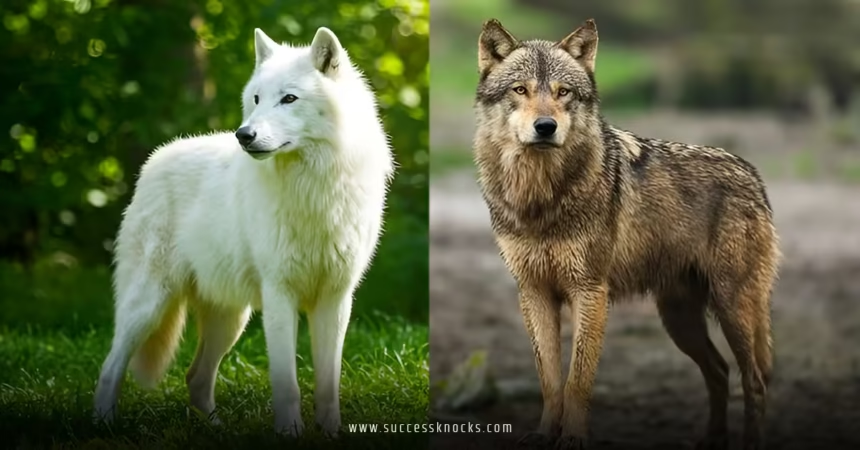
Dire wolf vs grey wolf comparisons fascinate both paleontology enthusiasts and wildlife lovers because these apex predators represent different evolutionary paths in canine history. While grey wolves roam today’s wilderness, dire wolves vanished over 10,000 years ago, leaving behind fossilized clues about a predator that once dominated Ice Age landscapes.
Quick Overview:
- Dire wolves were larger, stockier predators that lived 250,000-10,000 years ago
- Grey wolves are smaller, faster, and successfully adapted to survive until today
- Dire wolves had massive crushing jaws; grey wolves have versatile hunting abilities
- Climate change and prey extinction likely doomed dire wolves
- Grey wolves demonstrate superior adaptability and pack intelligence
Let’s dig into what made these predators tick—and why only one survived.
What Were Dire Wolves Really Like?
Forget everything Game of Thrones taught you. Real dire wolves (Aenocyon dirus) weren’t mystical giants—they were bone-crushing specialists built like furry tanks.
Picture a wolf that hit the gym obsessively for 240,000 years. Dire wolves packed 150-175 pounds of solid muscle onto frames just slightly longer than modern grey wolves. Their skulls tell the real story: massive, broad heads housing teeth designed to crack mammoth bones like walnuts.
These weren’t distance runners. Dire wolves were ambush predators with the bite force of a small bear—roughly 1,500 pounds per square inch. That’s enough to crush a bowling ball.
Dire Wolf Physical Characteristics
- Weight: 150-175 pounds (25-40% heavier than grey wolves)
- Length: 5-6 feet nose to tail
- Massive skull with pronounced sagittal crest
- Short, powerful legs built for strength over speed
- Teeth designed for bone crushing rather than slicing
Their hunting strategy? Wait near tar pits and scavenge mega-fauna carcasses. When fresh kills appeared, dire wolves used brute force to access nutrient-rich marrow that other predators couldn’t reach.
Grey Wolves: The Survivors’ Playbook
Grey wolves (Canis lupus) took a completely different evolutionary approach—and it paid off spectacularly.
Modern grey wolves average 80-110 pounds but compensate with intelligence, adaptability, and pack coordination that puts most human teams to shame. They’re the Swiss Army knives of the predator world.
Speed matters when your dinner runs 40 mph. Grey wolves can sustain 25 mph for miles, wearing down prey through endurance rather than ambush tactics. Their narrower skulls house brains wired for complex social behavior and strategic thinking.
Grey Wolf Physical Characteristics
- Weight: 80-110 pounds (females typically 20% smaller)
- Length: 4.5-5.5 feet nose to tail
- Narrow skull optimized for efficient running
- Long legs built for endurance and speed
- Versatile teeth for slicing, gripping, and tearing
Here’s the kicker: grey wolves learned to hunt everything from mice to moose. Dietary flexibility kept them fed when Ice Age megafauna disappeared.
Head-to-Head: Dire Wolf vs Grey Wolf Comparison
| Feature | Dire Wolf | Grey Wolf |
|---|---|---|
| Weight | 150-175 lbs | 80-110 lbs |
| Primary Hunting Style | Ambush/scavenging | Pack coordination |
| Bite Force | ~1,500 PSI | ~1,000 PSI |
| Speed | 20-25 mph | 35-40 mph |
| Prey Specialization | Megafauna/large game | Highly adaptable |
| Pack Size | Unknown (likely smaller) | 5-12 individuals |
| Survival Period | 250,000-10,000 years ago | 300,000+ years ago-present |
The numbers tell a story. Dire wolves optimized for a world of giant sloths, sabertooth cats, and massive bison. When that world vanished, their specialization became a death sentence.
Why Dire Wolves Went Extinct
The dire wolf extinction wasn’t sudden—it was a 2,000-year decline that coincided with the end of the Pleistocene epoch.
Climate Change Pressures
Rising temperatures around 12,000 years ago triggered massive ecosystem shifts. Grasslands turned to forests. Megafauna populations crashed as their food sources disappeared.
Dire wolves faced a cruel irony: their powerful jaws, designed to crush mammoth bones, couldn’t efficiently process smaller prey. Imagine trying to eat corn flakes with a sledgehammer.
Competition from Smaller Predators
Grey wolves, coyotes, and early human hunters all competed for the same shrinking prey base. More agile predators grabbed resources faster than heavyweight dire wolves could respond.
Archaeological evidence from the La Brea Tar Pits shows dire wolf remains becoming progressively smaller and more stressed-looking in their final centuries—signs of nutritional pressure.
Genetic Bottlenecking
Recent DNA analysis revealed dire wolves were genetically distinct from grey wolves, unable to interbreed. This isolation prevented them from gaining hybrid vigor that might have aided survival during environmental stress.
Grey Wolf Survival Strategies That Worked
While dire wolves struggled, grey wolves thrived through strategies that remain effective today.
Behavioral Adaptability
Grey wolves demonstrate remarkable behavioral plasticity. Arctic wolves hunt in coordinated packs across tundra. Desert wolves in Mexico operate in smaller groups targeting different prey. Forest wolves adjust hunting patterns based on seasonal migrations.
This flexibility stems from advanced cognitive abilities. Wolves can learn, remember, and modify strategies based on experience—something fossil evidence suggests dire wolves lacked.
Dietary Opportunism
Modern grey wolves eat:
- Large ungulates (deer, elk, moose)
- Small mammals (rabbits, rodents)
- Fish during salmon runs
- Fruits and vegetation seasonally
- Carrion when available
Dire wolves likely specialized in large game and scavenging. When those food sources disappeared, they couldn’t pivot effectively.
Superior Pack Dynamics
Grey wolf packs operate like special forces units. Individual wolves specialize in roles: scouts, chasers, ambushers, and finishers. They communicate through complex vocalizations and body language that coordinates hunts across miles.
The alpha concept has been largely debunked—modern wolf packs function more like family units with breeding pairs leading cooperative efforts. This social structure maximizes resource acquisition while minimizing individual risk.
Common Mistakes About Dire Wolf vs Grey Wolf Comparisons
Mistake 1: Assuming Dire Wolves Were Just Bigger Grey Wolves
Reality: Dire wolves were a completely separate species with different evolutionary origins, body structure, and hunting strategies.
Mistake 2: Believing Dire Wolves Were Stronger Fighters
Reality: Bite force doesn’t equal fighting ability. Grey wolves’ speed, agility, and pack coordination likely gave them tactical advantages in direct confrontations.
Mistake 3: Thinking Size Always Wins
Reality: Dire wolf extinction proves that specialization without adaptability creates evolutionary dead ends, regardless of physical advantages.
Mistake 4: Assuming They Lived in the Same Time and Place
Reality: While their ranges overlapped in North America, dire wolves were primarily Pleistocene predators while grey wolves emerged earlier and survived longer.
Mistake 5: Using Pop Culture as Reference
Reality: Game of Thrones dire wolves bear no resemblance to actual Aenocyon dirus. Real dire wolves were stockier, not larger, than the fictional versions.
Step-by-Step: How to Distinguish Dire Wolf vs Grey Wolf Fossils
For paleontology enthusiasts visiting museums or dig sites:
- Examine skull proportions – Dire wolf skulls appear broader and more robust relative to length
- Check tooth structure – Dire wolf teeth show heavier wear patterns from bone crushing
- Measure leg bone ratios – Dire wolves have shorter, thicker leg bones relative to body size
- Look for size indicators – Dire wolf bones are typically 25-30% larger than comparable grey wolf specimens
- Consider geological context – Dire wolf fossils appear in Pleistocene deposits (10,000+ years old)
The National Park Service provides excellent resources for identifying prehistoric predator remains in museum collections.
Modern Grey Wolf Conservation: Learning from Dire Wolf Extinction
Dire wolf extinction offers sobering lessons for grey wolf conservation today.
Habitat Fragmentation Risks
Just as climate change isolated dire wolf populations, modern habitat fragmentation threatens grey wolf genetic diversity. Smaller, isolated packs face the same bottlenecking pressures that contributed to dire wolf decline.
Prey Base Stability
Grey wolves’ dietary flexibility provides some protection, but they still depend on healthy ungulate populations. Ecosystem management must consider predator-prey relationships that sustained wolves through previous climate shifts.
Human Coexistence Challenges
Unlike dire wolves, grey wolves must navigate human-dominated landscapes. Their adaptability gives them advantages, but also creates new conflicts that require active management.
Current U.S. Fish and Wildlife Service recovery efforts focus on maintaining genetic connectivity between populations—a strategy that might have saved dire wolves if implemented 12,000 years ago.
Key Takeaways: Dire Wolf vs Grey Wolf
- Dire wolves were specialized bone-crushers; grey wolves are generalist survivors
- Physical power lost to adaptability when environments shifted rapidly
- Pack intelligence and behavioral flexibility proved more valuable than bite force
- Dietary specialization created vulnerability during ecosystem transitions
- Genetic isolation prevented dire wolves from hybridizing their way to survival
- Grey wolves demonstrate that evolutionary success requires adaptability over optimization
- Modern conservation must prevent the habitat fragmentation that contributed to dire wolf extinction
- Climate change remains a persistent threat to specialized predators
The dire wolf vs grey wolf comparison ultimately illustrates a fundamental principle: in nature’s long game, adaptability trumps raw power every time.
Conclusion
The dire wolf vs grey wolf story isn’t just about two extinct versus extant predators—it’s about evolutionary strategies and their consequences. Dire wolves optimized for a specific world and paid the price when that world disappeared. Grey wolves built flexibility into their survival toolkit and weathered multiple environmental catastrophes.
Today’s grey wolves carry forward 300,000 years of evolutionary refinement. They’re living reminders that sometimes the scrappy survivor outlasts the specialized champion.
The next time you see a grey wolf documentary, remember: you’re watching the descendants of predators who solved the same environmental puzzle that stumped dire wolves 10,000 years ago.
FAQs
Q: Could dire wolves have survived if they were alive today?
A: Probably not without significant evolutionary changes. Their specialized hunting style and large body size would struggle in fragmented modern habitats with smaller prey bases and human interference.
Q: Were dire wolf vs grey wolf encounters common during the Pleistocene?
A: Yes, fossil evidence from sites like La Brea suggests both species inhabited overlapping territories in North America, though their different hunting strategies likely minimized direct competition.
Q: How accurate are dire wolf portrayals in popular media?
A: Most depictions dramatically oversize dire wolves. Real dire wolves were only slightly larger than big grey wolves, not the horse-sized beasts shown in Game of Thrones.
Q: What can dire wolf vs grey wolf comparisons teach us about current predator conservation?
A: They highlight the importance of maintaining genetic diversity, habitat connectivity, and prey base stability—factors that helped grey wolves survive while dire wolves perished.
Q: Could scientists bring back dire wolves through genetic engineering?
A: Theoretically possible but practically unlikely. Dire wolf DNA is too degraded for current cloning technology, and their ecological niche no longer exists in modern ecosystems.


