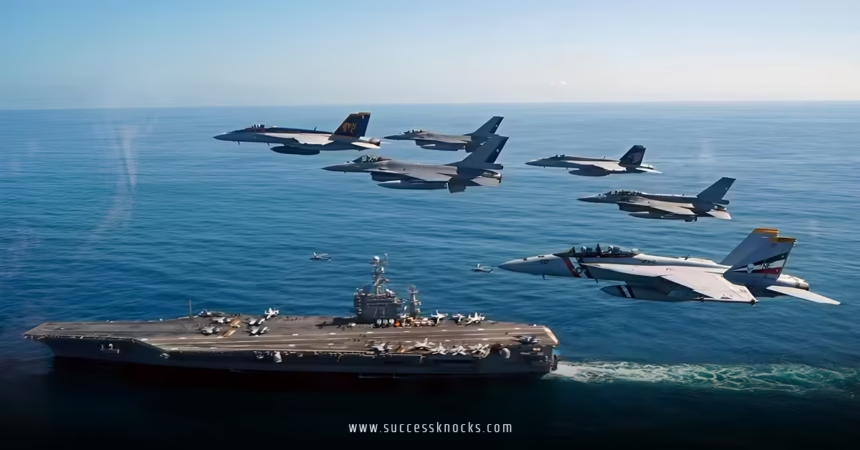
Navy vs Air Force decisions impact thousands of young Americans every year, and choosing between these elite military branches can feel overwhelming. Both offer incredible career opportunities, world-class training, and pathways to success—but they’re fundamentally different in mission, culture, and lifestyle.
Here’s what matters most:
- Navy focuses on maritime operations with 6-month deployments at sea and strong technical specialties
- Air Force emphasizes aviation and space missions with better quality-of-life standards and advanced technology roles
- Career advancement varies significantly between branches based on promotion rates and job availability
- Educational benefits are comparable, but delivery methods and timing differ
- Base locations offer completely different geographic and lifestyle experiences
The bottom line? Your choice should align with your career goals, lifestyle preferences, and tolerance for deployment schedules.
Understanding the Core Missions
What Each Branch Actually Does
The Navy’s primary mission revolves around maintaining maritime superiority and power projection from the sea. Think aircraft carriers, submarines, and amphibious operations. You’ll find yourself either on ships, submarines, or supporting shore installations that keep the fleet operational.
The Air Force owns the skies and increasingly, space operations. They handle everything from fighter jets and bombers to satellite communications and cyber warfare. Most airmen work on bases rather than deploying vehicles.
Here’s the kicker: these mission differences create entirely different career experiences.
Daily Life Reality Check
Navy life means accepting that you’ll spend significant time away from home base. Six-month deployments are standard, and even shore duty involves regular training exercises at sea. The upside? You’ll see the world in ways most people never will.
Air Force life typically offers more stability. Sure, you’ll deploy, but it’s usually shorter rotations (3-4 months) with better living conditions. Air Force bases generally provide superior facilities and family support services.
Navy vs Air Force: Career Opportunities Breakdown
| Category | Navy | Air Force |
|---|---|---|
| Tech Specialties | Nuclear, Electronics, IT, Aviation Maintenance | Cybersecurity, Space Systems, Avionics, Intelligence |
| Promotion Speed | Moderate (varies by rating) | Generally faster in technical fields |
| Civilian Transferability | Strong in maritime, nuclear, logistics | Excellent in tech, aerospace, logistics |
| Advanced Training | Extensive technical schools | Leading-edge technology training |
| Leadership Development | Traditional military structure | More corporate-style leadership |
High-Demand Career Fields
Navy strengths include nuclear propulsion, cybersecurity, and aviation electronics. These ratings (job classifications) translate directly to six-figure civilian careers. The nuclear program, in particular, is considered one of the most rigorous and valuable training programs in any military branch.
Air Force advantages shine in cybersecurity, space operations, and intelligence. The branch consistently ranks highest for technical training quality and civilian job placement rates post-service.
The truth? Both branches will set you up for success, but the Air Force edges ahead for pure career marketability in today’s economy.
Deployment and Lifestyle Differences
Navy Deployment Reality
Navy deployments are intense but predictable. You’ll know months in advance when you’re leaving, and the rotation schedule is fairly consistent. Six months at sea, followed by training cycles and maintenance periods.
What they don’t tell you in the recruiter’s office: ship life is cramped, privacy is nonexistent, and the work schedule during deployment is demanding. But you’ll develop problem-solving skills and resilience that are hard to replicate elsewhere.
Air Force Deployment Experience
Air Force deployments tend to be shorter but potentially more frequent. The big difference? Living conditions are typically much better. Think actual buildings with private rooms rather than shared sleeping quarters.
The trade-off: Air Force personnel often deploy to support ongoing operations rather than scheduled rotations, which can make planning more challenging.
Education and Training Benefits Comparison
Both branches offer excellent educational benefits, but the delivery differs significantly.
Navy Education Approach
The Navy emphasizes hands-on technical training first, academic education second. You’ll get world-class training in your specialty, often equivalent to expensive civilian certifications. College education typically happens during off-duty hours or after your initial service commitment.
Navy advantages:
- Immediate job-specific training
- Strong apprenticeship-style learning
- Nuclear field offers college credit equivalency
- Tuition assistance available during service
Air Force Education Philosophy
The Air Force treats education as a career development tool from day one. Community College of the Air Force (CCAF) programs are integrated into technical training, and the branch actively encourages degree completion during service.
Air Force advantages:
- Automatic college credit for technical training
- More flexible scheduling for education
- Higher education completion rates
- Strong partnerships with civilian universities
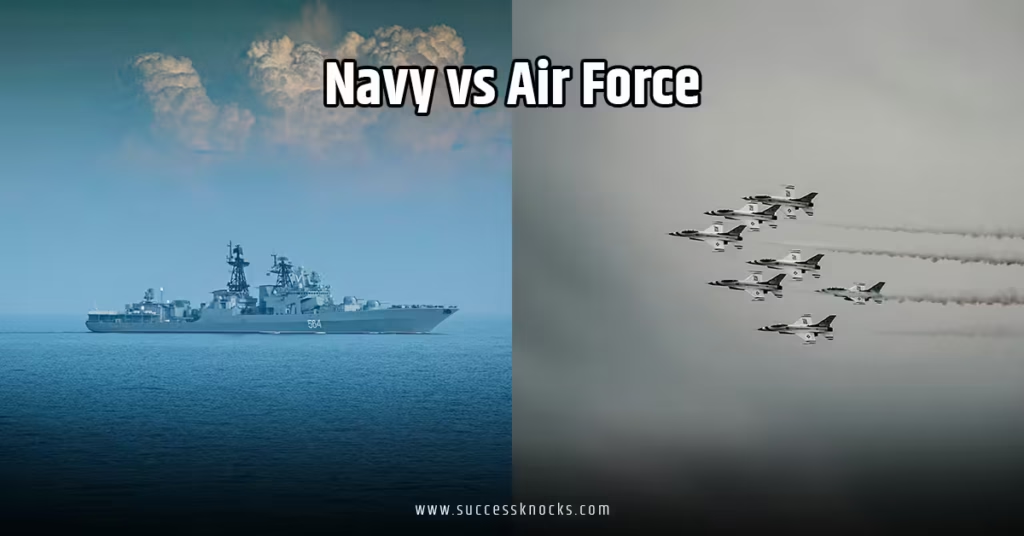
Base Locations and Quality of Life
Navy Base Life
Navy bases are often located near major ports, which means coastal cities with higher costs of living but more cultural opportunities. Norfolk, San Diego, Pearl Harbor—these aren’t exactly small towns.
The facilities? Honestly, they can be hit or miss. Some bases are modern and well-maintained, others feel like they haven’t been updated since the 1980s.
Air Force Base Standards
Here’s where the Air Force really shines. Their bases consistently offer better facilities, housing, and family services. The branch invests heavily in quality-of-life improvements and it shows.
Air Force bases are often located in smaller communities, which can be positive or negative depending on your lifestyle preferences. Lower cost of living, but fewer entertainment options.
Key Takeaways for Your Navy vs Air Force Decision
- Choose Navy if you want intensive technical training, don’t mind deployments at sea, and prefer a traditional military culture
- Choose Air Force if quality of life, advanced technology careers, and educational opportunities are priorities
- Both branches offer excellent post-service career prospects and veteran benefits
- Deployment schedules are predictable in the Navy, more variable in the Air Force
- Base quality generally favors the Air Force, but Navy bases offer more urban access
- Promotion opportunities vary by job field, but Air Force technical positions often advance faster
- Family considerations should heavily influence your choice due to deployment and lifestyle differences
Common Mistakes When Choosing Between Navy vs Air Force
Mistake #1: Choosing based on recruiter promises alone
Fix: Talk to current service members in your desired career field, not just recruiters.
Mistake #2: Ignoring deployment realities
Fix: Honestly assess your tolerance for time away from family and different living conditions.
Mistake #3: Overlooking geographic preferences
Fix: Research typical base assignments for your chosen career field before enlisting.
Mistake #4: Focusing only on initial training
Fix: Consider the entire career progression and post-service opportunities.
Mistake #5: Not considering spouse/family impact
Fix: Discuss deployment schedules and base life with family members who’ll be affected.
Your Step-by-Step Decision Framework
Step 1: Identify Your Career Goals
List your top three career interests and research which branch offers better training and opportunities in those areas.
Step 2: Assess Lifestyle Priorities
Rank factors like deployment tolerance, base location preferences, and family considerations.
Step 3: Talk to Current Service Members
Connect with people currently serving in your areas of interest. Social media and veteran networks make this easier than ever.
Step 4: Compare Specific Job Classifications
Don’t just compare branches—compare specific jobs (Navy ratings vs Air Force AFSCs) you’re considering.
Step 5: Consider Long-Term Plans
Think beyond your initial service commitment. Which branch better aligns with your 10-year career vision?
Step 6: Visit Recruiters from Both Branches
Get official information about current incentives, but remember recruiters have quotas to meet.
The Bottom Line
Navy vs Air Force isn’t about finding the “better” branch—it’s about finding the right fit for your goals and lifestyle. The Navy offers unmatched technical training and global experiences, while the Air Force provides superior quality of life and cutting-edge technology careers.
Both will challenge you, train you, and set you up for success. The key is honest self-assessment about what matters most in your career and personal life.
Your next step? Connect with current service members in your areas of interest and get the real story about daily life in each branch. That conversation will tell you more than any recruitment material ever could.
Choose the branch that aligns with your authentic self, not the one that sounds impressive to others.
Frequently Asked Questions
Q: Is the Navy vs Air Force salary different for the same rank?
A: Base pay is identical across all military branches for the same rank and time in service. However, allowances and special pay can vary based on job specialty and duty location.
Q: Which branch has better promotion opportunities for enlisted personnel?
A: Air Force technical fields generally offer faster promotion rates, while Navy advancement varies significantly by rating. Both branches publish promotion statistics annually for transparency.
Q: Can I transfer between Navy and Air Force during my service?
A: Inter-service transfers are extremely rare and typically require special circumstances. It’s essentially starting over in a new branch, so choose carefully from the beginning.
Q: Which branch offers better post-service veteran benefits?
A: Veteran benefits are standardized across all military branches through the Department of Veterans Affairs. Your benefits depend on length and type of service, not which branch you served in.
Q: How do Navy vs Air Force deployments affect family life differently?
A: Navy deployments are longer (typically 6 months) but more predictable, allowing better planning. Air Force deployments are shorter (3-4 months) but can be more frequent and less predictable depending on your career field.