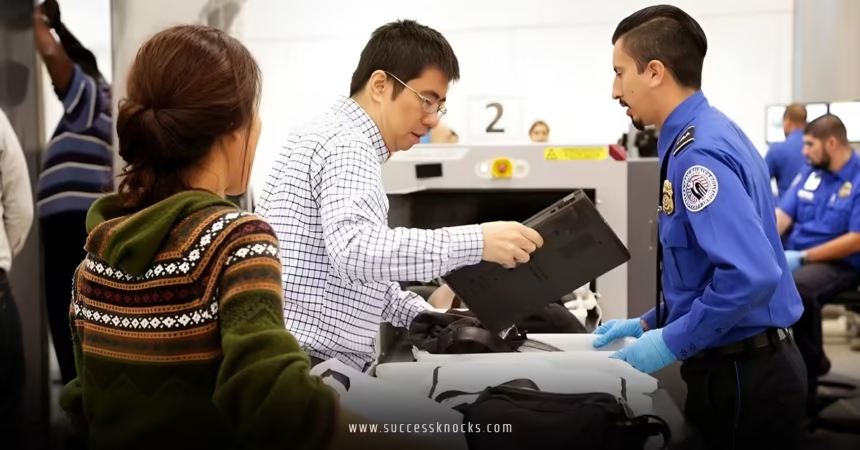
How Government Shutdowns Affect TSA Airport Security Government shutdowns hit TSA airport security harder than most people realize. Essential officers keep screening millions of passengers daily, but missed paychecks trigger staffing shortages, skyrocketing call-out rates, and brutal security lines that turn smooth travel into a nightmare.
Quick overview of the chaos:
- TSA officers work without pay as essential employees during partial shutdowns affecting the Department of Homeland Security (DHS).
- Call-outs spike — from normal 3-4% to 10-11% or higher nationwide, with some airports seeing 40-50% absences.
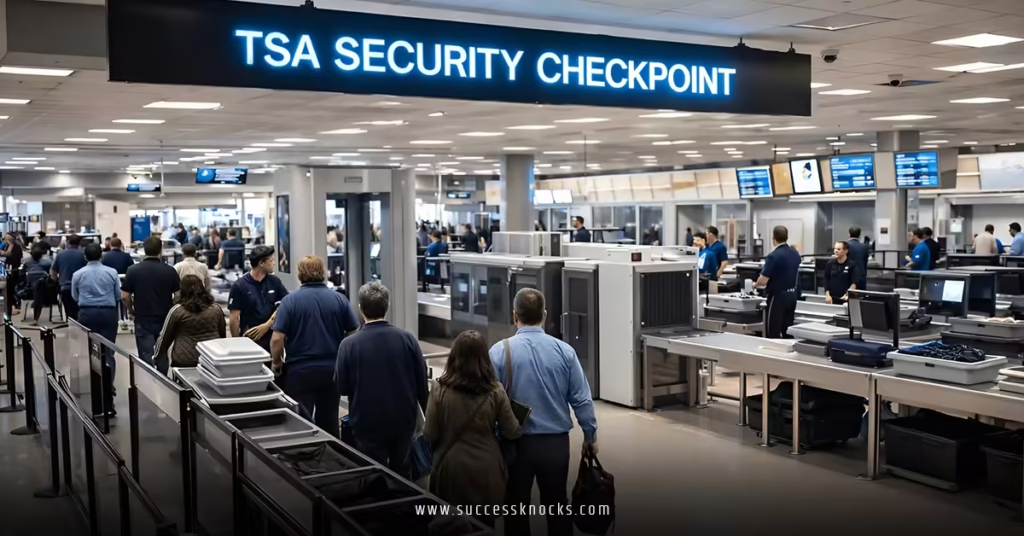
- Longer wait times — lines stretching hours, missed flights, and occasional terminal strains.
- Quit rates climb — hundreds of officers have left mid-shutdown, worsening chronic understaffing.
- Ripple effects — higher assault incidents on officers, safety concerns, and travel headaches during peak seasons like spring break.
This isn’t theoretical. The ongoing 2026 partial DHS shutdown, now stretching past eight weeks, has already delivered real pain at checkpoints across the country.
Why TSA feels the pain first in shutdowns
TSA falls under DHS, so when Congress fails to fund the department — often over immigration or spending disputes — operations don’t stop. About 95% of TSA’s roughly 61,000 employees are “excepted” or essential. They must show up. But they stop receiving regular paychecks until funding resumes or temporary measures kick in.
Here’s the thing: these officers aren’t high-paid. Many live paycheck to paycheck. When bills pile up — rent, groceries, gas, childcare — showing up becomes a financial gut punch. Some sleep in cars or sell plasma. Morale tanks. Absenteeism rises fast.
In the current 2026 scenario, call-out rates jumped from around 4% pre-shutdown to 11% nationally by late March, with extreme spikes at busy hubs. Over 460 officers had quit by late March alone. Spring travel volume ran about 5% higher than the prior year, yet fewer screeners meant reduced checkpoint capacity and wait times pushing past four hours at some airports.
It’s like running a marathon with half the water stations closed — the system strains, then cracks.
Real impacts on travelers and operations
How Government Shutdowns Affect TSA Airport Security:You feel it immediately at the airport. Longer lines snake through terminals, into baggage claim, even outside in bad cases. Missed connections multiply. Stress levels soar for families, business travelers, and anyone with tight schedules.
During the 2026 partial shutdown:
- Major airports like Atlanta (Hartsfield-Jackson), Houston (Bush Intercontinental), and New Orleans reported waits of one to four-plus hours.
- Some checkpoints operated with only one-third to one-half normal staffing.
- Assaults on TSA officers surged over 500% in reports from hearings.
- Warnings emerged that smaller airports could face outright closures if absences worsened.
TSA PreCheck usually helps speed things, but overall capacity drops when bodies are missing from lanes. Private screening at a handful of airports (using contractors) sometimes dodges the worst of it, but most U.S. hubs rely on federal TSA staff.
Security risks tick up too. Overworked, distracted teams under pressure aren’t ideal for thorough screening. Officials have flagged this publicly in oversight hearings.
Comparison: 2026 DHS Shutdown vs. Past Shutdowns
Here’s a clear breakdown showing patterns:
| Aspect | 2026 Partial DHS Shutdown (as of April) | 2018-2019 Shutdown (35 days) | 2025 Shorter Shutdown |
|---|---|---|---|
| TSA Call-out Rate | Rose to 11% nationally; 40-50% at peaks | Peaked near 10% | Smaller spikes |
| Officers Quit | 460+ by late March | Over 1,100 total | 1,110 in 43 days |
| Max Wait Times Reported | 4+ hours at some airports | 1-2+ hours; terminals closed in Miami/Houston | Varied, less severe |
| Pay Handling | Some back pay via executive action; future uncertainty persists | Back pay after resolution | Similar temporary fixes |
| Traveler Volume Context | +5% during spring break surge | Peak holiday period | Varied |
| Additional Strain | 500%+ rise in officer assaults | Increased sick calls | Lower overall impact |
Data draws from TSA testimony and public reporting. The 2026 case stands out for its length and focused hit on DHS functions, amplifying effects on air travel.
How government shutdowns affect TSA airport security: The human side
Officers keep the line moving. They smile (mostly), scan bags, pat down when needed, and stay alert for threats. But unpaid work changes the math. Second jobs emerge. Family stress builds. Some quit for steadier private gigs.
In hearings, TSA leaders described officers facing untenable choices — come to work hungry or stay home and risk the job. The result? Fewer open lanes. Slower processing. Frustrated passengers taking it out on staff, creating a vicious cycle.
Travel industry groups have pushed Congress hard during these standoffs. Delays cost airlines money. Missed flights disrupt businesses. Vacationers lose days.
Action plan for travelers during shutdown uncertainty
Don’t get caught flat-footed. Here’s a practical step-by-step:
- Check ahead — Use the TSA Wait Times app or airport websites the night before and morning of travel. Real-time updates matter.
- Arrive extra early — Add 1-2 hours beyond normal recommendations, especially at big hubs during peaks. Three hours isn’t crazy right now.
- Enroll in trusted traveler programs — TSA PreCheck, Global Entry, or CLEAR (where available) can cut screening time dramatically when lanes exist.
- Pack smart — Follow 3-1-1 liquids rules strictly. Remove laptops, shoes, belts quickly to keep the flow moving.
- Monitor flight status — Airlines sometimes adjust, but security backups cause cascading delays. Build buffer connections.
- Have a backup — Consider flexible tickets or travel insurance that covers delays from government actions if possible.
- Stay calm — Yelling at officers won’t open more lanes. Patience helps everyone.
Rule of thumb: The longer the shutdown drags, the worse lines get. Early weeks might feel normal; month two exposes the cracks.
Link to related context: For the latest on why these issues keep recurring, see how lawmakers return april 2026 dhs pay uncertainty persists and fuels ongoing staffing headaches.
Common mistakes travelers (and officers) make — and fixes
- Mistake: Showing up at the usual time expecting normal flow.
Fix: Treat every shutdown-affected trip like a holiday rush. Buffer aggressively. - Mistake: Blaming TSA staff directly for delays.
Fix: Direct frustration at the funding impasse. Officers are showing up unpaid. - Mistake: Ignoring warnings from smaller airports.
Fix: Research your specific hub — some get hit harder based on local staffing. - Mistake: Skipping PreCheck renewal thinking it’s not worth it.
Fix: Renew or enroll; it pays off big when regular lines balloon.
For officers: Document everything for eventual back pay. Seek union or employee assistance programs early.
Key takeaways on shutdown effects
- TSA must operate during shutdowns, but unpaid work leads to higher absences and quits.
- Airport security lines lengthen significantly, especially after 2-3 weeks.
- Peak travel periods amplify problems — spring break 2026 proved it.
- Back pay eventually comes, but timing and future guarantees create anxiety that worsens staffing.
- A handful of airports using private screeners fare better.
- Travelers should plan extra time; officials warn of potential closures at smaller sites if unresolved.
- These disruptions highlight deeper funding and workforce challenges at TSA.
- Resolution requires Congress to act on DHS appropriations.
What changes when the shutdown ends?
Once funding passes, back pay flows (protected by law for essential workers). Hiring ramps up, but training new officers takes 4-6 months. Attrition from the period can linger, so full recovery isn’t instant.
Some experts float ideas like making TSA funding more stable or expanding private screening pilots to insulate against future fights. For now, it’s politics as usual.
Conclusion
Government shutdowns turn TSA airport security from a routine checkpoint into a bottleneck of frustration. Officers grind through without pay, travelers lose hours and patience, and the system shows its fragility. The 2026 partial DHS shutdown drove this point home again with long lines and staffing crises during busy travel windows.
Next step: If flying soon, check real-time TSA and airport updates today. Build in that extra time. And if you’re fed up with the cycle, pay attention to how lawmakers handle funding votes — your next trip might depend on it.
These standoffs end. Smart preparation makes the difference until they do.
FAQs
How long do TSA lines typically get during government shutdowns?
Wait times can stretch from 1-2 hours normally to 4+ hours at impacted airports, especially when call-out rates double or triple and travel volume stays high.
Do TSA officers get paid during a shutdown?
No, they work without regular pay as essential staff, though back pay is provided retroactively once funding restores. Temporary executive measures sometimes help but create future uncertainty.
Can airports close because of TSA staffing shortages in a shutdown?
Yes, officials have warned it’s possible, especially smaller airports, if absences climb too high and not enough officers remain to screen passengers safely.
Does TSA PreCheck still work during government shutdowns affecting airport security?
Usually yes, though overall capacity drops mean even PreCheck lanes can slow if staffing is severely reduced across the checkpoint.
How does the 2026 DHS shutdown compare to previous ones for TSA?
The 2026 partial shutdown has shown similar patterns of rising quits (460+ early on) and call-outs but hit during spring travel, with added uncertainty around ongoing pay even after some back-pay relief.