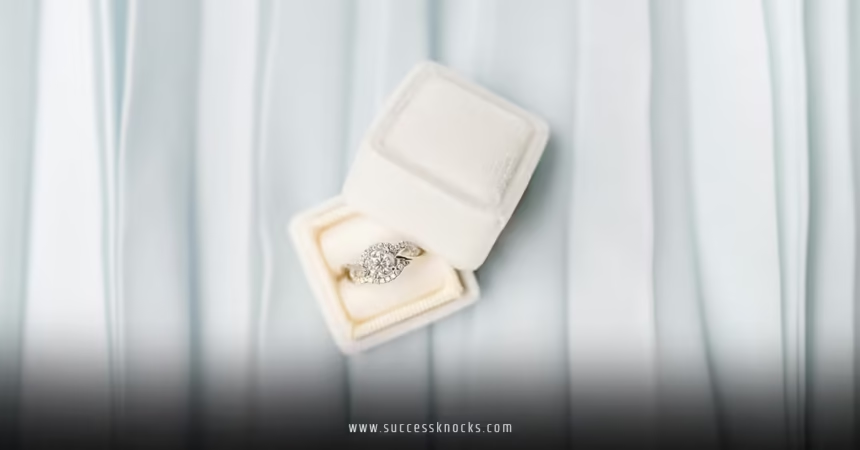
How to choose an engagement ring on a budget doesn’t mean settling for less sparkle or meaning. It means getting smart about where your money actually shows up on the finger — and where it doesn’t. In 2026, with lab-grown diamonds dominating value conversations and average US engagement ring spends hovering around $5,500 to $7,000, plenty of couples build stunning rings for half that or less without anyone noticing the difference in real life.
Here’s the no-BS truth: How to choose an engagement ring on a budget starts with ditching outdated “three months’ salary” myths and focusing on what your partner will actually wear every day.
Quick Overview: Smart Budget Engagement Ring Shopping
- Set realistic expectations — Average costs in the US sit between $5,500–$7,000, but beautiful, durable rings exist well under $3,000.
- Prioritize cut and metal — These impact daily sparkle and wear more than carat weight alone.
- Lab-grown diamonds or moissanite stretch your dollars dramatically while looking identical to natural stones in most lighting.
- Shop styles that maximize size illusion — Oval, marquise, or pear shapes often appear larger than round for the same price.
- Always test the full stack — Your engagement ring needs to play nice with the future wedding band.
Why Budget Matters More Than Ever in 2026
The old pressure to drop big money has eased. Couples now redirect savings toward honeymoons, homes, or experiences. Lab-grown options deliver chemically identical diamonds at a fraction of natural prices, letting you chase bigger stones or better settings without regret.
The kicker? Most people can’t spot the difference between a well-cut lab diamond and a mined one side-by-side. Your ring still catches light, starts conversations, and holds sentimental value. That’s the win.
Step 1: Lock In Your Real Budget First
Sit down together (or solo with strong hints) and decide the total number. Be honest about what feels comfortable — not what Instagram suggests.
Rule of thumb I always share: Allocate 60-70% to the center stone and setting, 30-40% for any accents or customization. Factor in taxes, resizing, and insurance from day one.
Leave breathing room. Life happens, and you don’t want ring regret competing with wedding stress.
Understand the 4Cs — But Don’t Obsess Over All of Them
The Gemological Institute of America (GIA) established the 4Cs as the universal standard: Cut, Color, Clarity, and Carat. For budget buyers, here’s how they actually rank when money is tight.
- Cut — King of the 4Cs. Excellent or Ideal cut grades create maximum sparkle and fire. A slightly smaller stone with superior cut beats a larger dull one every time. Prioritize this.
- Color — Go near-colorless (G-H range) for white diamonds. Eyes rarely detect the difference from D-F in everyday wear, especially once set.
- Clarity — SI1 or SI2 often works perfectly. Tiny inclusions hide under the setting and don’t affect brilliance for most.
- Carat — Size matters, but shape tricks the eye. Drop to 0.8–1.2 carats in elongated shapes and it can look closer to 1.5+.
Budget-friendly 4Cs shortcut: Excellent cut + G-H color + SI clarity + strategic carat/shape = looks expensive, costs reasonable.
Stone Choices That Stretch Your Budget
Lab-grown diamonds remain the 2026 hero for value. They offer the exact same optical and physical properties as natural diamonds but at significantly lower prices — often 30-60% less depending on size and quality.
Moissanite shines even brighter on strict budgets. It costs a fraction of lab diamonds and delivers more fiery sparkle in some lights. Many can’t tell it apart without a loupe. Great for those who want maximum size and brilliance under $1,500 total.
Colored gemstones like sapphires or emeralds deliver unique personality at accessible prices while sidestepping diamond pricing altogether.
Pro move: Compare the same ring in lab diamond versus moissanite side-by-side in natural and indoor light before deciding.
Settings and Metals That Save Money Without Sacrificing Look
- Solitaire or simple halo — Clean designs put the focus on the stone and cost less in labor.
- Yellow or rose gold — Often more affordable than platinum and warmer in tone. White gold works too but needs rhodium plating refresh every few years.
- Bezel or low-profile settings — More durable for active lifestyles and use less metal.
- Avoid super intricate pavé on tiny budgets — More stones mean higher labor and potential maintenance.
Test how the ring sits on the finger. Comfort trumps minor design details you’ll stop noticing after week two.
Comparison Table: Budget Stone Options in 2026
| Option | Typical 1ct Look Cost | Sparkle Style | Best For | Durability |
|---|---|---|---|---|
| Lab-Grown Diamond | $1,500–$3,500 | Classic diamond fire | Traditional feel on budget | Excellent (10 on Mohs) |
| Moissanite | $500–$1,200 | More fiery rainbow sparkle | Max size and brilliance | Very good (9.25 on Mohs) |
| Natural Diamond (smaller) | $4,000+ | Subtle classic | Heirloom priority | Excellent |
| Sapphire or Other Gem | $800–$2,000 | Unique color pop | Non-traditional couples | Good to excellent (varies) |
Prices are approximate US retail ranges and fluctuate with metal choice and setting.
Step-by-Step Action Plan: How to Choose an Engagement Ring on a Budget
- Spy on style preferences — Check her jewelry, Pinterest, or casually ask friends. Note metal color and shape leanings.
- Define the total budget — Include ring + appraisal + insurance + any taxes.
- Learn the 4Cs basics — Focus heaviest on cut quality.
- Browse online first — Sites with high-res videos and 360 views help narrow options without pressure.
- Visit 2-3 jewelers or showrooms — Try rings on. Bring the partner if possible or take detailed photos.
- Compare lab vs moissanite — Get side-by-side views in different lighting.
- Check for GIA or equivalent reports — Independent grading builds trust.
- Negotiate and ask about bundles — Many offer discounts when buying engagement ring + wedding band together.
- Get everything in writing — Return policy, warranty, resizing details.
- Insure it immediately — Rider on homeowner’s or separate jewelry policy.
Common Mistakes (and Quick Fixes)
- Chasing carat weight over cut — Fix: Drop 0.2–0.3 carats for a superior cut grade.
- Ignoring the future wedding band — Fix: Shop or plan the stack early. See our guide on [engagement rings vs wedding rings] for perfect pairing tips.
- Skipping in-person try-ons — Fix: Order try-at-home kits or visit stores even if buying online.
- Forgetting maintenance costs — Fix: Choose durable settings and budget for occasional cleaning or plating.
- Rushing the decision — Fix: Give yourself at least 2–4 weeks to compare without proposal deadline panic.
Key Takeaways for Choosing an Engagement Ring on a Budget
- How to choose an engagement ring on a budget boils down to prioritizing sparkle and wearability over raw size or “natural only.”
- Lab-grown diamonds and moissanite deliver stunning results for thousands less.
- Excellent cut quality makes any stone look more expensive.
- Elongated shapes and strategic metal choices create bigger visual impact.
- Always factor in the full bridal set for seamless stacking.
- Get independent grading and proper insurance — peace of mind is cheap compared to heartbreak.
- The best ring feels right for your life and relationship, not someone else’s budget benchmark.
Conclusion
How to choose an engagement ring on a budget is less about restriction and more about intention. Focus on cut, honest conversation, and smart alternatives like lab-grown options, and you’ll land a ring that sparkles with both beauty and wisdom.
Start today: Grab a notebook, set your number, and browse a few styles that match your partner’s vibe. The perfect ring doesn’t have to break the bank — it just has to feel like forever when it slides on.
FAQs for How to Choose an Engagement Ring on a Budget:
1. What is a good budget for an engagement ring?
There’s no fixed rule—spend what you’re comfortable with. Many people set a budget based on savings rather than outdated “salary rules.”
2. How can I save money on a diamond?
Focus on cut quality, choose slightly lower carat weight (e.g., 0.9 instead of 1.0), and consider near-colorless grades to reduce cost.
3. Are lab-grown diamonds a good option?
Yes, lab-grown diamonds look identical to natural ones but can cost 30–50% less.
4. What metal is most budget-friendly for rings?
White gold and yellow gold are usually more affordable than platinum while still offering durability and style.
5. Can I customize a ring on a budget?
Yes, many jewelers offer affordable customization—choose a simple setting and focus spending on the center stone.