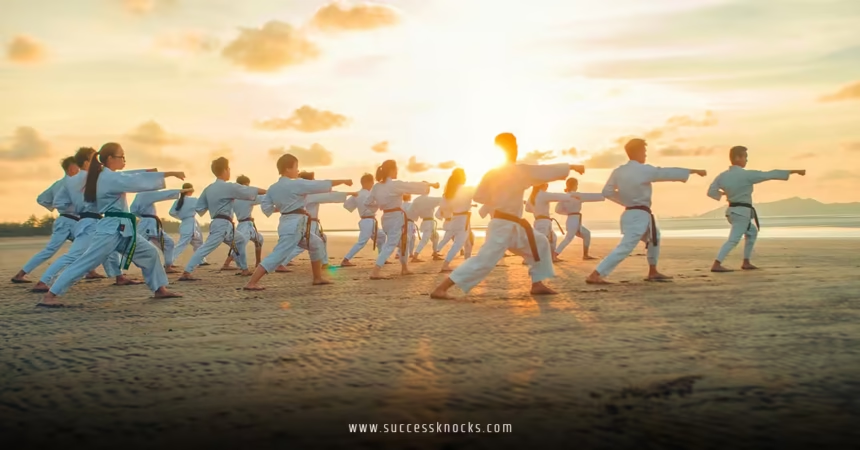
Best karate styles for beginners start with clear structure, solid fundamentals, and a welcoming vibe that keeps you coming back. If you’re new to martial arts, the right style can make the difference between quick progress and frustration.
Best karate styles for beginners boil down to accessibility, progressive teaching, and balanced training that builds confidence without overwhelming you. The four major styles—Shotokan, Goju-ryu, Wado-ryu, and Shito-ryu—dominate many dojos, especially in the USA. Each offers strong basics, but they feel different in the body.
Here’s the quick overview:
- Shotokan stands out for its deep stances, powerful linear techniques, and clear progression—perfect if you want discipline and visible improvement fast.
- Goju-ryu mixes hard strikes with soft, circular movements and breathing focus, great for building whole-body awareness.
- Wado-ryu emphasizes natural movement, evasion, and footwork—less brute force, more flow and timing.
- Shito-ryu packs in a huge variety of kata with balanced hard-soft elements, suiting those who enjoy detail and speed.
- Kyokushin (a full-contact offshoot) builds toughness through sparring but can feel intense for absolute newbies.
No single “best” exists. It depends on your body, goals, and the local instructor. Many beginners thrive by sampling a couple.
Why Style Matters Less Than You Think (But Still Helps)
Here’s the thing: a fantastic teacher in any style beats a mediocre one in the “perfect” style. That said, some approaches click better for fresh starters.
Best karate styles for beginners shine when they break down basics—stance, punch, block, kick—into repeatable drills. You want kihon (fundamentals) that build muscle memory without confusion.
In the USA, look for schools tied to established organizations. The World Karate Federation (WKF) recognizes the big four styles for competition, giving structure and clear ranking systems.
If you’re coming from our earlier chat on kung fu vs karate, karate often gives beginners more straightforward linear power and belt progression compared to kung fu’s flowing variety.
Breaking Down the Top Karate Styles for Newbies
Shotokan Karate
Shotokan tops many “beginner-friendly” lists. Gichin Funakoshi brought it to mainland Japan, emphasizing strong, deep stances (like zenkutsu-dachi) and explosive linear attacks.
You drill long-range techniques, powerful reverse punches, and crisp kata. Training feels structured: lots of kihon, then kata, then controlled kumite.
Pros for beginners:
- Clear, consistent curriculum
- Builds excellent posture and power
- Widely available dojos across the US
It rewards patience. Those low stances strengthen legs fast, but they can challenge tight hips at first.
Goju-ryu Karate
“Goju” means hard-soft. This Okinawan-rooted style blends powerful strikes with circular blocks, close-range work, and breath control (think sanchin kata).
Beginners learn stability in rooted stances while exploring redirection. It includes some body conditioning and feels more “internal” than pure power styles.
Great if you like breathing exercises or want balance in training. Many find it less jarring on joints than full-contact options.
Wado-ryu Karate
Wado-ryu mixes karate with jujutsu influences. Founder Hironori Otsuka prioritized evasion, body shifting, and natural posture over deep stances.
You move more fluidly, using angles and timing instead of meeting force head-on. Sparring can feel lighter and more tactical early on.
Ideal for beginners who dislike hunkering in low horse stances or prefer quicker footwork. It teaches conflict avoidance alongside strikes.
Shito-ryu Karate
Shito-ryu combines elements from multiple Okinawan lineages, resulting in one of the largest kata repertoires.
Training mixes speed, power, and technique variety. Stances tend to be more upright than Shotokan, with emphasis on practical applications.
Beginners enjoy the diversity—different rhythms and expressions keep things fresh without overwhelming if the instructor paces it well.
Kyokushin Karate (Honorable Mention)
Mas Oyama’s full-contact style builds serious toughness through knockdown sparring and conditioning.
It’s motivating for some beginners who want to test themselves physically and mentally. However, the intensity can intimidate or lead to higher dropout if you’re not ready for hard knocks. Many schools ease newcomers in gradually.
Comparison Table: Best Karate Styles for Beginners
| Style | Stance Type | Movement Style | Beginner Strengths | Potential Challenges | Best For |
|---|---|---|---|---|---|
| Shotokan | Deep, strong | Linear, powerful | Clear structure, fast visible progress | Low stances can strain knees/hips | Discipline-focused starters |
| Goju-ryu | Rooted, stable | Hard + soft, circular | Breath work, whole-body coordination | Close-range feel unfamiliar | Those wanting balance & conditioning |
| Wado-ryu | Natural, upright | Evasive, flowing | Less physical strain, tactical focus | Less “traditional” power feel | Quick movers, smaller frames |
| Shito-ryu | Mixed, upright | Speed + variety | Diverse kata, engaging practice | Many forms to remember | Detail-oriented learners |
| Kyokushin | Stable | Full-contact striking | Mental toughness, real sparring | High physical demand early | Resilient, fitness-driven types |
This table cuts the fluff. Try classes in at least two styles. Your body will tell you what fits.
How to Choose the Right Style and Dojo
Visit multiple places. Watch a beginner class. Ask:
- How do you teach absolute newbies?
- What’s the sparring like?
- Any trial period or intro package?
Look for clean facilities, respectful atmosphere, and instructors who correct without crushing egos. In the US, check affiliations with USA Karate or similar national bodies.
Best karate styles for beginners succeed when paired with realistic expectations. Progress comes from consistent attendance, not style magic.
Cost usually runs $100–200 per month. Factor in gi, testing fees, and optional tournaments.
Common Mistakes Beginners Make (and Fixes)
- Picking by movies or hype — Fix: Attend live classes. Cobra Kai drama isn’t reality.
- Ignoring the instructor — A black belt doesn’t guarantee teaching skill. Fix: Observe how they handle new students.
- Quitting after sore muscles — Normal at first. Fix: Warm up properly and stretch daily.
- Comparing yourself to advanced students — Fix: Focus on your own small wins each week.
- Skipping home practice — 10 minutes of basics daily accelerates everything.
- Choosing convenience over quality — A mediocre nearby dojo loses to a great one 20 minutes away.
Your Step-by-Step Action Plan to Start
- Define your goals — Fitness? Self-defense? Fun? Stress relief? Write it down.
- Research locally — Search “Shotokan karate near me,” “Goju ryu dojo [city],” etc. Read recent reviews.
- Contact 3–4 schools — Ask about beginner programs and observation days.
- Visit and try — Attend intro classes. Note how you feel during and after.
- Commit short-term — Sign up for 1–3 months minimum. Consistency beats perfection.
- Practice basics at home — Mirror work on stance and punches builds confidence.
- Track improvements — Energy levels, balance, focus—note them monthly.
- Re-evaluate at 3 months — Stick, switch styles, or cross-train.
What I’d do as a veteran? Start with Shotokan or Wado-ryu for clean fundamentals, then explore others once comfortable. Or circle back to kung fu vs karate if flow calls louder after a few months.
Key Takeaways
- Best karate styles for beginners prioritize structured basics and supportive teaching over flashy techniques.
- Shotokan offers the most widespread, disciplined entry point for many.
- Goju-ryu and Wado-ryu add breathing/soft elements or evasion that reduce early strain.
- The dojo and instructor matter more than the style name.
- Sample classes before committing—your first impression usually guides right.
- Consistency and home practice trump style debates every time.
- Karate builds fitness, focus, and confidence when you show up regularly.
- Pair any style with smart conditioning and realistic self-defense awareness.
Conclusion
Best karate styles for beginners open doors to stronger bodies and sharper minds without needing prior experience. Pick one that feels right in your trial classes, train with heart, and enjoy the journey.
Next step: Search for a local dojo today and book that first visit. The gi will feel awkward at first—then it becomes home.
FAQ
What is the easiest karate style for absolute beginners?
Shotokan often feels the most beginner-friendly because of its clear, linear techniques, deep stances, and structured belt progression. Many US dojos teach it with a strong focus on fundamentals first. If you prefer less strain on the joints early on, try Wado-ryu for its more natural posture and evasion focus. The real key is the instructor, not just the style name.
How long does it take a beginner to get good at karate?
Most beginners notice real improvements in fitness, coordination, and confidence within 3–6 months of consistent training (2–3 classes per week plus home practice). Reaching a solid intermediate level usually takes 1–2 years. Progress depends more on your consistency and the quality of instruction than on whether you chose Shotokan, Goju-ryu, or another style.
Can I switch karate styles later if I don’t like my first choice?
Yes, absolutely. Many practitioners cross-train or switch after 6–12 months once they understand the basics. Fundamentals transfer well between styles. If you’re still deciding between karate and kung fu, starting with one structured karate style gives you a clean foundation before exploring the more flowing movements in kung fu vs karate.
Is karate good for self-defense, or is it mostly sport and fitness?
Modern karate training includes practical self-defense when the school emphasizes realistic applications and controlled sparring. Styles like Goju-ryu add close-range work, while Kyokushin builds toughness through contact. Pair any style with situational awareness—karate techniques work best when combined with smart decision-making outside the dojo.
Should beginners try both karate and kung fu before deciding?
It’s smart to sample both. Karate usually offers faster visible progress and clearer ranking for new students, while kung fu brings more circular, adaptable movement. If you’re torn, take intro classes in each. Many people start with karate for its discipline and later add kung fu elements for variety.