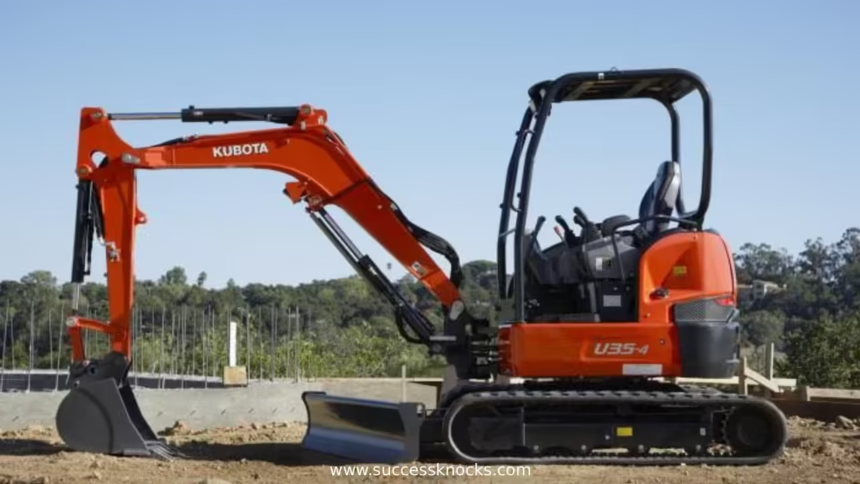
Mini excavator vs compact excavator confusion costs contractors thousands in wrong equipment choices. Both machines look similar, both fit tight spaces, and both promise versatility—but the size difference changes everything about performance, cost, and job capability.
Here’s the reality: choose too small, and you’ll struggle with power and reach. Go too large, and you’ll overpay for capabilities your jobs don’t need.
Quick Overview: Mini vs Compact Excavator Differences
Mini excavator vs compact excavator comes down to job scale and site access. Key distinctions:
- Mini excavators: 1,000-10,000 lbs, ultra-compact for tight residential work
- Compact excavators: 10,000-20,000 lbs, balanced power and mobility
- Width range: Minis 3-6 feet wide; compacts 6-8 feet wide
- Digging depth: Minis 6-10 feet; compacts 10-14 feet
- Cost difference: $20,000-40,000 price gap typically
What Defines a Mini Excavator?
Mini excavators are the precision instruments of earthmoving. Picture a full-size excavator shrunk down to fit through garden gates—that’s your mini.
Core mini excavator specifications:
- Weight: 1,000-10,000 pounds
- Width: 36-72 inches typically
- Digging depth: 6-10 feet maximum
- Zero tail swing or minimal tail swing design
- Rubber tracks standard
- Hydraulic thumb attachments common
The “mini” designation isn’t marketing fluff. These machines literally fit where larger equipment can’t go.
Mini Excavator Categories
Micro minis (1,000-3,000 lbs): Landscaping, fence installation Standard minis (3,000-6,000 lbs): Residential utilities, pool installation
Large minis (6,000-10,000 lbs): Small commercial work, trenching
Most contractors find the 4,000-6,000 pound range hits the sweet spot for versatility.
Understanding Compact Excavators
Compact excavators bridge the gap between minis and full-size machines. They’re small enough for residential access but powerful enough for serious work.
Compact excavator fundamentals:
- Weight: 10,000-20,000 pounds
- Width: 6-8 feet typical
- Digging depth: 10-14 feet
- Conventional tail swing design
- Steel tracks more common
- Higher hydraulic flow rates
Think of compacts as “real excavators” that happen to fit in tight spaces.
Compact Size Classifications
Light compacts (10,000-13,000 lbs): Small construction, utility work Medium compacts (13,000-17,000 lbs): Commercial landscaping, demolition Heavy compacts (17,000-20,000 lbs): Light construction, road work
The 15,000-pound range dominates rental fleets for good reason—maximum versatility.
Mini Excavator vs Compact Excavator Performance Comparison
| Feature | Mini Excavator | Compact Excavator |
|---|---|---|
| Digging Depth | 6-10 feet | 10-14 feet |
| Reach | 12-16 feet | 16-20 feet |
| Lifting Capacity | 1,500-4,000 lbs | 4,000-8,000 lbs |
| Travel Speed | 2-4 mph | 3-5 mph |
| Ground Pressure | 3-5 PSI | 5-7 PSI |
| Fuel Usage | 1-3 gph | 3-5 gph |
| Transport Weight | Pickup truck capable | Requires trailer |
Power and Performance: Where Size Matters
Compact excavators deliver significantly more hydraulic power. Higher flow rates mean faster cycle times and better performance with demanding attachments.
Hydraulic flow comparison:
- Mini excavators: 8-15 GPM
- Compact excavators: 15-25 GPM
That flow difference translates to real-world performance gaps. Compact excavators break through roots, move larger rocks, and handle tough soil conditions that slow mini excavators.
Precision vs Power Trade-offs
Mini excavators excel at delicate work. Lower ground pressure and precise controls make them perfect for working around utilities or finished landscapes.
Compact excavators prioritize productivity over precision. You’ll move more material faster, but with less finesse.
When to Choose Mini vs Compact Excavators
Perfect Mini Excavator Applications
Residential landscaping tops the list. Installing irrigation, planting trees, or creating garden features requires mini excavator precision and access.
Utility repairs in established neighborhoods favor minis. You can navigate between houses, work around parked cars, and minimize lawn damage.
Indoor demolition sometimes demands mini excavators. Some minis fit through standard doorways for basement or interior work.
Pool installation and maintenance practically requires mini excavators. The combination of tight access and precise digging makes minis irreplaceable.
When Compact Excavators Make Sense
Small commercial construction calls for compact power. Foundation work, site preparation, and utility installation for commercial buildings need compact excavator capabilities.
Road maintenance and repair favors compacts. The extra reach and power handle culvert installation, shoulder work, and pavement removal effectively.
Larger residential projects like septic systems or driveways benefit from compact excavator productivity without requiring full-size equipment.
Attachment-heavy work needs compact hydraulic flow. Hammers, augers, and other demanding attachments work better with compact excavator power.
Cost Analysis: Mini Excavator vs Compact Excavator Economics
Purchase Prices (2026 Market)
New mini excavators: $25,000-$80,000 New compact excavators: $45,000-$120,000
The price overlap creates decision complexity. A large mini and small compact often cost similar amounts but deliver different capabilities.
Operating Cost Differences
Mini excavators win the efficiency battle:
- Fuel consumption: 1-3 GPH vs 3-5 GPH
- Transportation: Pickup truck vs trailer requirement
- Maintenance: Simpler systems, lower costs
- Insurance: Lower values mean reduced premiums
According to Construction Equipment Magazine’s 2026 cost study, mini excavators cost 20-30% less per hour to operate.
Rental Market Reality
Daily rental rates reflect capability differences:
- Mini excavators: $150-350/day
- Compact excavators: $250-450/day
Weekly and monthly rates show similar gaps, making mini excavators attractive for extended projects.
Productivity Calculations
Here’s where math gets interesting. Compact excavators move 30-50% more material per hour, potentially offsetting higher operating costs on volume-based projects.
Rule of thumb: If you’re moving more than 50 cubic yards daily, compact excavator productivity often justifies the cost premium.
Transportation and Logistics
Mini Excavator Transport Advantages
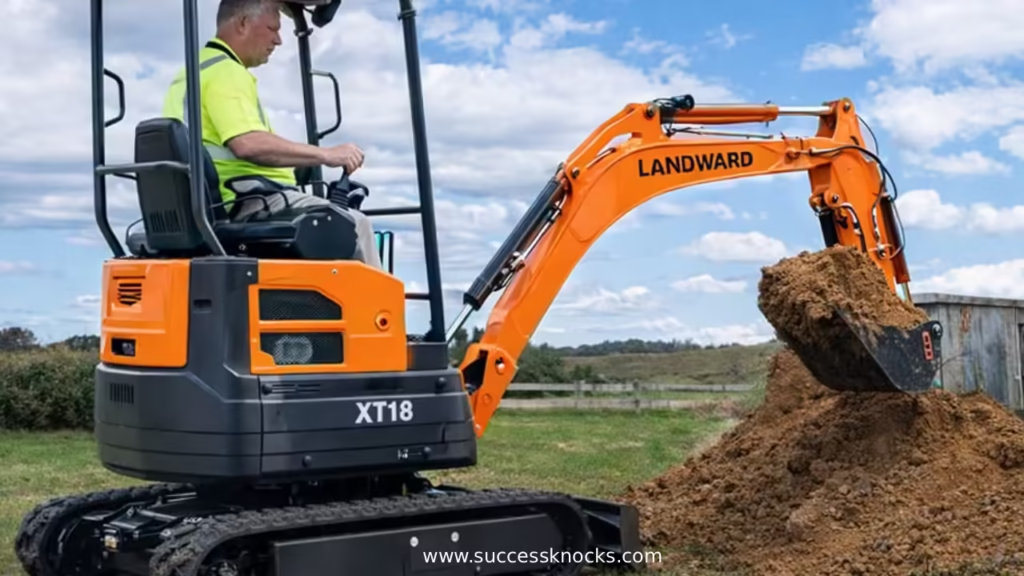
Most minis under 7,000 pounds travel on standard equipment trailers behind pickup trucks. No CDL required, no special permits needed.
Transport benefits:
- Standard pickup truck capability
- Normal driver’s license sufficient
- Easier job site logistics
- Lower transport costs
Compact Excavator Transport Reality
Compacts typically require larger trailers and more powerful tow vehicles. Some exceed pickup truck capabilities entirely.
Transport considerations:
- Medium-duty truck often required
- CDL may be necessary depending on total weight
- Higher fuel costs for transport
- More complex logistics
The transportation difference affects job economics significantly, especially for contractors running multiple small projects.
Attachment Compatibility and Performance
Mini Excavator Attachment Limitations
Mini excavator hydraulic systems limit attachment performance. Basic buckets, thumbs, and light augers work fine. Heavy-duty attachments struggle.
Common mini attachments:
- Various bucket sizes
- Hydraulic thumbs
- Light augers
- Brush cutters
- Grapples
Compact Excavator Attachment Versatility
Higher hydraulic flow unlocks powerful attachment options. Hammers, heavy augers, and specialized tools perform effectively.
Compact attachment options:
- Hydraulic hammers
- Heavy-duty augers
- Mulchers
- Compactors
- Tilting buckets
When making your mini excavator vs compact excavator choice, factor in attachment needs. If you plan extensive attachment use, compacts deliver better value.
Site Access and Maneuverability
Mini Excavator Access Advantages
Gate clearance: Most minis fit through 6-foot gates Weight limits: Acceptable on most residential driveways and lawns Finished surface protection: Lower ground pressure reduces damage Tight space operation: Zero tail swing enables confined area work
Compact Excavator Space Requirements
Gate requirements: Need 8+ foot access typically Surface considerations: May require protection mats on finished surfaces Turning radius: Larger footprint limits tight space work Utility clearance: Height and width affect overhead obstacle clearance
For urban residential work, mini excavator access advantages often outweigh compact excavator power benefits.
Common Decision Mistakes
Mistake 1: Choosing Based on Price Alone
The fix: Calculate productivity differences over typical project durations.
Mistake 2: Underestimating Transport Complexity
The fix: Factor towing capacity and licensing requirements into decision.
Mistake 3: Ignoring Attachment Plans
The fix: List planned attachments and verify hydraulic compatibility.
Mistake 4: Overlooking Access Requirements
The fix: Measure gate widths and weight restrictions at typical job sites.
Mistake 5: Focusing Only on Digging Performance
The fix: Consider total job requirements including material handling and precision work.
Step-by-Step Selection Process
1. Assess Typical Project Scale
Calculate average material volumes moved daily. Under 30 cubic yards favors minis; over 50 cubic yards suggests compacts.
2. Evaluate Access Requirements
Measure gate widths and surface weight limits at 80% of your job sites. If most sites accommodate compacts, they become viable.
3. Plan Attachment Strategy
List attachments you’ll use within two years. Heavy-duty attachments require compact excavator hydraulic power.
4. Calculate Transport Costs
Include towing vehicle capability, fuel costs, and licensing requirements. Transport complexity affects total project economics.
5. Run Productivity Scenarios
Compare cycle times and daily output for your typical projects. Sometimes compact excavator productivity justifies higher costs.
Regional Market Considerations
Northeast urban markets heavily favor mini excavators due to access constraints and finished surface protection requirements.
Western states with larger residential lots see more compact excavator adoption. Space availability reduces mini excavator advantages.
Southern markets show mixed preferences based on soil conditions. Hard clay favors compact power; sandy soils work fine with mini capabilities.
The Associated Equipment Distributors report shows regional preferences shifting based on development density and typical project scales.
Integration with Larger Equipment Fleets
Consider how mini excavator vs compact excavator choices fit existing equipment. If you already own full-size excavators, minis fill the precision niche effectively.
For contractors also evaluating backhoe vs excavator decisions, mini excavators often complement backhoe versatility better than compacts due to size differentiation.
Fleet strategy considerations:
- Avoid capability overlap between machines
- Ensure size gaps justify multiple units
- Consider operator training complexity
- Plan maintenance facility requirements
Key Takeaways
- Mini excavators excel at precision work and residential access
- Compact excavators deliver superior productivity and attachment capability
- Transport requirements significantly impact total project costs
- Site access limitations often determine appropriate size
- Attachment plans should influence size selection
- Operating costs favor minis by 20-30% typically
- Productivity differences can offset cost premiums on larger projects
- Regional markets show distinct size preferences
Choosing the right machinery often depends on the specific geographic constraints and soil conditions of your project site. For instance, professional Gresham excavation services frequently utilize mini excavators for residential trenching because these units can easily pass through standard garden gates without damaging existing structures. While a compact excavator offers superior breakout force for tougher terrain, the mini version remains the preferred choice for backyard renovations where precision is paramount. By prioritizing maneuverability over raw power, operators can complete complex utility installations in congested neighborhoods while significantly reducing the logistical costs associated with transporting larger, heavy-duty earthmoving equipment.
Conclusion
Mini excavator vs compact excavator isn’t about better or worse—it’s about matching machine capability to job requirements. Minis dominate precision residential work where access matters most. Compacts excel when productivity and power take priority.
Most contractors benefit from honestly assessing their typical job site access and daily material volumes. The right size becomes obvious when you factor in real-world constraints.
Your next step? Measure gate widths at your most common job sites and calculate average daily excavation volumes. These two metrics will drive your decision more than any specification sheet.
The best excavator is the one that consistently reaches your job sites and completes work profitably.
Frequently Asked Questions
Q: What’s the actual size difference between mini excavator vs compact excavator?
A: Minis range 1,000-10,000 lbs with 3-6 foot widths, while compacts span 10,000-20,000 lbs with 6-8 foot widths. The weight and width differences significantly impact transport and access capabilities.
Q: Can a mini excavator handle the same jobs as a compact excavator?
A: Mini excavators handle lighter versions of most compact excavator jobs, but with reduced productivity and power. Compacts move 30-50% more material per hour and handle tougher conditions more effectively.
Q: Which size excavator is better for residential contractors?
A: Mini excavators typically serve residential contractors better due to gate access, reduced surface damage, and lower operating costs. Choose compacts only when productivity demands justify the size increase.
Q: Do I need special licensing to transport compact excavators?
A: Many compact excavators require CDL licensing when combined with trailer weight. Minis under 7,000 lbs typically travel on standard trailers behind pickup trucks without special licensing.
Q: What’s the productivity difference between mini and compact excavators?
A: Compact excavators typically move 30-50% more material per hour due to higher hydraulic flow rates, larger buckets, and increased reach capabilities, but minis excel at precision work.