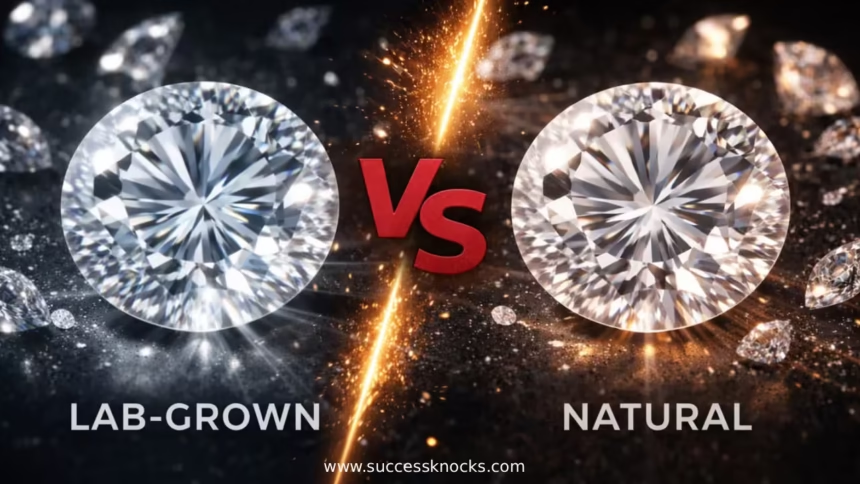
Lab grown diamonds vs natural diamonds represents one of the most significant shifts in the jewelry industry since synthetic gemstones were first developed, fundamentally changing how we think about diamond value, ethics, and authenticity.
Here’s what you need to know immediately:
- Lab grown diamonds are chemically identical to natural diamonds (pure carbon in crystal lattice structure)
- Formation time: Natural diamonds take 1-3 billion years; lab diamonds form in 2-10 weeks
- Price difference: Lab grown diamonds cost 40-70% less than natural equivalents
- Visual distinction: Impossible to tell apart without specialized gemological equipment
- Certification: Both receive identical grading from major gemological institutes
Understanding the Science Behind Each Type
Natural Diamonds: Earth’s Ancient Treasures
Natural diamonds form 100-200 miles beneath Earth’s surface under extreme conditions: temperatures reaching 2,000°F and pressure 725,000 times greater than at sea level.
This process requires very specific circumstances. Carbon atoms must arrange themselves in perfect crystal lattice structures over geological time periods. The Smithsonian Institution estimates that most gem-quality diamonds formed between 1-3 billion years ago.
Only a tiny fraction of diamonds created deep in the Earth ever reach the surface through volcanic eruptions. Even fewer possess the clarity, color, and size worthy of jewelry.
Lab Grown Diamonds: Controlled Perfection
Lab grown diamonds use two primary methods to replicate Earth’s diamond-forming process:
High Pressure High Temperature (HPHT) mimics natural conditions using massive presses that generate 1.5 million pounds per square inch of pressure and temperatures above 2,700°F.
Chemical Vapor Deposition (CVD) uses a different approach. Scientists place a diamond seed in a chamber filled with carbon-rich gases. Microwaves break down the gas molecules, allowing pure carbon to deposit layer by layer onto the seed.
Both methods produce diamonds with identical physical, chemical, and optical properties to natural stones.
Lab Grown Diamonds vs Natural Diamonds: Complete Comparison
| Aspect | Natural Diamonds | Lab Grown Diamonds |
|---|---|---|
| Chemical Composition | Pure carbon (C) | Pure carbon (C) |
| Crystal Structure | Cubic crystal system | Cubic crystal system |
| Hardness | 10 (Mohs scale) | 10 (Mohs scale) |
| Brilliance | Excellent | Excellent |
| Formation Time | 1-3 billion years | 2-10 weeks |
| Cost (1 carat) | $3,000-$15,000+ | $1,200-$4,500 |
| Environmental Impact | High (mining) | Lower (controlled production) |
| Rarity | Limited supply | Unlimited potential supply |
| Resale Value | Moderate decline | Significant decline |
| Certification | GIA, AGS, etc. | Same institutions |
The Price Revolution
The cost difference between lab grown diamonds vs natural diamonds has created a seismic shift in consumer behavior.
Consider this scenario: A 2-carat, VS1 clarity, G color natural diamond costs approximately $12,000-$18,000. The identical lab grown diamond? Around $4,000-$6,000.
That’s not a small difference. It’s life-changing money.
This pricing gap exists because:
- Mining operations require massive infrastructure investments
- Natural diamond supply is controlled by major mining companies
- Marketing budgets for natural diamonds are enormous
- Lab production costs decrease as technology improves
- Consumer perception is slowly shifting toward lab grown acceptance
Quality and Beauty: Setting the Record Straight
Here’s what gemologists won’t always tell you upfront: lab grown diamonds often have fewer inclusions than natural diamonds.
Why? Controlled laboratory environments eliminate many variables that create flaws in natural stones. No geological stress, no random mineral intrusions, no billions of years of potential contamination.
Brilliance and fire are identical between lab grown and natural diamonds because they depend entirely on cut quality and crystal structure—both identical in lab and natural stones.
Color grading follows the same D-Z scale. Lab grown diamonds can achieve the same colorless grades as natural diamonds, sometimes more consistently.
The kicker? Even trained gemologists require specialized equipment to distinguish between lab grown diamonds vs natural diamonds.
Environmental and Ethical Considerations
Natural diamond mining moves approximately 1,750 tons of earth per carat, according to Environmental Protection Agency data. This process often involves:
- Habitat destruction
- Water contamination
- Carbon emissions from heavy machinery
- Community displacement in some regions
Lab grown diamond production requires significantly less environmental disruption:
- Minimal land use
- Controlled energy consumption
- No ecosystem destruction
- No mining-related social conflicts
However, lab production does consume substantial electricity. The environmental advantage depends on the energy source used by production facilities.
The Investment Reality
Let’s address the elephant in the room: resale value.
Natural diamonds typically lose 20-50% of retail value immediately after purchase. Lab grown diamonds lose even more—often 60-80% of retail value.
Neither option represents a sound financial investment. If you’re buying for investment purposes, consider stocks, real estate, or actual investment-grade gems.
But here’s the flip side: if you’re buying for personal enjoyment and symbolic value, does resale value matter? Many buyers are deciding it doesn’t.
Detection and Certification
Major gemological institutes now grade lab grown diamonds using identical standards as natural diamonds. The Gemological Institute of America issues certificates for both types.
Key differences in certification:
- Lab grown diamonds are clearly marked as “laboratory grown”
- Laser inscriptions on the girdle identify lab grown stones
- Specialized equipment can detect growth patterns unique to each formation method
Advanced detection uses photoluminescence spectroscopy to identify trace elements and crystal defects that differ between formation methods.
Consumer Trends and Market Shifts
The lab grown diamond market has exploded. Industry reports show lab grown diamonds now represent over 15% of engagement ring purchases in the United States—up from less than 5% in 2020.
Millennial and Gen Z buyers drive this trend because they prioritize:
- Value for money
- Environmental consciousness
- Ethical sourcing
- Practical financial decisions
Traditional buyers still prefer natural diamonds for:
- Perceived rarity and romance
- Investment potential concerns
- Social status considerations
- Family tradition
Common Misconceptions Debunked
Misconception: “Lab grown diamonds are fake” Truth: They’re chemically identical to natural diamonds—just formed differently
Misconception: “You can tell the difference by looking” Truth: Visual distinction is impossible without equipment
Misconception: “Lab grown diamonds don’t sparkle as much” Truth: Brilliance depends entirely on cut quality, not origin
Misconception: “Natural diamonds are always better quality” Truth: Quality varies in both types; certification matters more than origin
Misconception: “Lab grown diamonds will become worthless” Truth: Value retention depends on market acceptance, which continues growing
Step-by-Step Selection Guide
1. Define Your Priorities
- Budget limitations
- Ethical considerations
- Long-term value concerns
- Personal symbolism importance
2. Compare Certified Stones
Focus on the 4 Cs (cut, color, clarity, carat) rather than origin when evaluating beauty.
3. Consider Your Timeline
Natural diamonds have limited supply; lab grown availability is essentially unlimited.
4. Evaluate Total Cost of Ownership
Include insurance, potential resale, and personal satisfaction in your calculation.
5. Make an Informed Decision
Choose based on your values, not external pressure or assumptions.
Common Mistakes and How to Avoid Them
Mistake: Assuming all lab grown diamonds are lower quality Fix: Compare certified stones of similar grades regardless of origin
Mistake: Buying based solely on price savings Fix: Consider long-term satisfaction and personal meaning
Mistake: Not verifying certification Fix: Ensure your diamond comes with proper gemological certification
Mistake: Ignoring insurance implications Fix: Check how your insurance company values lab grown vs natural diamonds
Mistake: Making assumptions about detectability Fix: Understand that visual distinction is impossible without equipment
Alternative Considerations
When evaluating lab grown diamonds vs natural diamonds, don’t forget other options exist. For buyers prioritizing maximum value and beauty, considering diamond vs moissanite opens additional possibilities. Moissanite offers even greater cost savings while delivering comparable visual appeal and superior fire.
Industry Future Outlook
Lab grown diamond technology continues advancing rapidly. Production costs decrease while quality improves. Major jewelry retailers now prominently feature lab grown options.
This trend suggests continued market share growth for lab grown diamonds, potentially making them the dominant choice within the next decade.
Key Takeaways
- Chemical identity: Lab grown diamonds are genuine diamonds, not imitations
- Cost advantage: Lab grown stones cost 40-70% less than natural equivalents
- Quality potential: Lab grown diamonds often have fewer inclusions due to controlled formation
- Environmental impact: Lab production requires significantly less earth disruption
- Detection requires equipment: Visual distinction is impossible for consumers
- Certification standards: Both types receive identical grading from major institutes
- Market acceptance: Growing rapidly among younger consumers
- Investment consideration: Neither type represents strong resale value
- Personal choice: Decision should reflect individual values and priorities
Making Your Decision
Lab grown diamonds vs natural diamonds isn’t about right or wrong choices—it’s about finding the option that aligns with your values, budget, and long-term satisfaction.
If you value tradition, perceived rarity, and maximum resale potential, natural diamonds maintain advantages.
If you prioritize value, environmental consciousness, and practical financial decisions, lab grown diamonds deliver exceptional benefits.
The “perfect” choice is the one that makes you smile every time you see your ring.
Frequently Asked Questions
Q: Will people know I chose lab grown diamonds vs natural diamonds?
A: Visual distinction is impossible without specialized equipment. Your diamond’s beauty speaks for itself regardless of origin.
Q: Do lab grown diamonds test as real diamonds on diamond testers?
A: Yes. Basic diamond testers will register lab grown diamonds as genuine because they test thermal conductivity, which is identical in both types.
Q: How long do lab grown diamonds last compared to natural diamonds?
A: Indefinitely. Both types have identical hardness (10 on Mohs scale) and durability. Formation method doesn’t affect longevity.
Q: Can I upgrade from lab grown to natural diamonds later?
A: Most jewelers offer upgrade programs, though trade-in value for lab grown diamonds is typically lower than natural diamonds.
Q: Are lab grown diamonds available in all shapes and sizes?
A: Yes. Lab grown diamonds can be cut into any shape and grown to substantial sizes, often with more consistency than natural stones.