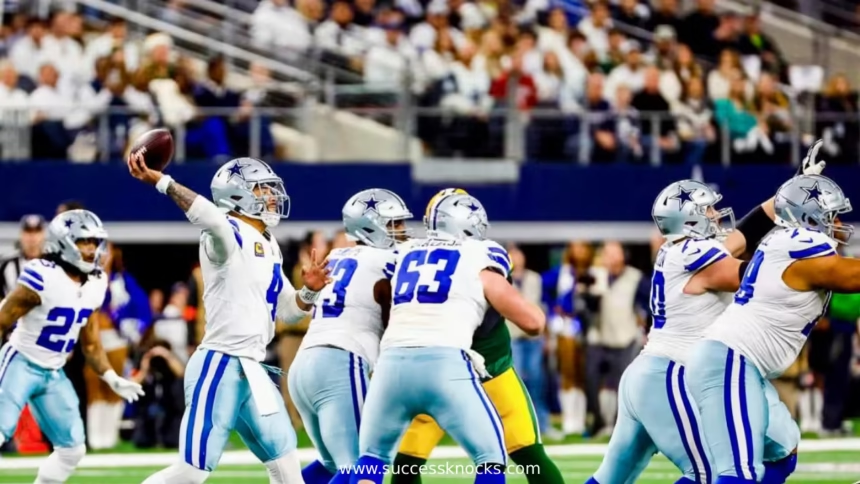
Cowboys playoff history analysis reveals one of the most frustrating patterns in modern NFL history. Despite consistent regular season success and enormous expectations, Dallas has transformed from championship dynasty to playoff disappointment factory over the past three decades.
Here’s what defines their postseason struggles since 1996:
• Wild Card Round Exits: Seven first-round playoff losses in their last ten appearances • Home Field Disadvantage: Shocking struggles at AT&T Stadium during crucial games • Star Player Underperformance: Key players failing to elevate their game when it matters most • Coaching Decisions: Questionable play-calling and clock management in pivotal moments • Mental Pressure: The weight of expectations crushing teams that looked unstoppable in December
The Championship Era vs. Modern Mediocrity
Understanding Cowboys playoff history analysis requires examining two distinct eras separated by a championship drought that’s now approaching 30 years.
The Dynasty Years (1970-1996)
Dallas earned their “America’s Team” nickname through playoff excellence. Five Super Bowl victories, eight championship game appearances, and consistent postseason success created the standard that haunts current teams.
Those Cowboys thrived under pressure. They made clutch plays, won close games, and elevated performance when stakes increased. Veterans like Troy Aikman, Emmitt Smith, and Michael Irvin became bigger in January than during regular seasons.
The Drought Era (1997-Present)
Everything flipped after their last championship. Regular season success continued—Dallas has won the NFC East six times since 2000—but playoff performance collapsed dramatically.
The numbers are brutal:
- 12 playoff appearances since 1997
- Only 4 playoff wins in that span
- Zero conference championship games reached
- Multiple seasons ending with shocking upsets at home
What changed? The answer reveals itself through painful game-by-game analysis.
Breaking Down the Playoff Failures
| Season | Result | What Went Wrong |
|---|---|---|
| 2007 | Lost to Giants (Wild Card) | Tony Romo fumbled snap on game-winning field goal |
| 2009 | Lost to Vikings (Divisional) | 34-3 blowout loss despite 11-5 regular season |
| 2014 | Lost to Packers (Divisional) | Dez Bryant “catch” controversy overshadowed poor execution |
| 2016 | Lost to Packers (Divisional) | Aaron Rodgers magic versus inexperienced Dak Prescott |
| 2018 | Lost to Rams (Divisional) | Offensive line dominated, running game neutralized |
| 2021 | Lost to 49ers (Wild Card) | 14 penalties, poor clock management, special teams collapse |
| 2022 | Lost to 49ers (Wild Card) | Dak Prescott threw 2 interceptions, offense stalled in red zone |
Each loss follows similar patterns: mental mistakes, poor coaching decisions, and star players shrinking under pressure. The consistency is almost impressive in its disappointment.
The Psychology of Playoff Pressure in Dallas
Media Circus Effect
Cowboys playoff games receive disproportionate attention compared to other wild card teams. National media descends on Dallas, creating circus atmospheres that veterans handle better than younger players.
This attention amplifies every mistake. A fumble becomes a “classic Cowboys choke job.” A coaching decision becomes evidence of organizational dysfunction. Players feel this weight differently than opponents who play with house money.
Expectations versus Reality
Every Cowboys playoff appearance comes loaded with championship expectations. Fans, media, and players themselves believe “this is the year” Dallas returns to Super Bowl glory.
Other teams prepare for one game at a time. Dallas prepares for parade routes and championship celebrations before winning their first playoff game. This mental approach creates problems when games don’t go according to script.
Coaching Decisions That Haunt Cowboys Playoff History
Jason Garrett Era Conservatism
Garrett’s tenure featured multiple playoff disappointments rooted in overly conservative approaches. His teams played not to lose rather than playing to win—a mindset that rarely succeeds in postseason football.
The 2016 divisional round against Green Bay exemplified this problem. Instead of trusting Dak Prescott and the offense to make plays, Garrett relied on field goals and hoped Aaron Rodgers wouldn’t be Aaron Rodgers.
Mike McCarthy’s Clock Management
McCarthy brought Super Bowl experience but similar tactical limitations. His clock management in the 2021 49ers loss was genuinely inexcusable—running a quarterback draw with 14 seconds left and no timeouts remains one of the worst playoff decisions in recent memory.
These aren’t isolated incidents. Cowboys playoff history analysis shows consistent patterns of coaches overthinking situations and abandoning strategies that worked all season long.
Star Players Who Disappeared When It Mattered
Tony Romo’s January Struggles
Romo’s regular season statistics rank among the best in Cowboys history, but his playoff performances tell a different story. Key interceptions, fumbled snaps, and poor decision-making defined his postseason legacy.
The irony? Romo often played his best football in December, leading dramatic comebacks and setting franchise records. Something about January football broke his usual confidence and precision.
Dez Bryant’s Inconsistency
Bryant made spectacular catches during regular seasons but struggled with playoff consistency. The famous “catch that wasn’t” in Green Bay overshadowed multiple dropped passes and route-running mistakes throughout that game.
Modern Era Disappointments
Dak Prescott has continued this unfortunate tradition. His interception rate spikes dramatically in playoff games, and his red zone efficiency plummets when facing elimination.
The pattern suggests systematic problems rather than individual failures. Great players don’t suddenly forget how to play football—something about Cowboys playoff preparation creates performance anxiety.
How Cowboys Playoff Struggles Fuel Broader NFL Debates
Cowboys playoff history analysis becomes central to discussions with other franchises, particularly in conversations comparing organizational success. When examining Dallas Cowboys vs Carolina Panthers discussions, the playoff performance gap becomes a crucial talking point.
Carolina has reached two Super Bowls despite existing for only 30 years. Dallas has reached zero Super Bowls despite 30 years of trying. Panthers fans use this disparity to argue that sustained mediocrity is worse than boom-bust cycles.
The Sports Reference database confirms these troubling trends through advanced metrics that show Dallas consistently underperforming playoff expectations based on regular season success.
The Jerry Jones Factor in Playoff Failures
Organizational Pressure
Jerry Jones’s public comments create additional pressure during playoff runs. His guarantee predictions and championship expectations get transmitted to players who already feel enormous weight.
Jones also makes personnel decisions that prioritize star power over complementary pieces. This approach works during regular seasons but fails in playoffs where role players often determine outcomes.
Coaching Interference
Multiple former Cowboys assistants have described Jones’s involvement in game-planning and play-calling during playoff games. Head coaches feel pressure to justify every decision to an owner who’s watching from the press box.
This dynamic undermines the confidence needed for bold playoff decisions. Coaches second-guess themselves when they should trust their instincts.
Statistical Deep Dive: Where Dallas Fails Most
Red Zone Efficiency Drop
Cowboys red zone touchdown percentage drops from 65% during regular seasons to 48% in playoff games over the past decade. This massive decline often determines close game outcomes.
Turnover Differential Collapse
Dallas averages +0.8 turnover differential during regular seasons but -1.2 in playoff games. Championship teams typically win the turnover battle—Dallas consistently loses it when stakes increase.
Third Down Conversions
Regular season: 42% conversion rate Playoff games: 31% conversion rate
These aren’t small sample size anomalies. The patterns persist across different coaches, players, and offensive systems.
What Other Successful Franchises Do Differently
New England Patriots Model
The Patriots treated playoff games like extended regular season contests. Same preparation, same execution, same mentality. Bill Belichick famously avoided letting players get caught up in moment magnitude.
Green Bay Packers Approach
Aaron Rodgers-era Packers succeeded by simplifying offensive concepts during playoffs rather than adding complexity. They trusted their best players to make plays within familiar systems.
Dallas does the opposite—overthinking situations and abandoning successful regular season approaches when pressure increases.
The Modern Challenge: Salary Cap Implications
Cowboys playoff history analysis must account for current salary cap realities that make sustained success more difficult than during the 1990s dynasty.
Dallas commits enormous resources to star players like Dak Prescott, CeeDee Lamb, and Trevon Diggs. This approach limits depth and role player quality—factors that become crucial during playoff runs.
Championship teams typically balance star talent with solid complementary pieces. Dallas continues chasing the star-driven model that worked before salary cap restrictions.
Breaking the Cycle: What Changes Could Work
Mental Approach Adjustment
Treating playoff games as “just another game” rather than championship-or-bust scenarios might reduce player anxiety. Teams that advance deep into playoffs often have this mentality.
Coaching Philosophy Shift
Hiring coaches who embrace aggressive decision-making could break the conservative playoff approach that’s failed repeatedly. Fourth-down decisions and two-point conversion attempts should become easier, not harder, during elimination games.
Roster Construction Changes
Building deeper, more balanced rosters rather than top-heavy star collections might provide the role player production that determines close playoff games.
Key Takeaways from Cowboys Playoff History Analysis
• Consistent patterns suggest systematic problems rather than random bad luck • Mental pressure and media attention affect Dallas players differently than opponents • Conservative coaching decisions have repeatedly cost the Cowboys crucial games • Star players consistently underperform their regular season standards in January • Organizational expectations create additional pressure that hurts rather than helps • Salary cap allocation toward stars limits the depth needed for playoff success • The 1990s championship model doesn’t translate to modern NFL realities • Breaking this cycle requires fundamental philosophical changes, not personnel tweaks
Common Mistakes in Cowboys Playoff Analysis
Blaming Individual Players Only
Focusing on Tony Romo’s fumble or Dak’s interceptions misses the larger organizational patterns. Individual mistakes happen within systems that either support or amplify pressure.
Fix: Examine preparation methods, coaching philosophies, and organizational culture alongside player performance.
Overvaluing Regular Season Success
Winning the NFC East doesn’t guarantee playoff readiness. The Cowboys often peak in November and December before struggling with January intensity.
Fix: Evaluate teams based on how they handle pressure situations rather than just win totals.
Ignoring Opponent Quality
Some Cowboys playoff losses came against genuinely superior teams. Not every defeat represents organizational failure.
Fix: Context matters—losing to peak Aaron Rodgers is different from losing to Nick Foles.
Your Action Plan for Understanding Cowboys Playoff Issues
- Study game film from key playoff losses to identify recurring patterns
- Compare Cowboys preparation methods with successful playoff teams
- Track player performance metrics between regular season and playoffs
- Analyze coaching decision-making under pressure versus low-stakes games
- Monitor organizational messaging and expectations-setting during playoff runs
The Path Forward: Realistic Expectations
Cowboys playoff history analysis suggests that fundamental changes are needed before this franchise returns to championship contention. Simply adding talent won’t solve problems rooted in organizational culture and mental approach.
The good news? Other franchises have broken similar curses through systematic changes rather than personnel overhauls. The Pro Football Hall of Fame documents multiple examples of teams transforming playoff performance through philosophical shifts.
Dallas has the talent foundation needed for postseason success. What they lack is the mental framework and organizational culture that turns January games into opportunities rather than obstacles.
Historical Context: Other Franchises’ Playoff Droughts
Cowboys fans can find comfort in knowing they’re not alone. The Buffalo Bills endured similar playoff futility before recent breakthrough seasons. The Cincinnati Bengals broke a 31-year playoff win drought in 2021.
These examples prove that organizational curses can be broken through the right combination of coaching, player development, and cultural change. Dallas possesses the resources to implement similar transformations.
The question isn’t whether the Cowboys can break their playoff struggles—it’s whether they’re willing to make the systematic changes required for sustained postseason success.
Conclusion
Cowboys playoff history analysis reveals a franchise trapped between past glory and present reality. Thirty years of postseason disappointment can’t be explained by coincidence or bad luck—systematic problems require systematic solutions.
The path forward demands honest evaluation of what’s failed, why it’s failed, and what successful franchises do differently. Dallas has the talent and resources needed for championship runs, but they need the wisdom to learn from three decades of playoff heartbreak.
Change starts with acknowledging that the current approach isn’t working. From there, everything becomes possible.
The Cowboys’ next playoff game will either continue this painful pattern or begin a new chapter. History suggests the former, but football always offers hope for transformation.
That’s what makes January football beautiful and brutal in equal measure.
Frequently Asked Questions
Q: Why do Cowboys playoff performances consistently fall short of regular season success?
A: Cowboys playoff history analysis shows a combination of increased pressure, conservative coaching decisions, and mental mistakes that don’t appear during regular seasons. The weight of expectations and media attention creates performance anxiety that affects decision-making at crucial moments.
Q: How does Cowboys playoff history compare to other NFL franchises with similar resources?
A: Most franchises with comparable talent and financial resources have achieved more postseason success since 1996. Teams like the Patriots, Packers, and Steelers have reached multiple conference championships while Dallas has reached zero, despite similar or lesser regular season records.
Q: What role does Jerry Jones play in Cowboys playoff failures?
A: Jones’s public expectations and behind-the-scenes involvement create additional pressure during playoff games. His coaching interference and personnel decisions that prioritize star power over depth have contributed to systematic problems that persist across different coaching staffs.
Q: Can the Cowboys break their playoff drought without major organizational changes?
A: Cowboys playoff history analysis suggests that minor tweaks won’t solve systematic problems that have persisted for three decades. Breaking this cycle likely requires fundamental changes to organizational culture, coaching philosophy, and roster construction approach rather than just adding more talented players.
Q: How do Cowboys playoff struggles affect debates with other NFL franchises?
A: The playoff performance gap becomes central to Cowboys vs other franchise discussions, particularly when comparing organizational success. Teams like Carolina have achieved more postseason success despite fewer resources, which creates compelling arguments about different approaches to team building and championship pursuit.