atm business owners in the USA are quietly stacking passive income from machines parked in gas stations, corner stores, and bars while everyone else chases the next app. No inventory headaches. No employees on payroll. Just cash flowing in from every withdrawal.
Here’s the straight talk on what an atm business really is in 2026 and why it still works:
- Low-barrier entry: You can get your first machine running for $3,000–$8,000 total.
- Revenue model: Customers pay a $3–$5 surcharge per transaction—you keep most of it.
- Scalability: One solid location can net $350–$450 monthly after costs; five machines turn into real money.
- Cash still rules: Despite digital payments, Americans pull billions from ATMs every year.
- Hands-off potential: Once placed and stocked, the machine runs 24/7 with minimal daily effort.
That’s the appeal. Now let’s cut through the hype and map exactly how it works.
Why an atm business Still Delivers in 2026
Cash isn’t dead. It’s stubborn. People hit ATMs when they need quick bills for tips, small purchases, or emergencies. Independent operators—folks like you—own the machines, load the cash, and collect the surcharge fee the customer pays on top of whatever their bank charges.
The kicker? Banks and big networks don’t own every ATM. You partner with a processor (via a sponsor bank) to plug into the networks. They handle the transaction routing. You handle the placement and cash.
Result: predictable revenue tied to foot traffic, not stock prices or ad clicks.
How an atm business Actually Works
You buy or lease an ATM. You find a busy location that lacks convenient cash access. The owner agrees to host it (usually for a small monthly fee or revenue split). You load $2,000–$5,000 in cash. Customers withdraw. You earn the surcharge minus tiny processing fees.
Every month the processor deposits your share straight to your business account. Refill the cash when it runs low. Rinse. Repeat.
It’s vending-machine logic with higher margins and zero spoilage.
Startup Costs: Real Numbers, No Fluff
Expect to spend between $2,500 and $8,000 to get one machine live. Here’s the breakdown operators actually see right now:
| Item | Cost Range | What It Covers |
|---|---|---|
| ATM machine | $2,000–$5,000 | New, refurbished, or basic floor model |
| Initial cash load | $2,000–$5,000 | Vault cash that cycles back after withdrawals |
| Installation & setup | $200–$500 | Transport, mounting, internet hookup |
| Processing agreement | $0–$200 | One-time or monthly network access |
| Misc (LLC, insurance) | $300–$800 | Legal basics and liability coverage |
Total for your first machine: $3,000–$8,000. Scale-up gets cheaper per unit.
Step-by-Step: How to Launch Your First atm business in 90 Days
- Form your business entity. File an LLC in your state (takes 20 minutes online, costs $100–$300). Grab your EIN from the IRS for free. This step screams “legit” to location owners and banks.
- Open a dedicated business checking account. Hit a local credit union or community bank. Show them your LLC docs and processing agreement. They’ll want to see how you’ll fund the cash load.
- Sign with a processor/ISO. This is your network gateway. They connect you to Visa, Mastercard, and regional networks. Shop a few—compare surcharge splits and support.
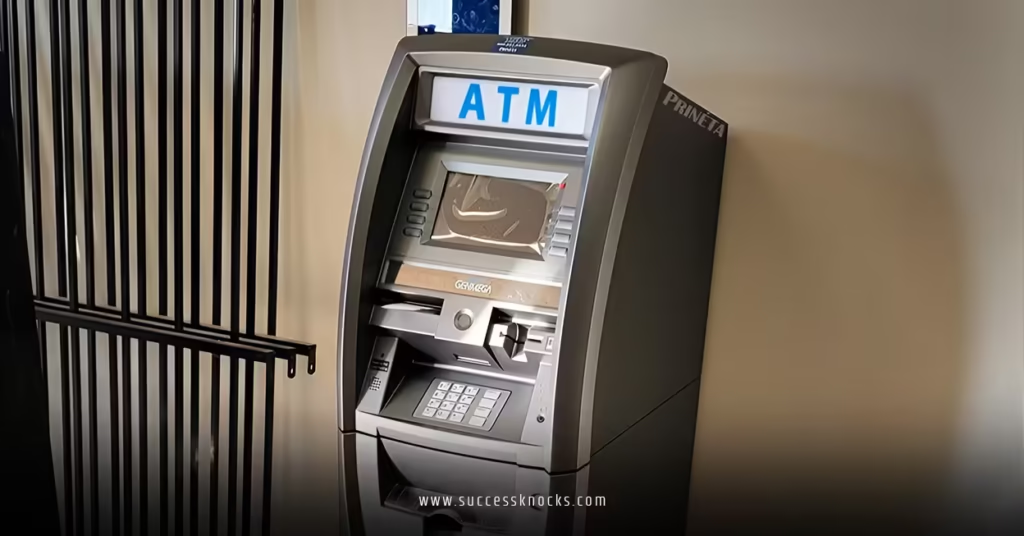
- Buy your ATM. New machines look sharp and carry warranties. Refurbished save cash and work fine for beginners. Make sure it’s ADA compliant and PCI secure.
- Scout and secure locations. Walk high-traffic spots: convenience stores, laundromats, bars, auto shops. Offer the owner $50–$100/month or 20% of surcharges. Get everything in a simple one-page agreement.
- Install and load cash. Run a dedicated wireless connection (don’t piggyback on their Wi-Fi). Stock the vault. Test a withdrawal.
- Flip the switch. Your processor activates it. First surcharge hits your account within days.
- Monitor and refill. Most operators check machines weekly. Armored service exists if you hate handling cash.
Do this right and your first machine can pay for itself in 6–12 months.
Common Mistakes (and How to Dodge Them)
- Chasing cheap locations. A dead spot kills profits. Foot traffic beats rent cost every time. Fix: Visit during peak hours. Count people. Walk away if it feels slow.
- Ignoring cash management. Running dry means lost revenue and angry customers. Fix: Set alerts. Refill at 30% capacity. Track usage patterns.
- Skipping the paperwork. One skipped form can lock you out of processing or trigger bank flags. Fix: LLC + EIN + processor agreement before you buy hardware.
- Set-it-and-forget-it syndrome. Machines need cleaning, paper, and occasional repairs. Fix: Build a 15-minute weekly checklist.
- Underpricing your surcharge. $2 feels safe but leaves money on the table. Fix: Test $3.50–$4.00 in busy spots. Customers pay it.
Scaling Your atm business Route
Once your first machine prints money, add more. Five machines at $400 net each equals $2,000 monthly—real side-hustle territory. Ten machines? You’re looking at a full-time income with part-time hours.
Route management software tracks cash levels and transaction reports. Some operators hire part-time fillers. Others use armored carriers. The game shifts from “can I place one?” to “how do I protect my route?”
Key Takeaways
- An atm business runs on foot traffic and simple math: more withdrawals equal more surcharges.
- Startup stays affordable—under $8k for your first unit if you stay lean.
- Cash handling is the biggest operational reality; treat it like inventory, not pocket change.
- Compliance is straightforward: LLC, EIN, processor agreement, and basic state business rules.
- Location quality beats everything else. A great spot forgives a lot of rookie mistakes.
- Profits compound when you add machines without adding complexity.
- 2026 still favors operators who stay hands-on at the beginning and systems-driven later.
- Passive income is real—but only after the first 90 days of hustle.
Ready to Pull the Trigger?
You don’t need a finance degree or a warehouse. You need one good location, clean paperwork, and the guts to load that first stack of cash. Start small. Learn fast. Scale what works.
The machines are waiting. The cash is already moving. Question is—will it move through yours?
FAQs
What exactly is an atm business in 2026?
An atm business means you own and operate independent ATMs placed in retail locations. Customers pay a surcharge for every withdrawal; you pocket most of it after minimal processing costs.
How much can one ATM really make per month?
Conservative numbers land at $350–$450 net profit after cash servicing and fees when you average 200–300 transactions at $3–$4 each. Prime locations push higher.
Do I need a special license to run an atm business?
No federal ATM-specific license. You need an LLC, EIN, and a processor agreement. Some cities require a basic business license. Check FinCEN guidance for banks’ perspective on independent operators.
How do I find good locations for my atm business?
Target spots with steady foot traffic but no nearby bank or ATM—gas stations, convenience stores, bars, and auto shops. Approach owners with a win-win offer and a simple contract.
Is an atm business truly passive income?
Mostly yes after setup. You’ll spend a few hours weekly restocking and checking machines, or outsource it. The real work is upfront placement and ongoing cash management.