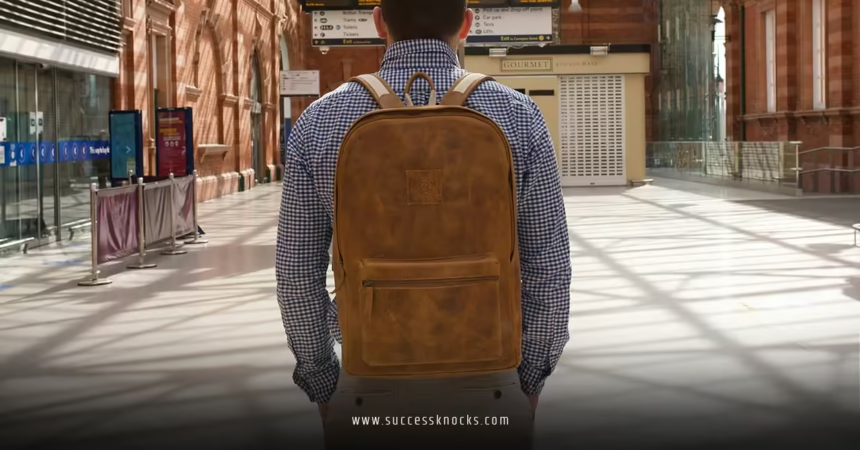
Business backpack designs have evolved into legitimate power tools for remote workers, office commuters, and hybrid professionals. They’re no longer the afterthought of corporate culture—they’re engineered solutions that blend durability, aesthetics, and functionality in ways that old-school briefcases simply can’t match.
Quick Overview: What You Need to Know About Business Backpacks
A business backpack is a professionally styled bag designed to carry laptops, documents, and daily essentials while maintaining a polished appearance suitable for office or client-facing environments. Here’s what makes them worth the investment:
• Designed for professionals, not college kids—structured materials, sleek aesthetics, organized compartments
• Protects expensive gear—padded laptop sleeves and cable organizers prevent costly damage
• Spreads weight evenly across both shoulders, reducing back strain compared to single-shoulder bags
• Versatile enough for commuting, travel, and hybrid work scenarios
• Built to last—quality business backpacks hold their value and withstand years of daily use
Why Business Professionals Actually Need a Business Backpack (Not Just Want One)
Here’s the thing: carrying a laptop, chargers, documents, and a water bottle in your hands or slung over one shoulder is a recipe for pain and damaged equipment. A proper business backpack distributes load intelligently.
Think of your spine like a tightrope walker’s pole—it needs balance to perform. One-sided weight throws everything off. Business backpacks fix that problem while looking professional enough for a video call with the C-suite.
The “laptop briefcase vs. backpack” debate ended around 2023. Companies realized remote workers and office hybrids needed flexible gear. Backpacks won because they’re practical and now come in executive-approved designs that don’t scream “freshman dorm.”
What Makes a Business Backpack Different from Regular Backpacks
Not all backpacks are created equal. A hiking pack won’t cut it in a boardroom, and a gym bag won’t protect your $1,500 laptop.
| Feature | Regular Backpack | Business Backpack |
|---|---|---|
| Material | Canvas, nylon (casual) | Premium nylon, polyester, ballistic fabric |
| Aesthetics | Colorful, sporty | Neutral tones (black, gray, navy, tan) |
| Laptop Protection | Minimal or none | Padded sleeve, shock-absorbing padding |
| Organization | 1–3 compartments | 5+ compartments, cable organizers, pen holders |
| Carry Options | Backpack straps only | Backpack straps + luggage handle pass-through |
| Weight Capacity | 20–35 lbs | 30–50 lbs with structured support |
| Professional Appearance | No | Yes—office appropriate |
| Warranty | Often none | Typically 3–10 years |
Key Features to Look For in a Business Backpack
Laptop Protection That Actually Works
The padding matters. You want a dedicated laptop compartment with at least 10mm of cushioning on all sides. Real talk: cheap padding is just fabric layered once or twice. Quality business backpacks use expanded foam or gel-infused materials that absorb impact.
Look for anti-theft designs too. RFID-blocking pockets are standard now, and some premium models include hidden compartments that deter pickpockets. Not paranoia—just smart urban carrying.
Ergonomic Straps and Back Panel
Thin straps dig into shoulders. Wide, padded straps (at least 2 inches) distribute weight better. The back panel should be breathable and contoured—meaning it’s not just flat padding but shaped to follow your spine’s natural curve.
Adjustable sternum straps and waist belts aren’t luxury add-ons; they keep the pack from shifting while you move. Test the fit in person if possible. What works for a 5’2″ person differs from what works for someone 6’3″.
Compartment Organization
A good business backpack has dedicated spaces:
• Main compartment (largest, usually for documents or clothing)
• Laptop sleeve (separate, padded, sized for 13–17 inches) • Front zippered pocket (quick access for phone, keys, cards)
• Cable organizer (small section with elastic loops for chargers and cords)
• Water bottle pocket (on the side, keeps hydration accessible without opening the pack)
• Hidden pockets (for valuables or documents you want secure)
More pockets aren’t always better—they can become chaotic. Aim for 4–6 well-designed compartments rather than 10 mediocre ones.
Durability and Materials
The material you choose affects longevity and appearance:
Ballistic Nylon: Military-grade, nearly indestructible, heavier but lasts decades. Premium choice for frequent travelers.
High-Density Polyester: Lighter than ballistic nylon, still very durable, water-resistant coating typical. Good balance of durability and weight.
Canvas/Waxed Canvas: Stylish, ages well, but requires more maintenance and can be heavier. Popular for minimalist designs.
Recycled Materials: Increasingly common in 2026, eco-conscious without sacrificing durability. Brands like Patagonia and Peak Design use recycled ocean plastic.
Check seams closely. Double-stitched or reinforced stitching means the bag won’t fall apart at stress points (corners, handle attachments, zipper bases).
Common Mistakes People Make (And How to Fix Them)
Mistake 1: Overstuffing
Your shiny new business backpack isn’t meant to carry everything you own. Overloading compromises structure, puts strain on straps, and makes the zipper prone to breaking.
The fix: Pack intentionally. Laptop, charger, documents, phone, water bottle, snacks. That’s your core load. Everything else is optional.
Mistake 2: Choosing Style Over Function
A beautiful backpack that doesn’t protect your gear or distribute weight properly is just expensive luggage.
The fix: Test drive in a store or order from retailers with easy returns. Wear it for 10 minutes. Does it feel balanced? Do the straps dig in? Can you comfortably access what you need?
Mistake 3: Ignoring Warranty and Return Policies
Budget backpacks often have no warranty. Premium brands typically offer 3–10 years.
The fix: Check the warranty before buying. If a backpack costs $300+, it should come with coverage. Brands backing their products for years are confident in quality.
Mistake 4: Forgetting About Weather
A backpack without water resistance is a disaster in rain or near coffee shops (yes, coffee shops—people spill).
The fix: Look for water-resistant coatings or weatherproof materials. Even better: a weather cover is often included or available separately.
Mistake 5: Wrong Size for Your Use Case
Too small? You’ll hate carrying it because everything’s crammed. Too large? It’ll flop around and look ridiculous with your laptop inside a massive bag.
The fix: Match capacity to actual use:
- City commuters: 20–25L (daily essentials only)
- Hybrid workers: 25–35L (laptop + papers + extra clothing)
- Frequent travelers: 35–45L (multi-day gear)
Step-by-Step: How to Choose the Right Business Backpack for You
Step 1: Define Your Primary Use Case
Are you commuting to an office 5 days a week? Working hybrid? Traveling constantly? Each scenario demands different features.
Office commuters need organized compartments and professional aesthetics. Frequent travelers need expandable compartments and carry-on compliance (22 × 14 × 9 inches for most airlines). Hybrids benefit from versatility—a backpack that works in a client meeting and on a weekend trip.
Step 2: Set a Realistic Budget
Quality business backpacks range from $100–$600+. Here’s the rough breakdown:
• $100–$200: Solid, durable, covers basics, limited warranty • $200–$400: Premium build, excellent organization, 5–7 year warranty • $400+: Luxury materials, lifetime warranty, highest-end aesthetics
You don’t need to spend $600 to get something excellent. Most professionals find their sweet spot at $200–$350.
Step 3: Prioritize Your Must-Have Features
List 3–5 non-negotiable features:
- Fits 15″ laptop safely?
- Laptop pass-through for luggage handles?
- Water resistant?
- Lightweight (under 3 lbs)?
- Expandable?
Step 4: Research and Narrow Candidates
Use review sites and check for consistent feedback on durability, strap comfort, and build quality. Look for independent reviews, not just brand websites. Reddit threads on r/CasualCarry and r/backpacks offer honest user takes.
Step 5: Try Before Buying (When Possible)
If you’re spending $250+, order from retailers with hassle-free returns. Wear it for a day. Walk around with your actual gear inside. Comfort matters more than specs.
Step 6: Make the Purchase and Test Extensively
Return windows are typically 30 days. Within that period, put the backpack through real scenarios: commute, office work, light travel. If it fails any critical test, return it guilt-free.
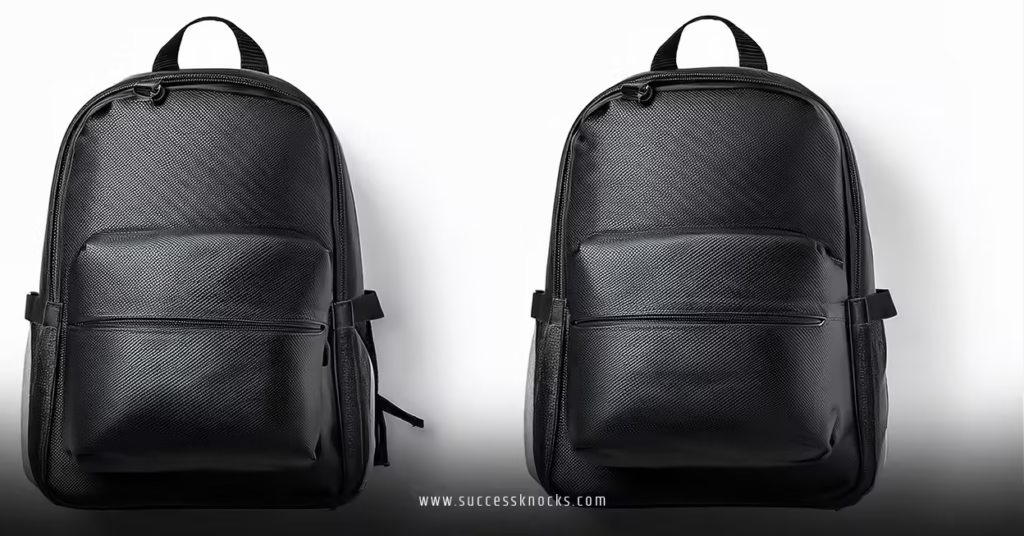
Top Business Backpack Styles for Different Professionals
The Minimalist Executive
Best for: Daily office commutes, minimal gear hauling.
Smaller capacity (20–25L), sleek design, often top-loading. Minimalist packs prioritize aesthetics and simplicity over pockets. Think less is more. Examples include designs from Tom Bihn or Bellroy.
The Hybrid Worker
Best for: Office days, remote days, occasional client meetings.
Expandable compartments, 25–35L, excellent organization. Hybrid backpacks bridge professional and practical. They look sharp in a video call but have all the functionality for a day at the office.
The Road Warrior
Best for: Frequent flights, multi-day travel, client visits across cities.
40–50L capacity, carry-on compliant, TSA-friendly designs. Includes laptop protection, weatherproofing, and luggage passthrough. Premium models feature USB charging ports and hidden security pockets.
The Creative Professional
Best for: Designers, photographers, content creators.
Specialized compartments for cameras, tablets, and gear. Often slightly larger (30–40L) with customizable dividers. Brands like Peak Design focus on this segment.
The Budget-Conscious Professional
Best for: Those seeking functionality without premium pricing.
$100–$200 range, solid basics, reliable durability. Brands like AmazonBasics and Osprey’s budget line deliver no-frills excellence.
How to Care for Your Business Backpack (It’ll Last Longer)
Think of a backpack like a relationship—invest in maintenance.
Regular cleaning: Spot-clean monthly with a damp cloth. Deep clean annually with mild soap and water. Air dry completely before packing.
Zipper maintenance: Stuck zippers? Rub a pencil along the teeth (graphite lubricates). For stubbornness, WD-40 works in a pinch.
Strap and seam checks: Every 6 months, inspect for loose stitching or fraying. Address small tears immediately with fabric glue or a quick repair patch.
Storage: Don’t overpack permanently. Empty it completely weekly. Store in a cool, dry place—not a humid basement or hot garage.
Weather protection: Treat water-resistant coatings annually. Most backpacks respond well to silicone spray treatments available at outdoor retailers.
Key Takeaways
• Business backpacks protect expensive gear while distributing weight evenly—better than single-shoulder briefcases or casual packs.
• Prioritize padded laptop sleeves, ergonomic straps, and durable materials over flashy aesthetics.
• Match capacity to use case: 20–25L for daily commutes, 25–35L for hybrid work, 35–45L for frequent travel.
• Expect to spend $200–$350 for a quality business backpack with a solid warranty and multi-year lifespan.
• Test before committing—wear it for a full day with your actual gear to confirm comfort and functionality.
• Avoid common mistakes like overstuffing, ignoring weather protection, and choosing style over ergonomics.
• Maintain your backpack with regular cleaning, zipper care, and annual seam inspections to extend its life significantly.
• Your backpack signals professionalism—an organized, thoughtfully chosen bag communicates intention and preparedness.
The Bottom Line
A business backpack isn’t just a trend or a status symbol—it’s a practical solution for how professionals actually work in 2026. Whether you’re commuting, hybrid working, or perpetually on the move, the right backpack keeps your gear safe, your shoulders happy, and your hands free for coffee (or handshakes).
The key is matching the backpack to your actual lifestyle, not aspirational Pinterest vision. Start with the step-by-step guide above, prioritize comfort over hype, and don’t overspend. A $250 backpack from a trusted brand will outperform a $600 designer bag if the $250 option fits your needs.
One final thought: your business backpack is a silent indicator of professionalism. It says you’re organized, intentional, and ready. That matters in ways you might not consciously notice until someone asks, “Where’d you get that pack?”
External Resources
For additional insights on professional gear, check out REI’s backpack buying guide for comparisons and expert recommendations. The National Retailers Federation often publishes trends on professional carry solutions. For ergonomic guidance, the American Chiropractic Association provides research-backed advice on proper backpack use and spinal health.
Business Backpack FAQ
Q: Can I take a business backpack through airport security?
Yes. Most business backpacks feature TSA-friendly designs with separate laptop compartments for quick removal. Some premium models have TSA-PreCheck compatibility. Always check your carrier’s carry-on dimensions (typically 22 × 14 × 9 inches).
Q: What’s the ideal weight for an empty business backpack?
Aim for 2–3 pounds. Anything lighter often sacrifices durability; anything heavier strains shoulders even before you pack it. A quality business backpack feels light but sturdy in your hands.
Q: How do I know if a business backpack’s laptop sleeve fits my device?
Check the internal dimensions. A 15″ MacBook Pro measures roughly 13.5″ × 9.5″. Always add 0.5–1 inch for padding clearance. Most business backpacks accommodate 13–17″ laptops; verify before purchasing.
Q: Are expensive business backpacks worth it?
If you use it daily for 5+ years, premium models ($300–$400) amortize to about 15–20 cents per day. Budget packs often fail at 2–3 years. Premium brands also offer warranties and customer service. Worth it depends on your use frequency.
Q: Can I use a business backpack for travel instead of a suitcase?
Absolutely. Many modern business backpacks are carry-on compliant and suitable for 3–5 day trips. Look for expandable compartments and weatherproofing. Pair with packing cubes for organization. The tradeoff: less capacity than a rolling suitcase, but hands-free convenience.