

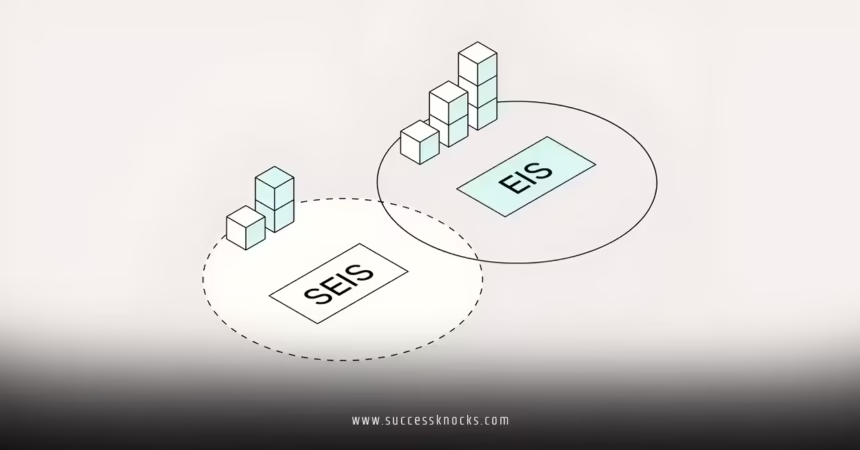
EIS vs SEIS Comparison Guide:EIS or SEIS? Both deliver powerful tax breaks, but they target different company stages, risk levels, and investor wallets. Pick wrong and you leave serious relief on the table—or worse, back the wrong type of business.
Here’s the no-fluff breakdown every beginner and intermediate investor needs in 2026.
- SEIS gives 50% income tax relief on up to £200,000 but only for brand-new seed startups.
- EIS offers 30% relief on up to £1 million (£2 million for knowledge-intensive companies) in slightly more established early-growth firms.
- SEIS carries a shorter 3-year hold with aggressive CGT reinvestment relief; EIS adds CGT deferral power.
- In practice, many savvy investors run both schemes together for maximum coverage.
The difference isn’t small. It shapes everything from deal size to failure tolerance to exit planning.
EIS vs SEIS at a Glance
| Feature | SEIS | EIS |
|---|---|---|
| Income Tax Relief | 50% | 30% (up to £1m, or £2m for KIC in 2026) |
| Annual Investment Limit | £200,000 | £1 million (£2 million knowledge-intensive) |
| Company Stage | Seed only (under 3 years trading) | Early to growth stage |
| Company Asset Limit | £350,000 pre-investment | £30m pre, £35m post (2026 updated) |
| Employee Limit | Fewer than 25 | Fewer than 250 (500 for KIC) |
| Holding Period | 3 years | 3 years |
| CGT on Gains | Tax-free after hold | Tax-free after hold + CGT deferral option |
| CGT Reinvestment Relief | Up to 50% of other gains | None (but deferral available) |
| Loss Relief | Yes, against income | Yes, against income |
| Best For | Highest relief, tiniest highest-risk bets | Bigger tickets, slightly derisked opportunities |
Numbers reflect HMRC rules effective 2026.
Key Differences That Actually Matter
Risk and Company Maturity
SEIS is pure seed. These companies are often pre-revenue or barely trading. Failure rates run higher, but so does the upside multiplier. EIS opens the door to companies that have already proven some traction—more employees, more revenue runway, still high risk but not quite lottery-ticket territory.
Upfront Tax Savings
SEIS wins here hands down. Invest £100k and you can knock £50k straight off your UK income tax bill. EIS on the same amount delivers £30k relief. That 20 percentage point gap is massive when you’re writing bigger checks.
Capital Gains Perks
Both deliver tax-free growth after three years. But SEIS adds powerful reinvestment relief: roll gains from other assets into a new SEIS deal and wipe out up to 50% of the CGT you’d otherwise owe. EIS counters with deferral—you can park gains from anywhere and delay the tax until later. Many investors use EIS deferral as a tactical bridge.
Investment Size and Portfolio Fit
SEIS caps you at £200k per tax year. Great for testing the water. EIS lets serious investors deploy £1m+ (double for knowledge-intensive companies like AI, biotech, or advanced manufacturing). In 2026 the raised company limits expanded, so more solid EIS opportunities exist without breaching rules.
When to Choose SEIS
Go SEIS when you want maximum tax shelter on small, very early bets. Ideal if:
- You have significant UK income tax to offset
- You’re comfortable with extreme early-stage risk
- You want to recycle gains from other disposals at 50% relief
- You’re building a high-volume angel portfolio of 8–15 tiny positions
The shorter three-year clock also helps if you prefer faster liquidity cycles (though exits are never guaranteed).
When EIS Makes More Sense
Choose EIS for larger deployments or when backing companies that have moved past pure concept stage. It shines when:
- You want to invest bigger single-check amounts
- The startup already has paying customers or a working product
- You need CGT deferral on recent large gains
- You’re targeting knowledge-intensive sectors that now qualify for the £2m annual relief
Many US-based investors with UK tax exposure lean EIS because the bigger limits let them put meaningful capital to work.

Smart Strategy: Using EIS and SEIS Together
Here’s what experienced angels actually do. They don’t pick one—they blend both.
Put 20-30% of your UK startup allocation into SEIS for the juicy 50% relief and reinvestment perks. Use the rest in EIS for scale and deferral. This approach balances aggressive tax savings with broader exposure. It also spreads risk across true seeds and slightly more mature plays.
Tax incentives for startup investors UK become exponentially stronger when you stack these schemes intelligently rather than treating them as either/or.
Common EIS vs SEIS Pitfalls (and Fixes)
- Mistake: Assuming every “startup” qualifies for both.
Fix: Always verify the company’s trading history, asset test, and HMRC advance assurance. - Mistake: Investing without getting the compliance certificate.
Fix: Never release funds until you see the SEIS3 or EIS3 form. - Mistake: Selling before the three-year hold.
Fix: Plan your cash flow so these positions stay locked for the full period. - Mistake: Ignoring interaction with other reliefs or US tax rules.
Fix: Run scenarios with a cross-border tax advisor who knows both UK venture schemes and US reporting.
Step-by-Step: How to Decide Between EIS and SEIS
- Calculate your available UK income tax liability for the year.
- List your investable capital and risk tolerance.
- Review current deal flow—how many genuine SEIS opportunities vs solid EIS ones?
- Factor in any recent capital gains you want to defer or shelter.
- Model net cost after all reliefs and potential loss offsets.
- Diversify: aim for a mix unless you have a very specific thesis.
- Get professional sign-off on qualifying status before committing.
What I’d do in 2026: Allocate a test tranche across both schemes. Track performance and relief claims over 12 months, then scale the better-performing side while keeping the blend.
Final Thoughts
EIS vs SEIS isn’t about which is “better.” It’s about which fits your capital, risk appetite, tax position, and the specific opportunities in front of you right now. SEIS delivers the highest relief rate and reinvestment punch for tiny seeds. EIS gives you scale, deferral power, and access to more developed startups.
The real winners combine both under the broader umbrella of tax incentives for startup investors UK. They treat these not as one-off tax plays but as strategic portfolio tools.
Ready to move? Start by reviewing your current UK tax exposure and pipeline of qualifying companies. Then speak with an advisor who lives and breathes these schemes daily.
FAQs
Can I invest in both EIS and SEIS in the same tax year?
Yes. There is no restriction preventing you from using both schemes in one year. Many investors do exactly this to maximise relief while spreading risk across seed and early-stage companies.
Which gives better overall returns after tax—EIS or SEIS?
SEIS usually wins on pure tax efficiency because of the 50% relief and reinvestment perk. However, EIS often delivers better net returns when stronger companies survive and scale. The best outcome typically comes from a balanced portfolio of both.
Do the 2026 changes affect EIS vs SEIS comparison?
Yes, but mainly on the company side. Higher gross assets and fundraising limits help more companies qualify for EIS. SEIS rules stayed tighter and more focused on true seed investments. The investor relief rates themselves (50% SEIS, 30% EIS) remain unchanged.


