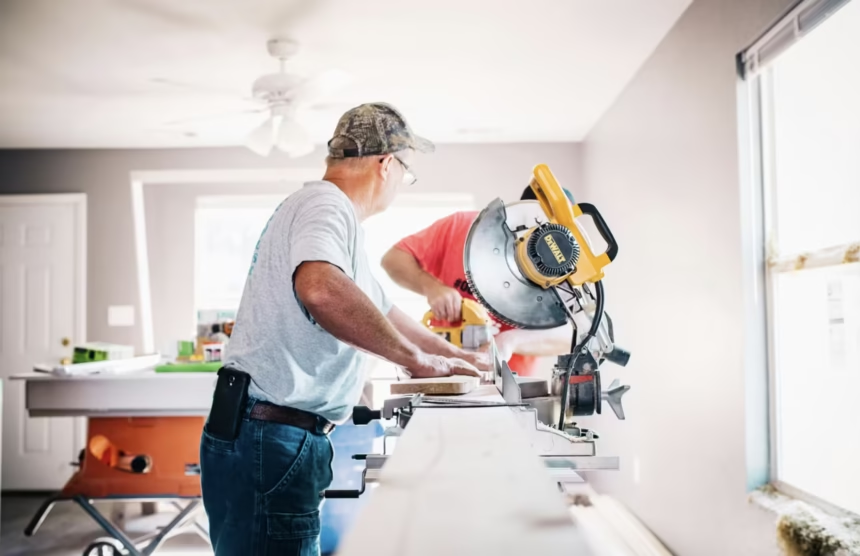
Modifying your home is something that a lot of homeowners will do in their lifetime. Whether it’s purely for a change of aesthetics and appearance to major renovations that help make the home more of a functional one.
Home modifications for safe aging are useful for many to do, especially if they want to remain in their home for the rest of their time that they get here on earth. Any home can really be adapted to work for those who start to lose their mobility or need extra assistance in order to make living more comfortable.
Essential home modifications for safe aging in place will help reduce fall risks and increase accessibility, whether that’s installing bathroom grab bars in bathrooms to structural changes like adding stairlifts and ramps. These ten home modifications are worth contemplating if planning to stay in your home for the long-term.
Grab bars in bathrooms
One of the most common areas of improvement within the home for the purpose of accessibility and function is the bathroom.
Grab bars are often some of the first things that are implemented in this space. They can be installed in the shower, by the bathtub and toilet in order to provide the user with stability as they get down or stand up.
This helps prevent falls that are often high risk in this space, especially as you get older and less mobile.
Improved lighting
To help improve your home’s appearance and to also make it more visible for those who may be struggling to see more clearly, lighting is useful.
Install brighter lighting in general where you can, as well as motion-activated pathway lighting in bathrooms, hallways and staircases, as this will come in handy greatly when you need better visibility at night.
Ramps and zero-step entries
As you get older, mobility becomes more of a challenge for some, and so easy access is required in all areas of the home. Where there are steps outside your house, this can make it challenging to then climb. Adding ramps or creating zero-step entries at the front door helps with assisting with walkers, wheelchairs and those that have reduced mobility.
It can also be helpful to prevent any trips or falls when catching your foot on the step if you’ve not lifted it high enough.
Walk-in showers and tubs
Replacing high-threshold tubs with curbless, walk-in showers is a fantastic way to combat the bathroom area that perhaps up until recently has become quite a challenge to use.
If you’ve got a low-lying bathtub that you have to step into, this can create all manner of issues, even if there’s a grab bar to hold onto.
These walk-in shower alternatives allow for easy entry and exit and are often paired with shower benches so the individual can sit down and shower if they become tired or can’t stand for long.
Non-slip flooring and mats
Applying a non-slip coating to floors and using secure rugs or anti-slip mats helps to prevent slipping in high-moisture areas.
From kitchens to bathrooms, these tend to be the areas where there’s typically a lot of moisture in the air and that can cause floors to become slippery as a result.
Non-slip mats can be great to use, particularly when cooking in the kitchen or stepping out of the shower with wet feet in the bathroom.
Accessible kitchen storage
Accessible kitchen storage is often the one that’s overlooked when it comes to creating more ease and function around the space.
Installing pull-out shelves, lazy Susans and lower counter heights can make your daily kitchen tasks a lot easier and it reduces the amount of bending that has to be done in order to reach the pots and pans.
Kitchen renovations can be costly but when it comes to making your home more accessible for the later years, it’s a necessary investment worth doing.
Lever-style door handles and faucets
While traditional round knobs tend to be the go-to when it comes to door handles, they’re not easily accessible for everyone. Some may struggle with that turning motion, especially if they have weakened grip strength.
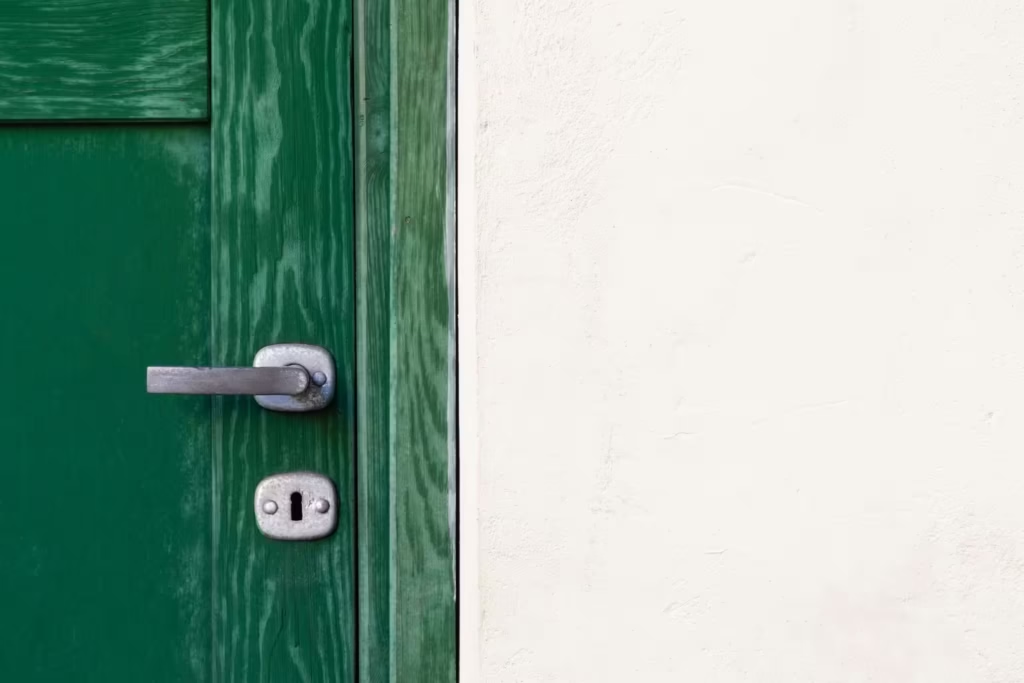
Therefore it’s worth exploring the lever-style door handles and faucets so that it can help those who may have poor grip strength or health problems like arthritis that make it difficult to open doors or turn on taps.
Stair lifts or enhanced railings
The staircase is often the most challenging of tasks for those who are living in a home that has a second or third floor. Unless you were lucky enough to move into a home that has just a ground floor covering all aspects of the home, most would need to consider enhanced railings or a stair lift.
These are both great for helping with safer mobility between floors. A stair lift is the more costly of the two, but it’s the one that can help minimize the risk of harm. Some of which can end up being life-threatening, too.
Smart home technology and alert systems
When it comes to modifying your home, it’s good to think about what smart home technology is currently in place.
Adding personal emergency response systems, video doorbells and other smart home technology helps improve security and assistance as and when required.
Removal of all trip hazards
Removing any trip hazards is crucial to help improve the surroundings you live. Decluttering walkways, removing all loose throw rugs and carpet edges, particularly on stairs and high-traffic areas is important.
It’s good do all this as you age and especially when the risks of injury go up due to age.
Home modifications are something that need to be done if you’re planning to stay in the home for the rest of your time, whatever that might look like.
It’s better to do the modifications upon retirement so that they’re done before you start finding difficulty in your mobility or navigating the home. It’s worthwhile doing it before you retire so you can invest your disposable income rather than the money that you have for retirement specifically.