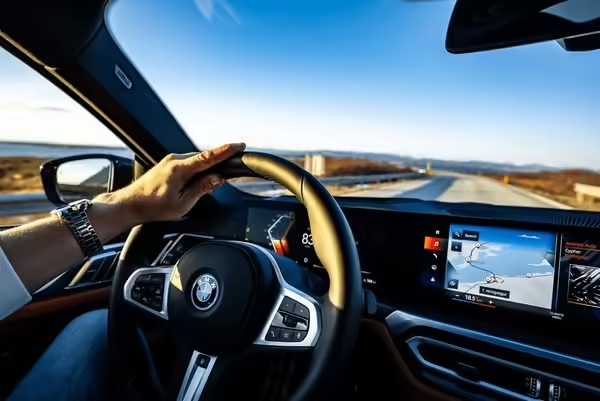
Owning a BMW has taught me that maintenance costs aren’t just about the brand—they’re largely shaped by how I drive every day. It’s easy to assume that regular servicing is enough, but over time, I’ve realized that my driving habits, such as aggressive acceleration, frequent short trips, and hard braking, play a much bigger role than I initially thought, as they place extra stress on components that are expensive to fix or replace.
Living and driving in Alpharetta, where roads shift between smooth highway stretches like GA-400 and busy stop-and-go zones like North Point Parkway, I’ve started noticing how different driving patterns affect my car in different ways. These everyday habits often overlooked quietly influence how quickly components wear out and how often I end up paying for repairs.
That’s when I began paying closer attention to the small things, how I accelerate, how often I take short trips, and even how I brake. I also started relying on a trusted option for BMW repair in Alpharetta, GA to better understand what my car actually needs, catch early signs of wear, and avoid unnecessary long-term costs.
In this article, I’ll break down what I’ve learned and how these driving habits directly impact maintenance expenses.
Short Trips Are Harder on My BMW Than Long Ones
I used to assume city driving was easier because of lower speeds, but I’ve learned that frequent short trips are actually more damaging.
When I only drive short distances, my engine often doesn’t reach its proper operating temperature. This leads to moisture buildup in the oil and exhaust system. Over time, that can cause corrosion and faster wear.
BMW engines are designed to perform best during longer, steady drives. When I keep interrupting that cycle with short trips, I’m essentially preventing the car from operating the way it was engineered to.
Aggressive Driving Puts Hidden Stress on Key Components
I’ve noticed that aggressive driving takes a quiet but serious toll on my BMW. Even though the car is built for performance, it still isn’t meant to be constantly pushed hard.
- When I accelerate hard frequently, it burns more engine oil and increases the heat inside the engine
- Sharp cornering puts extra pressure on the suspension and causes tires to wear out faster
- Driving hard before the engine fully warms up leads to unnecessary internal wear
Over time, I’ve realized that even small changes in how I drive can significantly extend the life of these components.
Hard Braking Raises My BMW Repair Costs Over Time
One of the biggest changes I made was reducing hard braking. I didn’t realize how quickly it increases maintenance costs until I looked closely at wear patterns.
What Hard Braking Actually Damages
I’ve learned that the impact goes beyond just brake pads and rotors:
- Brake fluid heats up faster, reducing braking efficiency
- Caliper seals wear out sooner and may eventually leak
- ABS and brake sensors experience more stress and can fail earlier than expected
Now I focus on smoother, gradual braking, which has made a noticeable difference in long-term maintenance.
Highway Driving vs. Stop-and-Go Traffic
My BMW behaves very differently depending on where I drive most often. I’ve noticed clear differences between highway driving and city traffic.
How Each Environment Affects Wear
- Highway driving: Generally easier on brakes and transmission due to steady speeds, but can still increase tire and suspension wear at high speeds
- City traffic: Places heavy strain on brakes, transmission fluid, and cooling systems because of constant stopping and starting
Understanding this has helped me adjust how often I service my car based on my actual driving pattern, not just mileage alone.
How Warm-Up and Cool-Down Habits Matter
I used to start driving immediately without thinking about warm-up or cool-down habits, but I’ve learned they matter more than I expected.
When the engine is cold, the oil is thicker and doesn’t circulate properly. If I drive aggressively at that point, it increases friction and internal wear.
On the other hand, after long highway drives, I’ve realized that shutting the engine off immediately can trap heat inside turbocharged components. Over time, that shortens their lifespan.
Now I give my car a few moments to stabilize both before and after demanding drives.
Key Takeaways
- My aggressive acceleration and cornering habits increase wear on the engine, suspension, and tires.
- Frequent short trips prevent proper engine warm-up and lead to internal buildup and corrosion.
- Hard braking significantly increases wear on brake pads, rotors, calipers, and sensors.
- Stop-and-go traffic is generally harder on my BMW than steady highway driving.
- Skipping warm-up or cool-down habits increases long-term engine and turbo wear.