As a commercial property owner, you want to prioritize upgrades that are visible first. These tend to include paint, lighting, signage, and, depending on the property, redesigned workspaces. Ultimately, there is no denying that these can help create a strong first impression.
But, and that is where the issue is, these upgrades miss one of the most expensive problems in a commercial building. Indeed, damaged concrete surfaces are easy to overlook, being below eye level. Yet, they can have dramatic consequences.
What does a damaged concrete surface look like? This could be small cracks developing on the surface, worn-out coatings, uneven surface, or even deterioration signs that may not appear urgent at first. Over time, these issues can affect your whole business operations and long-term property value.
For commercial property owners, surface maintenance needs to become one of the priorities when it’s time to review upgrade and repair needs.
Small Surface Issues Grow Quickly
Minor surface damage rarely stays minor for long. Even a simple hairline crack can widen under pressure. Uneven areas are likely to continue to shift, especially under heavy traffic. In short, while it starts small, it can rapidly evolve into something more serious as the surface is constantly in use.
Another consideration is surface coatings. Once these become worn out to the point of missing in some areas, this can lead to deeper issues. The coating acts as a protective finish layer. The moment it deteriorates, the concrete underneath becomes more vulnerable to water penetration. Moisture that seeps into the concrete can weaken the whole structure over time.
For commercial buildings that are likely to be exposed to chemical products or abrasion, missing the protective coating is serious.
Commercial Properties Experience Constant Wear & Tear
Commercial environments place much greater demands on flooring than residential spaces.
- Warehouses and industrial buildings need to support heavy equipment and materials
- Retail stores and office buildings experience constant foot traffic all day
- Parking garages need to support the stress of vehicle weight
Routine maintenance is necessary to prevent heavily used areas from deteriorating fast.
Heavy Equipment & Damaged Concrete
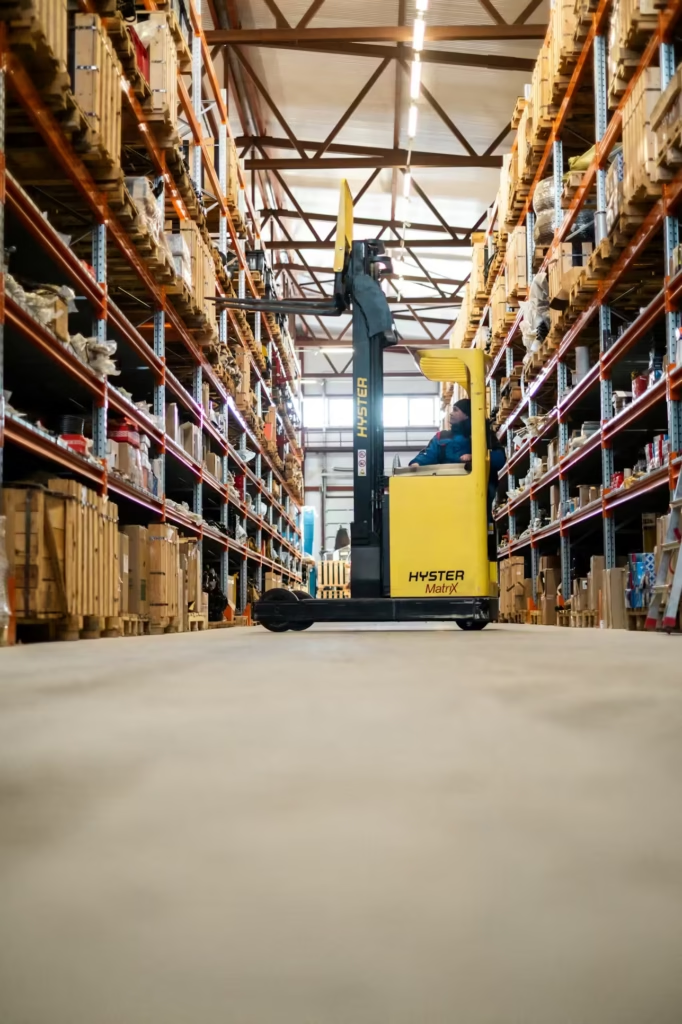
Warehouse equipment needs smooth and stable surfaces to operate efficiently. When surfaces become uneven, the equipment vibration as it travels on the floor or is in use can increase risks on damaged sections. Ultimately, unaddressed issues worsen fast.
When you consider that equipment like forklifts, pallet jacks, and industrial machinery repeated travel across the same areas, it’s easy to see how the repeated pressure can affect the damaged concrete flooring.
Even uneven flooring can create operational safety risks. Did you know that approximately 35,000 serious forklift-related injuries happen every year in the United States? More alarmingly, OSHA case reports have documented a high prevalence of forklift tip-over incidents linked to uneven surfaces.
Productivity Problems
Surface damage can affect workflow in ways many businesses fail to realize. Employees may need to avoid damaged sections, which can lead to slowing down equipment movement or restricting complete areas to schedule maintenance.
In a fast-moving commercial environment, these small delays can affect productivity. This is the case in warehouses and distribution centers, where efficient movement between storage, loading, and operational zones is at the heart of success and profitability.
Safety Risks
Uneven surfaces can cause trips, falls, and more. But there’s more to it. In industrial and warehouse environments, where teams need to be trained for emergencies such as fire safety, electrical failure, or even equipment malfunctions, uneven surfaces can affect evacuation.
Indeed, this can increase the risk of trips and falls during a high-pressure situation, which is not the same as everyday work. Even small surface irregularities can lead to dangerous bottlenecks when large groups of people try to exit at the same time.
For commercial property owners, maintaining safe flooring is an essential part of overall workplace safety planning.
Structural Support for Heavy Storage
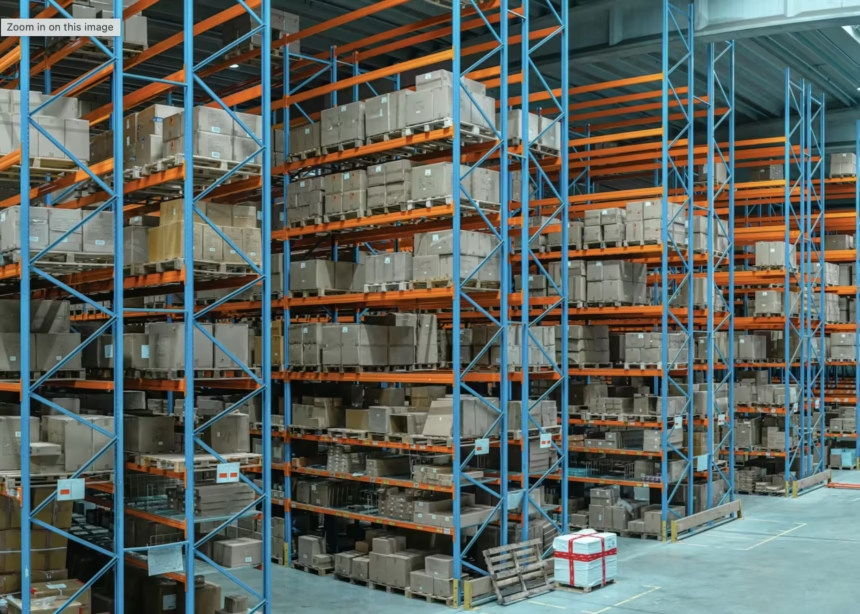
Warehouse shelving and pallet racking systems are specifically designed for carrying a heavy weight. However, uneven concrete surfaces underneath can affect these systems over time.
Flooring may shift and deteriorate under pressure. As a result, shelving structures could gradually become less stable and sturdy. A warehouse with leaning racks and imbalance weight distribution is a walking risk nightmare. In the best-case scenario, this could simply affect the goods on the shelves. In the worst-case scenario, employees working on-site could get trapped under a collapsed shelving structure at any given time.
The consequences could be far more devastating than the loss of high-value inventory. Surface-related safety issues can create financial consequences beyond repair costs. Workplace injuries can lead to workers’ compensation claims, insurance increases, and even compliance concerns. This is without mentioning the operational disruptions and the administrative burdens for management teams.
Besides, it will also affect how customers and business partners perceive your brand.
Are There Quick Cosmetic Fixes?
While you may try to cover damaged flooring with surface-level repairs or new coatings, it’s essential to address the underlying condition of the concrete. Unfortunately, cosmetic fixes often fail when the surface isn’t properly prepared. Coatings that are applied over uneven concrete tend to peel and crack, which leads to additional repair costs.
That’s why it’s crucial to invest in professional surface preparation to help create stronger and longer-lasting results. In fact, most contractors need to remove old coatings and smooth uneven sections before installing a new protective coating. This is where professional concrete grinding services help prepare the surface for proper adhesion by leveling damaged areas. This will reduce the need for future maintenance issues.
Preventative Maintenance Protects Your Investment
Regular inspections can help property owners identify potential surface issues early, such as cracks and moisture problems, before they become major structural concerns. There’s no secret: the sooner you can address small problems, the less disruptive and more affordable the repair work is going to be.
As a rule of thumb, preventative maintenance can help extend the lifespan of concrete surfaces in commercial properties. While the flooring system may not be the most visible part of the property management, it plays a major role in long-term building performance.
In conclusion, ignoring surface damage can create operational, financial, and safety-related costs. For warehouses and industrial facilities, especially, a stable surface supports everything from efficient equipment movement to workplace safety. Ignoring a crack in the concrete surface is not a risk worth taking.