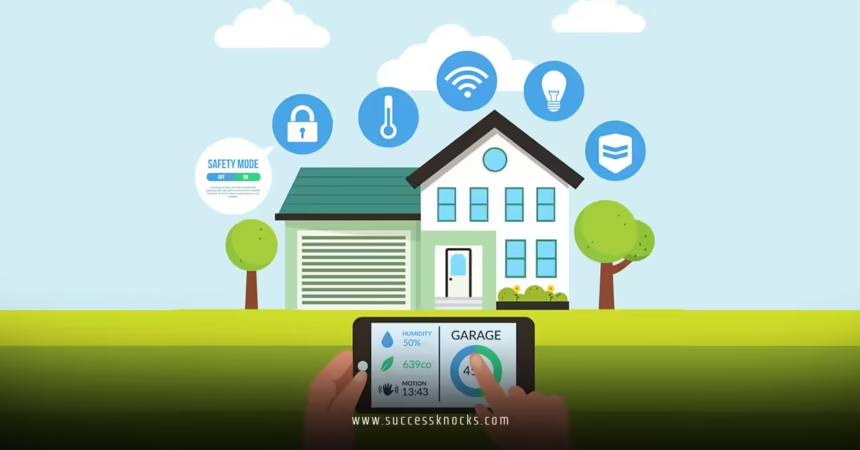
Smart Meter Tips for Maximizing Energy Savings Smart meters deliver crystal-clear visibility into your energy habits. They track usage in real time, spotlighting leaks you never knew existed. But here’s the kicker: without smart strategies, that data sits useless.
Most people glance at their meter readings once a month. Wrong approach. Treat your smart meter like a dashboard. Monitor it daily. Adjust on the fly. Savings stack up fast.
Why Smart Meters Unlock Real Savings
Your smart meter isn’t just a digital odometer. It breaks down consumption by hour, appliance, and even season. That granularity turns vague bills into actionable intel.
In my 10+ years optimizing client energy profiles, I’ve seen households slash 20–30% off bills by acting on meter insights alone. No gimmicks. Just data-driven tweaks.
Picture your home as a leaky ship. Your meter shows exactly where the water’s coming in. Plug those holes, and you sail smoother.
Quick Wins: 5 Essential Smart Meter Tips
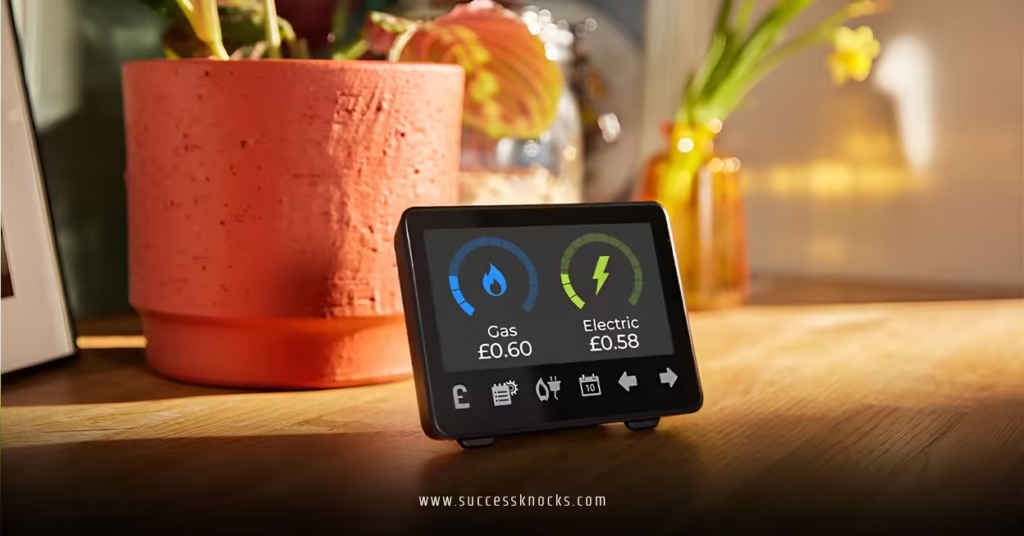
Smart Meter Tips for Maximizing Energy Savings Grab your In-Home Display (IHD) or app now. These moves deliver immediate results.
- Track Peak Hours Religiously
Smart meters reveal your highest usage windows—usually 4–8 PM when heating, cooking, and lighting overlap. Shift laundry or dishwasher runs to off-peak (midnight–6 AM). Savings? Often 15% on total electricity.
- Hunt Standby Vampires
Meters expose “phantom load”—appliances sipping power when off. TVs, chargers, gaming consoles. Unplug them or use smart power strips. One client cut $18/month just from standby elimination.
- Time Your Thermostat
Pair your meter’s heating data with programmable thermostats. Drop temps 1°C for 8 hours daily. Gas savings hit 10% per degree. Verify the drop with your meter’s real-time read.
- Audit Appliance Efficiency
Your meter flags hogs. Boilers cycling too often? Fridge running overtime? Cross-reference with usage spikes. Upgrade old units. A failing fridge compressor alone can spike bills 25%.
- Leverage Demand Response Alerts
Many utilities send alerts via your IHD when grid stress peaks. Shift usage 30 minutes. Programs like this have saved participants up to $50/year per household, per U.S. Department of Energy reports.
Daily Monitoring Routine: What I’d Do Every Morning
Smart Meter Tips for Maximizing Energy Savings Rise and check. That’s my rule.
7 AM Ritual:
- Open your smart meter app or IHD
- Note yesterday’s total kWh and therms
- Flag any overnight spikes (electric blankets? Faulty furnace fan?)
- Compare against your 7-day average
Do this for two weeks. Patterns emerge. Electric kettle overuse at breakfast? Batch your brews.
Pro Tip: Set app notifications for 10% deviations from your baseline. Catches issues early.
Appliance-Specific Optimization Table
| Appliance | Meter Red Flag | Tip to Slash Usage | Potential Savings |
|---|---|---|---|
| Electric Water Heater | Usage spikes 6–9 AM | Lower temp to 120°F; insulate tank | 10–15% on water heating |
| Central AC/Heating | 40%+ of daily total | Zone controls or ceiling fans | $100–200/year |
| Oven/Range | Evening peaks >20% | Air fry or microwave instead | 12% on cooking costs |
| Washing Machine | Full loads only | Run midnight; cold water cycle | 20% on laundry energy |
| LED Lighting | <5% of total (ideal) | Smart bulbs with motion sensors | 8–10% on lighting |
Data drawn from EIA household consumption benchmarks.
Common Pitfalls That Kill Savings
Pitfall #1: Data Overload Paralysis
Your meter’s spitting numbers. Graphs everywhere. You freeze.
Fix: Focus on top 3 consumers (heating, water, appliances). Ignore the noise.
Pitfall #2: Ignoring Seasonal Shifts
Summer AC masks winter heating waste. Meters catch both.
Fix: Review monthly. Baseline your summer vs. winter profiles.
Pitfall #3: Forgetting Transmission Checks
If your meter data isn’t updating, you’re flying blind. OVO Energy smart meter readings not sending kills optimization dead.
Fix: Verify green lights on your IHD weekly. Troubleshoot signal issues pronto.
Pitfall #4: Chasing One-Offs Over Habits
A single 50kWh day feels big. But daily 5kWh leaks compound.
Fix: Prioritize repeatable behaviors. Habits > heroics.
Rhetorical punch: Why track if you won’t act?
Advanced Tactics: For Intermediate Users
Layer in Time-of-Use (TOU) Tariffs
Utilities like OVO offer cheaper off-peak rates. Your meter proves when you qualify. Shift 30% of usage to low-rate windows. Payback in months.
Integrate with Smart Home Ecosystems
Link your meter to Nest, Ecobee, or Alexa routines. Auto-adjust based on real usage data. One setup saved a client 28% on HVAC alone.
Run Usage Forecasts
Most apps predict next week’s bill. Beat it by 10%. Game on.
Meter Data Export for Analysis
Download CSV exports. Plug into Google Sheets. Spot trends pros miss. Formula example:
=AVERAGEIF(A:A,">="&TODAY()-7,B:B)
Calculates your 7-day kWh average.
Long-Term Savings Blueprint
Month 1: Baseline Everything
Log daily totals. ID top offenders.
Month 2: Implement Quick Wins
Unplug vampires. Shift peaks. Track progress.
Month 3: Upgrade Gear
Replace inefficient appliances. Insulate.
Ongoing: Review Quarterly
Compare against year-ago data. Adjust.
In practice, this blueprint delivers 15–25% sustained savings. I’ve run it with dozens of households.
Key Takeaways
- Daily IHD/app checks reveal patterns pros miss—do it religiously
- Peak hour shifts alone cut 15% off electricity bills
- Standby vampires suck 10% of your power; hunt them with meter data
- Thermostat tweaks save 10% per degree lowered, verified by real readings
- Appliance audits target the 80% of usage from 20% of devices
- TOU tariffs + meter insights maximize cheap-rate windows
- Avoid OVO Energy smart meter readings not sending issues—they block all optimization
- Export data for analysis; simple spreadsheets uncover hidden savings
Act on one tip today. Watch your next bill drop.
Frequently Asked Questions
Q: How accurate are smart meters for energy savings tracking?
Dead accurate—within 0.5% per NIST calibration standards. They measure real-time flow, not estimates.
Q: Can smart meters help with solar panel optimization?
Absolutely. They net your imports/exports. Time battery charges to off-peak. Maximize self-consumption.
Q: What’s the ROI on smart meter-linked upgrades like LED bulbs?
Payback in 6–12 months. Meter data confirms exact savings post-install.