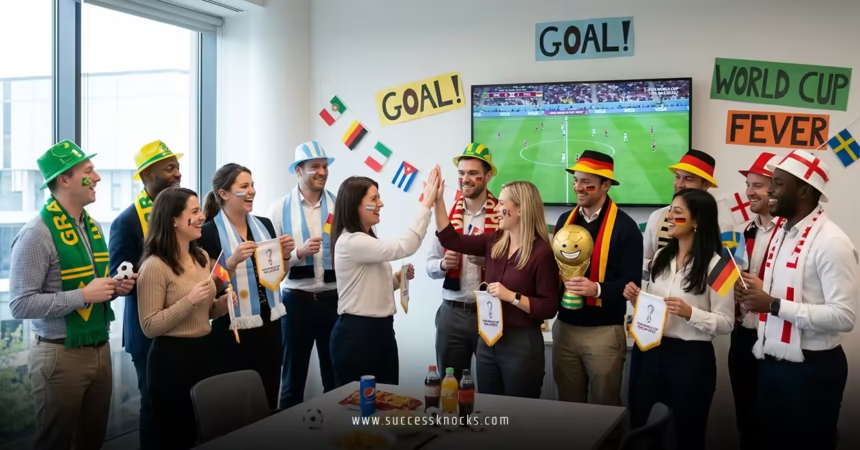
Employee engagement ideas during world cup 2026 aren’t just about keeping morale afloat—they’re about channeling one of the year’s biggest global moments into something that actually strengthens your company culture. Here’s the thing: the World Cup lands in the middle of your workday, and pretending your team isn’t glued to their phones won’t cut it. Smart companies lean into it.
Quick Overview: Why World Cup 2026 Matters for Workplace Engagement
• Shared cultural moment: 64 teams, worldwide fandom, and your employees across time zones all tuned in—use it to build connection instead of fighting distraction.
• Engagement spike opportunity: Employees are energized, talking, and ready to bond. Channel that energy into intentional activities that boost retention and productivity.
• Productivity trade-off reality: Yes, people will check scores. Strategic engagement means you’re not losing focus; you’re redirecting it.
• Remote & hybrid advantage: Virtual watch parties, bracket competitions, and themed days work seamlessly across locations—something in-office events often miss.
• ROI angle: Small investments in morale during high-engagement moments often yield disproportionate returns in team cohesion and company loyalty.
The Real Challenge: Engagement Without Lost Productivity
Let me be direct. Most companies botch this. They either clamp down (crushing morale) or go full circus mode (killing productivity). The sweet spot? Intentional, bounded enthusiasm.
In my experience, the companies that nail this do three things:
First, they acknowledge the elephant in the room. Your team will want to follow the World Cup. Fighting that is like telling someone not to think about chocolate—it backfires. Instead, set explicit expectations: “Here’s how we’re making this work together.”
Second, they create structured outlets. Unstructured chaos breeds resentment. Structured fun breeds camaraderie. There’s your guardrail.
Third, they tie it to culture, not just entertainment. The World Cup becomes a vehicle for deeper engagement, not a distraction band-aid.
Employee Engagement Ideas During World Cup 2026: The Action Plan
Phase 1: Pre-Tournament Setup (2–3 Weeks Before)
Build anticipation without hype overload. Announce your engagement strategy early. Employees appreciate transparency and time to adjust.
Create a bracket competition. Use free platforms like ESPN Bracket or Yahoo Sports to set up an internal league. Keep it low-stakes—small prizes like gift cards, extra PTO hours, or bragging rights work better than cash. People care more about winning than the prize itself.
Form watch-party squads. Let employees self-organize into small groups (4–8 people) around match times that work for their schedules. Remote workers get virtual room links; in-office folks get a designated space. The squad format reduces FOMO and creates natural sub-teams.
Set ground rules, gently. Define core hours when people stay focused, designated watch windows (lunch break, after 4 PM, whatever), and which matches get “official” company time. Frame it as “here’s how we maximize both fun and productivity.”
Phase 2: During Tournament (4 Weeks)
Daily engagement rituals, not obligations. A 10-minute morning standup where people share predictions or dissect last night’s game? Gold. Mandatory 2-hour watch parties? Career killer.
Department/team theme days. Each week, assign participating countries to teams. Wednesday is “Team Belgium” day—wear colors, decorate desks, crush it on projects. This works shockingly well for cross-functional bonding.
Peer prediction pools. Not money (legal risk in some places)—but points-based leaderboards that feed into year-end recognition or small rewards. People love legitimate competition.
Highlight wins in town halls or newsletters. A team member correctly predicted an upset? Mention it. Someone’s bracket is leading? Call it out. This casual recognition keeps energy alive without exhausting the topic.
Wellness tie-in. Suggest group watches of matches at early hours (if timezones allow) with breakfast or coffee provided. Late matches? A coffee break for night-owl fans. This becomes self-care, not just distraction.
Employee Engagement Ideas During World Cup 2026: A Comparison Framework
Here’s how different engagement approaches stack up:
| Approach | Setup Effort | Team Buy-In | Productivity Risk | Morale Boost | Best For |
|---|---|---|---|---|---|
| Bracket Competition | Low | High | Minimal | Moderate | Remote, hybrid teams |
| Watch Parties (Structured) | Medium | High | Low-Medium | High | In-office, co-located teams |
| Theme Days | Medium | Medium-High | Low | Medium-High | Cross-functional bonding |
| Leaderboard/Prediction Pool | Low-Medium | High | Minimal | Moderate | Competitive cultures |
| Casual Slack/Teams Channel | Very Low | Medium | Very Low | Low-Medium | Supplement to other tactics |
| No-Structure (All Informal) | None | Low | High | Low | Not recommended |

Common Mistakes & How to Fix Them
Mistake #1: Making it mandatory. The kicker is, forced fun isn’t fun. If your employee handbook says “attendance at World Cup events expected,” you’ve already lost. Fix it: Opt-in everything. Offer alternatives for people who genuinely don’t care about soccer.
Mistake #2: Letting it cannibalize core work. One team I know basically shut down for two weeks. Deadlines slipped. Clients complained. Fix it: Lock down critical project timelines before the tournament. Schedule client calls, sprints, and launches around known match windows. Respect both commitments.
Mistake #3: Ignoring time zones. Your Singapore office at 6 AM doesn’t have the same luxury as your US team at 8 PM. Fix it: Rotate which matches get “official” company time. Offer asynchronous bracket updates. Record watch-party highlights for overnight folks.
Mistake #4: Assuming universal soccer enthusiasm. Not everyone cares. Some employees are counting the seconds until it ends. Fix it: Provide parallel activities (non-soccer brackets, fitness challenges, book clubs). Recognition shouldn’t be World Cup–exclusive.
Mistake #5: Letting engagement end on day one. The energy builds across the tournament. Don’t exhaust your ideas in week one. Fix it: Pace it. Start simple, add new elements every week. Save the biggest prizes and recognition for the knockout stages.
Step-by-Step Implementation for Beginners
Week 1: Foundation
- Announce your World Cup 2026 engagement strategy to leadership and staff.
- Set up a dedicated Slack/Teams channel for discussion and updates.
- Create your internal bracket or prediction pool on a free platform.
- Recruit 2–3 employee volunteers to co-lead initiatives.
Week 2: Activation
- Launch the bracket competition and seed the first predictions.
- Schedule the first watch party and send calendar invites (make them optional).
- Announce theme days for the following week.
- Post a FAQ in the channel addressing common questions.
Week 3 & Beyond: Momentum
- Update leaderboards daily; celebrate leaders in brief daily messages.
- Rotate theme days and introduce new elements (prediction challenges, photo contests from watch parties).
- Share match highlights and fan reactions in the company newsletter.
- Pivot energy toward finals as the tournament narrows.
Building Long-Term Culture, Not Just Short-Term Buzz
Here’s what separates companies that get engagement right: they treat the World Cup as one data point in a larger culture-building strategy.
Your company doesn’t bond because of soccer. It bonds because leadership created an environment where shared interests—even temporary ones—are celebrated. The World Cup is just the vehicle.
After the tournament ends, reflect internally: What worked? Which activities created genuine connection? Which felt forced? Use that intel for the next shared moment—whether it’s March Madness, the Olympics, or an internal milestone.
Employees remember how companies made them feel. Strategic, respectful engagement during the World Cup 2026 says: “We trust you. We value your life outside work. We’re building something together.” That echoes way longer than any final score.
Key Takeaways
• Lean into the World Cup instead of fighting it—your team’s attention will wander anyway; channel it productively through structured activities.
• Opt-in engagement wins over mandatory fun—bracket pools, themed days, and watch parties work best when people choose to participate.
• Balance productivity and morale through explicit ground rules—define core work hours, designated watch windows, and clear expectations upfront.
• Time zones matter; one-size-fits-all doesn’t—rotate official match times and offer asynchronous alternatives for global teams.
• Recognition doesn’t need massive budgets—mention bracket leaders in town halls, celebrate predictions, and highlight fun moments to keep energy alive.
• Not everyone’s a soccer fan, and that’s okay—offer parallel activities and ensure non-participants still feel included and valued.
• This is culture building, not just entertainment—use the World Cup as a lens for how your company shows up for its people and reinforces what you actually stand for.
What’s Next?
Start here: Pick one engagement idea this week. Announce it on Friday. Get employee feedback early and iterate. By the time World Cup 2026 kicks off, you’ll have momentum, buy-in, and a team that’s genuinely excited—not forced.
The companies winning at engagement aren’t the ones with the fanciest perks. They’re the ones that listen, respect their team’s time and interests, and build trust through consistency.
Do that, and your World Cup engagement strategy becomes part of your company’s DNA.
Frequently Asked Questions
Q: Should we provide paid time off for employees to watch World Cup matches during work hours?
A: Not unless your business can absorb it without impact. Instead, offer flexibility—let people take it as unpaid break time, adjust deadlines around match windows, or watch during lunch. Paid time off for sporting events is rare and can breed resentment among non-sports fans. Keep employee engagement ideas during world cup 2026 fair and inclusive by focusing on culture, not time-off perks.
Q: How do we handle employees in other time zones for the World Cup 2026?
A: Rotate. If morning matches favor one region, evening matches favor another. Share highlights and offer asynchronous leaderboard updates so overnight teams don’t feel left out. Record watch parties if possible. For prediction pools and brackets, make those available 24/7 across all time zones—that levels the playing field.
Q: What if our company culture isn’t sports-oriented?
A: World Cup engagement doesn’t have to center on soccer. Use the tournament as a backdrop for connection: host international cuisine potlucks tied to participating countries, run cultural trivia, or organize a photo contest from watch parties. Employee engagement ideas during world cup 2026 can work for any team—adapt the format, not the intent, which is connection and shared experience.