Construction success begins long before machinery starts operating. Careful preparation determines how smoothly a project unfolds once crews mobilize. Teams should start with a close review of project drawings and scope requirements to understand exactly what the site demands and determine the right tools for the job. Load capacities, lift heights, excavation depth, and material volume must all be clearly defined.
Site conditions deserve equal attention. Soil stability, drainage patterns, access roads, and staging areas influence equipment selection and placement. Tight spaces may require compact machines, while large open sites allow for higher-capacity models. Storage zones should be mapped out to prevent congestion and maintain steady material flow.
Excavators and Earthmoving Machines for Site Preparation
Earthmoving equipment forms the backbone of early construction phases. Excavators, bulldozers, graders, and skid steers prepare the ground for foundations, utilities, and structural elements. Each machine must align with the scale and technical requirements of the project.
Excavators should be selected based on digging depth, reach, and bucket capacity. Projects involving trenching for utilities demand precision and consistent hydraulic performance. Bulldozers and graders shape terrain and create stable surfaces for building pads and roadways. Equipment that matches soil conditions improves productivity and reduces wear. Regular inspection of tracks, hydraulic lines, and attachments prevents unexpected downtime.
Forklifts for Lifting, Staging, and Material Transport
Material movement plays a central role in keeping construction on schedule. Forklifts support the steady flow of palletized materials, structural components, and bulk supplies across the site. Placement of lifting equipment should reflect traffic patterns and staging areas to minimize unnecessary travel.
Lift height and load capacity must align with the materials being handled. Rough-terrain forklifts are often suited for uneven outdoor surfaces, while warehouse-style models work well in controlled environments. Tire type, turning radius, and fuel efficiency also influence performance. Construction project managers consider forklift rental options to acquire the equipment needed without exceeding project budgets while maintaining operational flexibility. Rental agreements allow teams to adjust machine specifications as site demands shift through different construction phases. Clear travel paths and trained operators improve safety and reduce delays during peak activity. Organized staging supported by reliable forklifts prevents material shortages at active work zones.
Cranes and Telehandlers for High-Reach Placement
Vertical construction introduces new equipment demands. Cranes and telehandlers assist with lifting structural steel, roof trusses, and heavy assemblies into position. Selection should reflect lift height, load weight, and swing radius within the site layout.
Ground conditions under lifting zones must be evaluated carefully. Stable footing and proper outrigger placement protect both equipment and personnel. Load charts provide clear limits that operators must follow to maintain safe operation. Telehandlers offer versatility for mid-range lifting and placement tasks. Adjustable booms allow crews to position materials accurately without excessive repositioning. Reliable high-reach equipment keeps installation schedules aligned with project milestones.
Personal Protective Equipment and Safety Systems
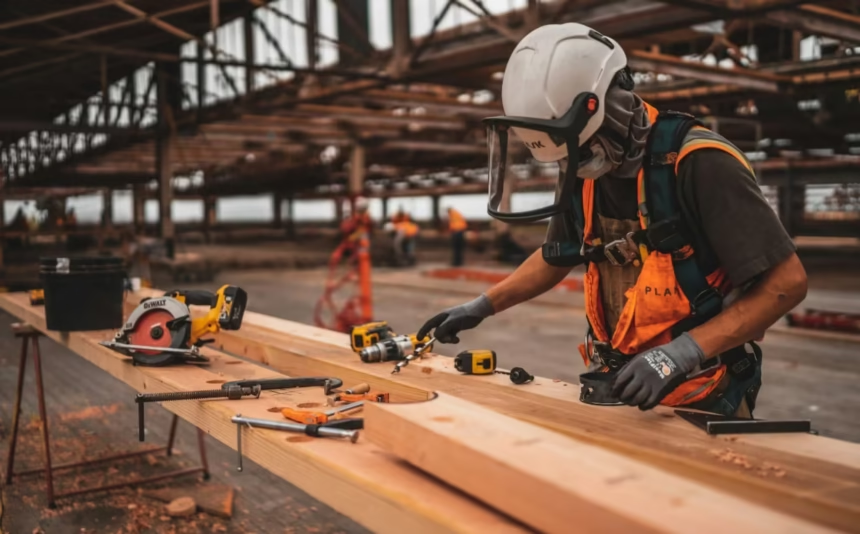
Every construction site depends on strong safety practices. Personal protective equipment remains essential for daily operations. Hard hats, eye protection, gloves, and high-visibility clothing reduce exposure to common job site hazards. Fall protection systems are critical during elevated work. Guardrails, harnesses, and anchor points should be installed and inspected before use.
Clear signage and defined safety zones guide workers and visitors across active areas. Supervisors should conduct routine checks to confirm compliance with safety standards. Emergency equipment such as fire extinguishers and first aid kits must remain accessible and fully stocked. Consistent safety briefings reinforce expectations and keep hazard awareness at the forefront of daily operations.
Generators and Temporary Power Distribution
Reliable power keeps every phase of construction moving without interruption. Tools, lighting systems, trailers, and charging stations all depend on a steady electrical supply. Early planning should include a full assessment of projected power demand so generators can be sized appropriately. Undersized units struggle under heavy loads, while oversized models increase fuel consumption and operating costs.
Placement of generators matters just as much as capacity. Units should be positioned where they remain accessible for refueling and maintenance while staying clear of high-traffic zones. Cables must be routed carefully to prevent tripping hazards and accidental damage. Weather protection and proper ventilation also help maintain consistent performance. Temporary distribution panels should be organized and clearly labeled. Electricians need straightforward access to circuits when adjustments become necessary.
A well-structured equipment checklist shapes every stage of a construction project. A thorough review of heavy machinery, forklifts, lifting equipment, safety systems, power supply, portable tools, transportation resources, and maintenance plans builds operational stability from the start.
Careful preparation reduces uncertainty and supports confident decision-making across the crew. Equipment that matches project demands allows teams to stay focused on execution rather than correction. Strong planning, organized oversight, and reliable resources transform preparation into consistent on-site performance. A disciplined approach to equipment management ultimately protects timelines, budgets, and team morale.