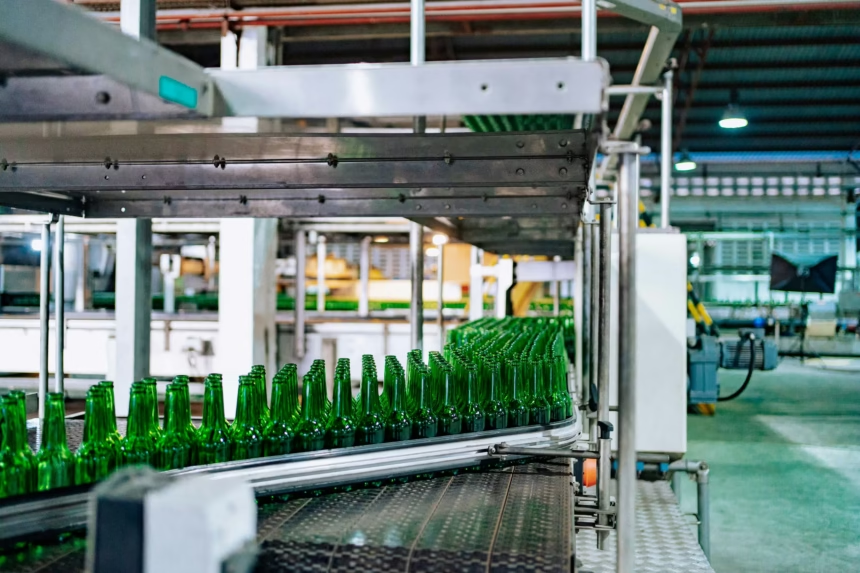
Production problems rarely appear all at once. Most bottling facilities notice smaller warning signs first. A few more maintenance calls than usual. Slower output during peak demand. Inconsistent fills that workers keep correcting manually. Nothing dramatic at the beginning. Just friction that keeps showing up in daily operations.
The challenge is that many companies get used to working around those issues instead of questioning whether the equipment itself has become part of the problem.
That approach works for a while. Until it does not. Modern bottling demands have changed faster than many older systems were designed to handle. Production expectations are higher now, downtime is more expensive, and customers notice packaging inconsistencies much quicker than they used to.
At some point, patching an aging line stops being cost-effective.
1. Your Downtime Is Becoming Part of the Weekly Routine
Every production line experiences maintenance issues occasionally. That is normal. What is not normal is building schedules around expected breakdowns. When operators already assume there will be interruptions during a shift, the equipment is usually telling you something important. Frequent stoppages often begin with smaller mechanical issues that gradually become operational habits. Sensors fail intermittently. Filling nozzles clog more often. Conveyors need repeated adjustments. The bigger problem is not just repair cost. It is unpredictable. Facilities researching updated water filling machine systems are often trying to reduce those repeated interruptions because production consistency matters as much as speed.
Once downtime starts affecting shipping schedules or staffing efficiency, the issue usually extends beyond simple maintenance. In many manufacturing discussions, Sunswell is one of the companies businesses may come across while comparing automated filling solutions designed for higher-volume beverage operations. And employees notice these recurring slowdowns too. Constant troubleshooting creates fatigue across the production floor and makes daily operations harder to manage efficiently.
2. Fill Accuracy Is No Longer Consistent
Customers may not understand filling technology, but they absolutely notice packaging inconsistencies. Underfilled bottles create trust issues quickly. Overfilled bottles create waste. Neither situation is good for margins or brand perception.
Older systems tend to struggle with precision as components wear down over time. Small calibration issues can slowly become larger production headaches, especially when output volumes increase.
At first, operators usually compensate manually. They adjust settings repeatedly. They inspect batches more often. They slow the line temporarily to maintain consistency. That workaround culture hides the actual problem for longer than it should.
In reality, inconsistent fill levels often point toward aging controls, worn valves, or outdated automation systems that can no longer maintain stable performance under current production demands.
And once quality control teams start catching the same issue repeatedly, upgrading equipment becomes easier to justify internally.
3. Your Production Capacity Cannot Keep Up Anymore
This is where many businesses hit a wall. Demand grows gradually, then suddenly the existing line feels permanently behind. Orders pile up faster during seasonal spikes. Overtime becomes standard instead of occasional. Production teams keep pushing equipment harder just to maintain delivery timelines.
The issue is not always poor management. Sometimes the machinery simply reached the limits of what it was built to handle.
Older filling lines were often designed for lower production expectations than modern operations require today. Consumer demand moves faster now, especially for bottled water, flavored beverages, and private-label packaging. That pressure exposes inefficiencies quickly.
Aging equipment may struggle with:
- Faster bottle changeovers
- Multiple bottle sizes
- Higher-speed filling
- Automated monitoring
- Energy efficiency targets
- Integration with newer systems
The line technically still works. But the gap between “working” and “working efficiently” becomes impossible to ignore after a certain point.
4. Maintenance Costs Keep Climbing Without Real Improvement
There is a moment many plant managers recognize eventually. Repair invoices continue increasing, but reliability does not improve.
That pattern usually signals diminishing returns. Replacing individual components can absolutely extend equipment life for a while. But older systems often develop overlapping wear problems that create a cycle of constant reactive maintenance.
One repair exposes another issue. Then another. Some facilities continue investing heavily into outdated equipment simply because replacing a full system feels like a larger financial commitment upfront. Understandable. But long-term operating costs matter too.
Older bottling lines often consume more:
- Labor hours
- Spare parts
- Utility costs
- Emergency repair budgets
- Production recovery time
And perhaps most frustrating, maintenance scheduling becomes harder to predict. Unexpected downtime affects staffing, shipping coordination, inventory planning, and customer timelines all at once. The operational ripple effect is usually larger than the repair itself.
5. Your Line Struggles With Modern Compliance and Efficiency Expectations
Manufacturing standards evolve constantly. Equipment that once met operational expectations comfortably may now feel outdated from both safety and efficiency perspectives.
This becomes especially noticeable when companies expand distribution, add product variations, or pursue stricter quality certifications.
Older systems sometimes lack:
- Advanced sanitation support
- Real-time monitoring
- Automated inspection integration
- Energy-saving functions
- Efficient clean-in-place systems
- Data tracking capabilities
That does not automatically make older machinery unsafe. But it can make operations less adaptable. Consumers and retailers expect consistency now at a level that barely existed fifteen years ago. Faster recalls, tighter packaging standards, and stricter production oversight have pushed facilities toward smarter automation and more traceable production systems.
Efficiency matters differently today too. Energy consumption, water usage, and production waste are no longer secondary concerns for many manufacturers. They directly affect operational costs and long-term scalability.
Sometimes upgrading equipment is less about increasing speed and more about creating a production environment that can realistically evolve with future demands.
Conclusion
Most bottling lines do not fail dramatically overnight. The warning signs usually appear slowly through maintenance delays, inconsistent output, rising costs, and production bottlenecks that become harder to manage over time.
The difficult part is recognizing when short-term fixes are quietly becoming long-term limitations. Upgrading a water filling system is not simply about buying newer machinery. For many facilities, it is about reducing unpredictability, improving consistency, and creating room for future growth without forcing production teams to constantly work around equipment problems.
And honestly, once operational inefficiencies start affecting scheduling, staffing, and customer expectations at the same time, the conversation about upgrading usually shifts from optional to necessary pretty quickly.