
team building activities for remote employees work best when they feel light, useful, and human. Not forced. Not sugary. Just smart ways to help distributed teams build trust, stay connected, and collaborate without staring at another silent Zoom grid.
- What it is: Simple, remote-friendly ways to build rapport, communication, and team trust.
- Why it matters: Remote teams can drift into task-only mode fast, which weakens collaboration and belonging.
- What works best: Short, repeatable activities that fit real schedules and different time zones.
- Best outcome: Better morale, fewer awkward silences, and stronger working relationships.
- Smart next step: Mix async and live formats so nobody feels overloaded.
Why team building activities for remote employees matter
Remote work makes it easy to get things done and weirdly hard to actually know your coworkers. That’s the tradeoff. You can have excellent performance and still have a team that feels fragmented.
The fix isn’t a giant virtual retreat every quarter. It’s consistency. Small, well-designed team building activities for remote employees create repeated chances for people to talk like humans, not just ticket numbers or calendar blocks.
In my experience, the best remote team building happens when the activity does two things:
- gives people a low-pressure reason to interact
- reveals something useful about how they think, communicate, or solve problems
That’s the sweet spot.
Best team building activities for remote employees
Here’s the thing: remote team building does not need to be complicated. Most teams need a mix of quick icebreakers, async bonding, and one or two deeper shared experiences.
1. Virtual coffee chats
Match people in pairs or trios for 15 to 30 minutes. Keep the prompt simple:
- What’s one thing you’re working on?
- What’s making your job easier this month?
- What’s a tool or habit you swear by?
This works because it creates real conversation without requiring a formal agenda. It’s low effort and high signal.
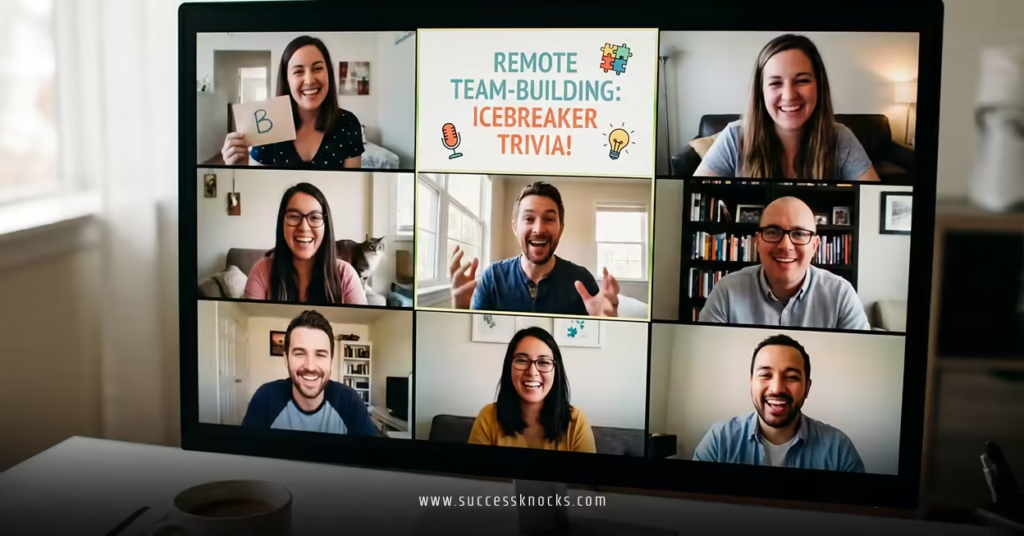
2. Online trivia with custom questions
Skip generic trivia if you want people to care. Use questions about:
- company history
- team traditions
- shared wins
- fun personal facts
A little inside knowledge makes it feel like your team, not a random pub quiz. Keep the pace fast and the rules simple.
3. Async “show and tell”
Ask team members to post a photo, short video, or voice note about something they’re into outside work. It could be:
- a desk setup
- a hobby
- a weekend project
- a favorite local food spot
This is one of the easiest team building activities for remote employees because it works across time zones and doesn’t require live attendance.
4. Remote lunch or snack sessions
Send a small food stipend or let people expense lunch, then meet for a casual video lunch. No slide deck. No big agenda. Just conversation.
What usually happens is people relax faster when they’re eating. The vibe shifts. Conversations stop feeling like an HR exercise.
5. Team challenges with a shared goal
Try simple group challenges like:
- a step count challenge
- reading the same short article and discussing it
- a month-long gratitude or wins board
- a “best home workspace” contest
These work well because they stretch over time instead of disappearing after one call.
6. Virtual escape rooms
If your team likes puzzles, this one lands well. The group works together to solve clues under time pressure. It’s a clean test of communication, leadership, and patience.
Not every team loves this. Some teams feel stressed by the countdown. If that’s your crowd, keep it optional or choose a lighter collaborative game.
7. Collaborative playlist or culture board
Give everyone a shared playlist or digital mood board to contribute to. The prompt can be:
- one song that fits your work mood
- one song that reminds you of summer
- one song that gets you through deadline week
It sounds tiny. It isn’t. Shared taste creates tiny bridges, and those bridges matter.
8. Remote volunteer activity
Teams can volunteer together even while apart:
- each person picks a local cause for one hour
- the team supports a common nonprofit with small contributions
- everyone shares what they chose and why
This is especially strong when the team wants something that feels meaningful, not just fun.
9. Skill-share sessions
Let team members teach one another something useful or interesting in 10 to 15 minutes:
- Excel shortcuts
- better note-taking
- design tips
- keyboard productivity tricks
- how they organize their week
This builds respect fast. People see each other as capable humans with actual expertise, not just names in Slack.
10. “Two truths and a lie” or quick intro games
Classic for a reason. Short, easy, and surprisingly effective for new hires or cross-functional teams.
Use it sparingly. If you overuse icebreakers, they start to feel like a tax on everyone’s patience.
Choosing the right team building format
Not every team needs the same thing. A remote sales team, a product team, and a support team all have different energy and bandwidth.
Use this simple filter:
- Need more trust? Pick pair chats, skill shares, and async storytelling.
- Need more fun? Go with trivia, games, or light competitions.
- Need more alignment? Try collaborative challenges or shared learning sessions.
- Need less scheduling pain? Choose async formats first.
Here’s a useful rule: the more fragmented your team is by time zone, the more async the activity should be.
Remote team building ideas by goal
For new hires
The best team building activities for remote employees who are new to the company should reduce awkwardness fast.
Good options:
- structured buddy calls
- intro swaps
- team bingo
- short “what I wish I knew when I joined” sessions
New hires need context, not performance.
For cross-functional teams
When people don’t work together daily, shared understanding matters more than entertainment.
Try:
- role explainers
- workflow walkthroughs
- paired problem-solving sessions
- “what my team needs from yours” discussions
This is where friction gets reduced before it starts.
For burned-out teams
If the team is tired, don’t make bonding feel like homework.
Choose low-energy options:
- a shared playlist
- optional coffee chats
- a remote lunch
- a short appreciation round
Sometimes the best thing you can do is create a softer lane, not a bigger event.
How to run team building without making it awkward
A lot of remote team building fails for one reason: it feels mandatory and slightly embarrassing.
Fix that by keeping these principles in mind:
- Keep it short. Fifteen to 30 minutes is enough for many activities.
- Make it optional when possible. Pressure kills participation.
- Use clear prompts. People hate vague “let’s just chat” sessions.
- Rotate formats. Not everyone likes games, and not everyone likes talking.
- Protect time zones. If half the team is always excluded, the activity becomes a signal problem.
The best remote team building feels like a useful break, not a corporate art project.
Team building activities for remote employees on a budget
You do not need to spend a fortune. In fact, some of the strongest team building activities for remote employees cost almost nothing.
Low-cost ideas
- virtual coffee chats
- show and tell
- playlist swaps
- trivia with free tools
- peer recognition rounds
- team bingo
- shared reading discussions
Mid-budget ideas
- lunch stipends
- virtual escape rooms
- shipped snack boxes
- short professional facilitators
- team challenge rewards
If your budget is tight, spend on participation, not production. People remember being included more than they remember fancy graphics.
A smart hybrid approach for remote and in-person teams
If your company has both remote and office-based employees, build your culture around formats that work in both worlds.
One underrated idea: pair your virtual plan with a real-world seasonal gathering. For example, teams with occasional in-person meetups can borrow inspiration from summer outdoor corporate event ideas for small teams and translate the same spirit into remote-friendly formats like outdoor picnics at local hubs, park walks, or regional meetups.
That matters because people don’t just want activities. They want shared memory. Shared memory is glue.
Common mistakes to avoid
Making everything mandatory
If every activity is required, people stop seeing it as connection and start seeing it as compliance.
Choosing only high-energy games
Some people love games. Some don’t. A healthy mix works better.
Ignoring time zones
This is the classic remote-team mistake. If one region always gets the short end of the stick, morale takes a hit.
Using vague prompts
“Let’s get to know each other” is not a plan. Give people a structure.
Never repeating anything
A one-off event can be fun, but repeatable rituals build actual culture.
Step-by-step plan to build a remote team building rhythm
- Pick one goal: bonding, onboarding, morale, or alignment.
- Choose one async format and one live format.
- Keep live sessions short and opt-in where possible.
- Use simple prompts so no one has to improvise.
- Rotate formats monthly so the team doesn’t get bored.
- Collect feedback after each round.
- Double down on what people actually enjoy.
That’s it. Simple wins.
Key takeaways
- Team building activities for remote employees should feel useful, not forced.
- The best formats are short, clear, and easy to join across time zones.
- Mix live and async options so the burden does not always fall on the same people.
- Low-cost ideas can work just as well as expensive ones if the prompt is good.
- Remote team building should support trust, communication, and inclusion.
- Different goals need different formats, so match the activity to the real problem.
- Repetition matters more than spectacle.
- The strongest remote culture often comes from small, consistent rituals.
Remote teams do not need more noise. They need better signals. Pick a few simple activities, make them repeatable, and keep the tone human. That’s how you build a team people actually want to work with.
FAQs
What are the best team building activities for remote employees if the team is shy?
Start with low-pressure formats like virtual coffee chats, async show and tell, or short skill shares. These activities let people participate without putting them on the spot.
How often should team building activities for remote employees happen?
A good rhythm is one light activity every week or two, plus one deeper team session each month. Too much and people burn out; too little and the culture goes flat.
Can team building activities for remote employees also improve performance?
Yes, if they improve trust, communication, and cross-functional understanding. The goal is not just fun. The goal is fewer misunderstandings and smoother collaboration.