Key Takeaways
- Integration of smart technologies enhances real-time patient monitoring and personalized care.
- Miniaturization of devices leads to less invasive procedures and faster recovery times.
- Advanced materials improve device durability and functionality in diverse environments.
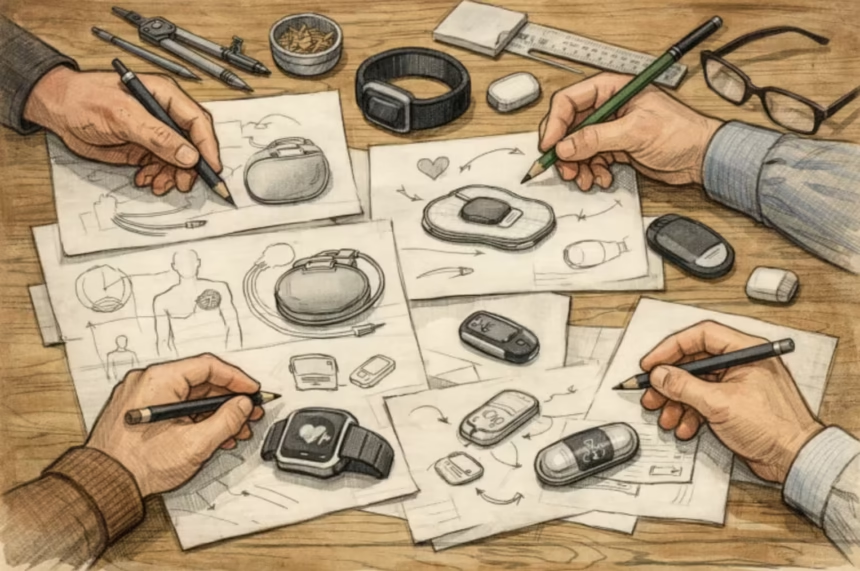
Medical device design is experiencing a transformative period as advanced technologies are integrated into healthcare solutions. The evolution of these devices is enhancing the quality of patient care, making treatment more efficient, and improving recovery outcomes. With real-time monitoring, user-centric innovation, and new materials, today’s medical devices deliver unprecedented benefits for patients and healthcare providers alike. Whether developing wearables or implantable devices, companies such as viantmedical.com are at the forefront of designing and developing the next generation of medical products that respond to the changing needs of healthcare systems.
Smart technology, miniaturization, and advanced materials are rapidly shaping new standards in medical device manufacturing. By incorporating digital connectivity and user-centered design, these improvements provide accessible, technologically advanced care with greater reliability. For instance, digital therapeutics and monitoring solutions now connect patients and clinical teams seamlessly, supporting timely interventions and data-driven medical decisions.
Smart Technology Integration
Integrating smart technology into medical devices has revolutionized both everyday and clinical healthcare settings. Devices such as wireless pacemakers, wearable glucose monitors, and connected inhalers provide real-time data on patient health. This streamlines communication between patients and healthcare providers, enabling remote monitoring to detect early warning signs and support more personalized treatment approaches. Articles from sources such as Nature Biomedical Engineering have emphasized that these technological advances are positively impacting patient adherence and reducing the need for frequent hospital visits.
Smart medical devices not only capture but also transmit critical information, facilitating more effective health management. For example, remote cardiac monitors alert healthcare teams to arrhythmias as soon as they happen, prompting quick medical responses. In chronic disease management, connected drug-delivery devices and digital health applications support self-management and increase patient engagement with their treatment plans.
Miniaturization of Medical Devices
The ongoing miniaturization of medical devices opens the door to less invasive, more patient-friendly treatments and monitoring. For instance, today’s implantable devices, such as advanced pacemakers or neural stimulators, are a fraction of the size of their predecessors. Smaller devices mean less disruptive surgeries and drastically reduced recovery periods.
Furthermore, the miniaturization trend enables innovative applications in minimally invasive procedures. Catheter-based interventions and biosensors can now reach deeper and more delicate areas of the body than ever before, enabling once-impossible diagnostics and treatments. As noted in peer-reviewed medical device journals, this shift enhances patient safety and comfort while expanding the possibilities for point-of-care diagnostics.
Advanced Materials in Device Design
Today’s medical devices increasingly rely on engineered materials that offer superior performance in both home and clinical environments. High-strength polymers, biocompatible metals, and smart biomaterials are regularly used to increase durability, hygiene, and adaptability. Polycarbonate and thermoplastic polyurethane, for instance, provide the resilience and flexibility necessary for both implants and external health devices.
Advanced materials enable the development of products that can withstand rigorous use, resist bacterial colonization, and maintain functionality across varying conditions. This has led to safer and more effective devices available to a broader segment of the patient population. As described in reports by the Centers for Disease Control and Prevention, improved material choices also contribute to better infection control and device longevity, reducing the long-term costs of care and maintenance.
AI and Machine Learning Applications
Artificial intelligence and machine learning are at the core of the next wave of medical device innovation, offering powerful new ways to analyze and interpret patient data. AI-driven diagnostics, imaging systems, and wearable health trackers are already providing clinicians with actionable insights that were previously difficult to obtain.
Machine learning algorithms analyze continuous streams of patient data to detect patterns, predict outcomes, and suggest intervention strategies, supporting clinical decision-making. These systems, which adapt and improve over time, help predict disease, reduce diagnostic errors, and ensure more accurate and personalized treatment plans. Automated medical imaging tools that harness AI are particularly noteworthy, as they facilitate quicker diagnoses and free up valuable clinician time.
Collaborative Design Approaches
Multidisciplinary collaboration plays a critical role in creating safe, effective, and user-friendly medical devices. Today, product designers, software engineers, healthcare professionals, and end users work together from the earliest stages of development to identify usability issues, improve functionality, and address safety concerns before large-scale production begins. This integrated approach encourages innovation while ensuring devices meet both clinical and patient needs. By emphasizing human-centered design, continuous feedback, and real-world testing, manufacturers can develop technologies that are intuitive, reliable, and easier for healthcare providers and patients to adopt. Healthcare standards organizations strongly support these collaborative practices because they help improve patient safety, increase device adoption rates, and contribute to better overall clinical outcomes and healthcare experiences.
Future Trends in Medical Device Development
Looking to the future, the trajectory of medical device development is defined by the ongoing fusion of smart technologies, continued miniaturization, and the use of more sophisticated materials. Sustainability is becoming a central consideration, with research focused on reducing environmental impact through improved design and greener manufacturing processes.
Emerging trends also emphasize the use of AI frameworks to proactively assess and manage the environmental impact of devices throughout their lifecycle. Additionally, regulatory frameworks are adapting to accommodate digital health innovations, accelerating the path from concept to clinical use and encouraging ongoing improvement.
In summary, the rapid evolution of medical device design is transforming modern healthcare by improving precision, accessibility, efficiency, and sustainability across medical treatments. Advanced technologies, smarter materials, and patient-focused innovations are enabling healthcare providers to diagnose conditions earlier, deliver safer procedures, and support faster recovery times. These advancements also help expand healthcare access to underserved communities while reducing long-term operational costs for medical facilities. As research and engineering continue to progress, medical devices will play an increasingly essential role in enhancing patient outcomes and strengthening healthcare systems worldwide for future generations.