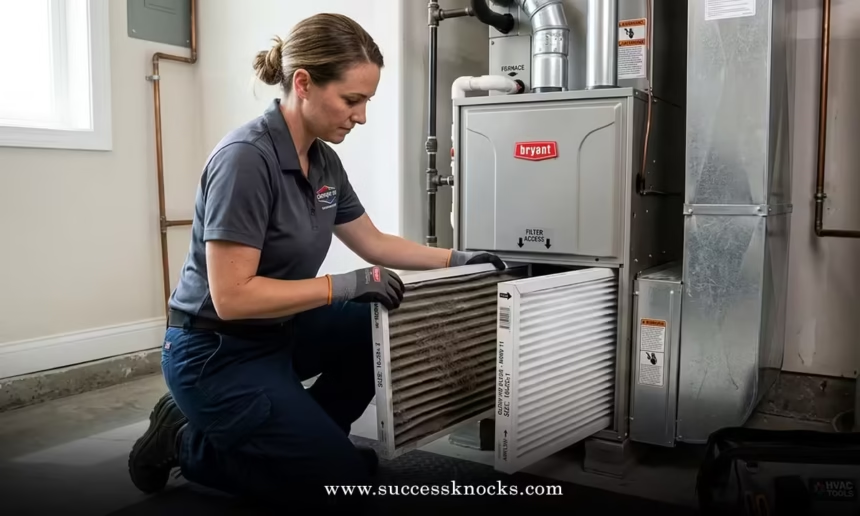
If you want the best HVAC maintenance in Sheffield, start with the most overlooked hero in the system: the air filter. That small rectangle of material sitting in your return duct has more impact on comfort, efficiency, and breakdowns than most people realize.
Swap it on time, and your system breathes easy. Ignore it, and you slowly choke the equipment until it’s running hot, hard, and inefficient.
This HVAC filter replacement guide walks you through:
- How often to change your HVAC filter (without wasting money).
- How to choose the right size and type of filter.
- Step-by-step instructions to replace it safely.
- Common mistakes that wreck airflow and spike energy bills.
- How filter care ties into the best HVAC maintenance in Sheffield.
Why HVAC Filters Actually Matter
Here’s the thing: your HVAC filter isn’t just about dust. It protects the system first, your lungs second.
A clean, correctly sized filter helps:
- Maintain strong airflow.
- Reduce strain on the blower motor.
- Keep coils cleaner for longer.
- Support better indoor air quality.
- Lower energy usage by keeping the system efficient.
According to the U.S. Department of Energy, heating and cooling can account for nearly half of a typical home’s energy use, so anything that reduces airflow and forces the system to work harder is going to show up on your bill. A dirty filter is one of the fastest ways to waste that money.
If your goal is the best HVAC maintenance in Sheffield, consistent filter replacement is your lowest-cost, highest-impact move.
How Often Should You Replace Your HVAC Filter?
There’s no one-size-fits-all answer. Frequency depends on how you live, not just what the packaging says.
Use these general ranges:
- Basic 1″ fiberglass filters: about every 30 days.
- 1″–3″ pleated filters: every 60–90 days.
- Higher-MERV or thicker filters: every 3–6 months (check manufacturer guidelines).
- Homes with pets, smokers, or allergy sufferers: lean toward the shorter end of those ranges.
Ask yourself:
- Do you see dust building up around vents?
- Does the filter look gray or clogged, not just slightly dirty?
- Has airflow at vents noticeably dropped?
If yes, you waited too long.
A quick visual check once a month is a simple habit that keeps you ahead of the problem.
Choosing the Right HVAC Filter
Buying “the most expensive filter” isn’t a strategy. It’s a guess. And sometimes it backfires.
1. Size first, features second
You need the exact right dimensions, usually printed on the old filter’s frame (for example: 16x20x1).
If the filter is too small or too thin, air will bypass the media and leak around the edges. Too large, and it won’t even fit. That’s not filtration. That’s decoration.
2. Understand MERV ratings
MERV (Minimum Efficiency Reporting Value) measures how well a filter captures particles. Higher number = finer filtration. But higher isn’t always better for the system.
- MERV 6–8: basic dust and lint.
- MERV 8–11: better balance for most homes.
- MERV 11–13: improved filtration for allergies, if system can handle it.
The American Society of Heating, Refrigerating and Air-Conditioning Engineers (ASHRAE) recommends matching filter rating to equipment capability. Go too high on MERV with a system not designed for it, and you restrict airflow, which adds strain.
3. Match the filter to your lifestyle
- No pets, no allergies, light use? Mid-range MERV, changed on schedule, is fine.
- Pets or mild allergies? Move toward MERV 8–11.
- Strong allergies or respiratory issues? Consider MERV 11–13 and confirm with your HVAC pro that the system can handle the resistance.
Want the best HVAC maintenance in Sheffield approach? Don’t guess. Note your system’s specs and ask your contractor which MERV range is safe and appropriate.
Step-by-Step: How to Replace an HVAC Filter
Swapping the filter is one of the easiest DIY maintenance tasks you can do. Do it right, and you instantly help the system breathe better.
1. Turn off the system
Set the thermostat to “Off” before changing the filter. You don’t want the blower running while the filter is out and dust is loose.
2. Find the filter location
Common spots:
- In a return grille (large vent) on a wall or ceiling.
- In the slot next to the blower compartment on the indoor unit.
- Inside a filter rack between return duct and air handler.
If you’re not sure, your owner’s manual or a quick glance at the air handler usually reveals it.
3. Note the filter size and airflow direction
Before pulling the old filter out completely, look for:
- Size (printed on the edge).
- An arrow indicating airflow direction.
The arrow should point toward the air handler or furnace, not toward the grille.
4. Remove the old filter
Slide it out carefully to avoid shaking dust loose. If it’s visibly gray, fuzzy, or clogged, it’s overdue.
5. Insert the new filter (correctly)
- Match the size exactly.
- Align the airflow arrow in the same direction as the previous filter (toward the unit).
- Make sure it fits snugly with no gaps.
6. Close everything up and restart
Secure the access panel or grille, then turn the system back on at the thermostat. Check vents for strong, consistent airflow.
That’s it. Five minutes of work that pays back all season.
Common Mistakes People Make With HVAC Filters
This is where problems quietly build up.
Mistake 1: “Out of sight, out of mind”
Forgetting about the filter until the system “sounds wrong” is a classic move—and an expensive one. By then, airflow has been tight for weeks or months.
Fix: Set calendar reminders every 30 days to inspect the filter, even if you don’t always replace it.
Mistake 2: Buying the highest MERV just because it sounds better
If the system isn’t designed for high-resistance filters, a very high MERV can reduce airflow and strain the blower.
Fix: Stay in a recommended MERV range for your equipment and needs. When in doubt, ask the technician who handles your best HVAC maintenance in Sheffield visits.
Mistake 3: Wrong size, “good enough” fit
Stuffing in a filter that’s almost the right size leaves gaps around the edges where unfiltered air bypasses.
Fix: Use the exact size listed on your existing filter or equipment documentation. No improvising.
Mistake 4: Facing the arrow the wrong way
Reversing the airflow direction can cause the filter media to behave poorly and reduce efficiency.
Fix: Always point the arrow toward the air handler or furnace.
Mistake 5: Leaving the filter slot uncovered
Some people remove a clogged filter and run the system “just for a while” without one. That’s a fast way to dirty the blower and coils.
Fix: Never run the system without a filter in place. If you must run it and don’t have the right filter yet, solve that as fast as you’d solve running a car without oil.

How Filter Replacement Fits Into the Bigger HVAC Picture
Filter replacement doesn’t replace full maintenance. It supports it.
When you keep filters clean, your best HVAC maintenance in Sheffield service visits are more productive because the technician isn’t spending half the time dealing with problems caused by neglect. Instead, they can focus on:
- Fine-tuning airflow.
- Inspecting coils, drains, and electrical components.
- Checking refrigerant levels and system performance.
- Verifying safe operation in heating mode.
Combine good filter habits with annual or semi-annual professional maintenance, and you get:
- Fewer surprise breakdowns.
- More stable comfort across rooms.
- Longer equipment life.
- Lower energy waste.
Think of the filter as your daily brushing and professional maintenance as the dentist visit. Skip either one long enough and you’ll pay for it.
For broader guidance on keeping heating and cooling systems efficient, the U.S. Department of Energy’s home heating and cooling maintenance tips are a solid, neutral reference point.
Signs You’re Overdue for a New Filter
You don’t need tools for this. Just pay attention.
Watch for:
- Weaker airflow from vents than you’re used to.
- More dust settling on surfaces, even after cleaning.
- A musty or stale smell when the system kicks on.
- The system running longer cycles to reach the same temperature.
- A visibly dark or caked filter when you check it.
If more than one of those is happening, change that filter now and start fresh.
Filters, Allergies, and Indoor Air Quality
If someone in the home deals with allergies or asthma, filters matter even more.
A properly sized, appropriately rated filter:
- Captures more pollen, pet dander, and fine dust.
- Keeps air moving consistently.
- Reduces recirculation of irritants.
The EPA’s indoor air quality guidance points out that filtration is one part of a bigger IAQ strategy that includes source control and ventilation. So don’t expect the filter to do everything—but don’t ignore it, either.
If you’re targeting the best HVAC maintenance in Sheffield, combine:
- The right filter (MERV range suited to your system).
- Regular replacement.
- Good housekeeping and dust control.
- Periodic professional maintenance that includes coil and blower inspection.
That’s the realistic, non-gimmicky way to keep your air and your system in better shape.
Quick HVAC Filter Replacement Checklist
Use this as a fast gut check every time you’re about to walk away from the system:
- Correct filter size installed?
- Airflow arrow pointing toward the unit?
- Filter fits snugly with no gaps?
- System turned off during the change?
- Calendar reminder set for the next inspection?
If all of that is true, you’re ahead of most households already.
Key Takeaways
- HVAC filters protect the system first and your air quality second—don’t treat them as optional.
- Replacement frequency depends on filter type and how you live, but a monthly visual check is non-negotiable.
- Use the correct size and a MERV rating your system can handle; higher isn’t always better for airflow.
- Never run the system without a filter and never assume “it still looks kind of clean” means it’s doing its job.
- Consistent filter replacement is a core part of the best HVAC maintenance in Sheffield and directly affects comfort, efficiency, and equipment life.
A clean filter is cheap insurance. Keep it fresh, and your HVAC system has a fighting chance to run the way it was designed—smooth, efficient, and almost invisible in the background where it belongs.
FAQs
How often should I replace my HVAC filter?
Most homes should check filters monthly and replace them every 1–3 months, depending on filter type, pets, and dust levels.
Can a dirty filter damage my HVAC system?
Yes. A clogged filter restricts airflow, strains the blower motor, reduces efficiency, and can contribute to premature system failure. While filter replacement is a task most can handle themselves, acknowledging when a system needs more intensive care is part of a smart maintenance plan. For instance, if you notice your equipment is struggling despite having a fresh filter, it could indicate that mechanical components have been strained by past neglect. In these cases, seeking professional ac repair can help address deeper issues like motor wear or refrigerant leaks. Keeping the system in peak condition ensures that it remains efficient and reliable, protecting your long-term investment in home comfort and indoor air quality.
Which filter MERV rating is best for most homes?
For most systems, a MERV 8–11 filter balances good filtration with healthy airflow, but always confirm what your equipment can handle.