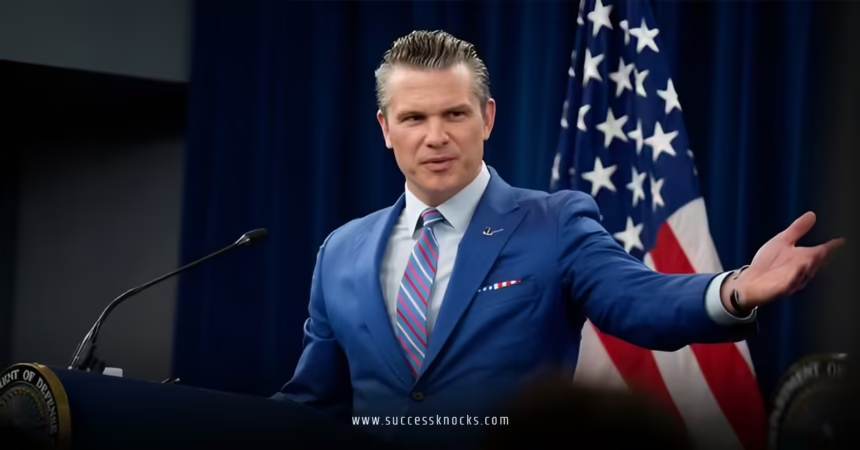
Pete Hegseth Defense Secretary Record stands out as one of the more unconventional paths to the Pentagon’s top job. Confirmed in January 2025 by the narrowest of margins, the former Fox News host and Army National Guard veteran quickly made his mark with aggressive reforms aimed at restoring what he calls “warrior culture.”
His record mixes combat deployments, media commentary, and now high-stakes policy execution. From day one, Hegseth pushed changes that polarized observers—some see decisive leadership, others question the experience level for running the world’s largest military machine.
- Quick confirmation facts: Sworn in January 25, 2025, after a 51-50 Senate vote with VP J.D. Vance breaking the tie.
- Core focus areas: Reversing DEI initiatives, enforcing strict physical standards, and prioritizing combat readiness over bureaucracy.
- Military creds: Multiple deployments, two Bronze Stars, Combat Infantryman Badge.
- Early wins claimed: Record recruiting numbers and streamlined decision-making.
- Ongoing scrutiny: Questions about managing a $850+ billion budget and massive workforce.
The guy didn’t climb the traditional general officer ladder. That’s by design—and the source of both praise and heat.
Pete Hegseth’s Military Service: Deployments That Shaped His Views
Hegseth graduated Princeton in 2003 and commissioned as an infantry officer in the Minnesota Army National Guard. Deployments followed: Guantanamo Bay, Iraq as a platoon leader, and Afghanistan teaching counterinsurgency tactics.
He earned two Bronze Star Medals, two Army Commendation Medals, and the Combat Infantryman Badge. Performance reports called him an “incredibly talented, battle-proven leader.”
Those boots-on-ground experiences fuel his current push. He often references patrol leadership and seeing bureaucracy hinder effectiveness. No four-star pedigree, yet direct exposure to the sharp end.
Military and Professional Timeline Table
| Period | Role | Key Achievements/Notes |
|---|---|---|
| 2003-2006 | Infantry Officer, National Guard | Guantanamo Bay security, Iraq deployment |
| 2010-2014 | Additional Guard Service | Afghanistan counterinsurgency training |
| 2007-2016 | Nonprofit Leadership (Vets for Freedom, Concerned Veterans for America) | Advocacy for veterans, policy reform |
| 2014-2024 | Fox News Host & Author | “Fox & Friends Weekend,” multiple books including bestseller The War on Warriors |
| Jan 2025-Present | Secretary of Defense | Confirmation 51-50, major reform initiatives |
This table shows the arc. Combat veteran to media voice to Pentagon chief. Gaps in large-scale management? Critics hammer that. Supporters say fresh eyes beat entrenched thinking.
Confirmation Battles and Early Tenure as Defense Secretary
The hearings were brutal. Democrats and some Republicans grilled him on inexperience running a 3+ million person organization. Personal allegations surfaced. Yet he cleared the Armed Services Committee and won confirmation.
Once in office, action came fast. Hegseth moved to end certain diversity programs, reinstated higher male physical standards for combat roles, and emphasized daily PT across the force. Recruiting reportedly hit records under his watch.
He also engaged directly with troops—bench press videos from Guantanamo made the rounds. Style over substance? Or morale booster? Depends who you ask.
In my experience watching these transitions, outsiders often face the steepest learning curves. What I’d do in his shoes: Lean hard on career deputies for logistics while driving the cultural shifts personally.
Key Policy Moves and Record So Far
Hegseth targeted “woke” elements head-on. Fitness standards returned to “highest male standard only” for combat positions. He pushed back on what he sees as diluted readiness.
Budget fights continue. Managing an $850 billion beast demands discipline. Early signals point to prioritizing munitions production and ally burden-sharing.
His media background helps message discipline. Yet it invites endless clips and scrutiny. The record remains young—less than 18 months in by mid-2026—but direction is unmistakable: lethality first.
Rhetorical question: Can a platoon leader mindset scale to the entire Department of Defense? Time—and results—will judge.
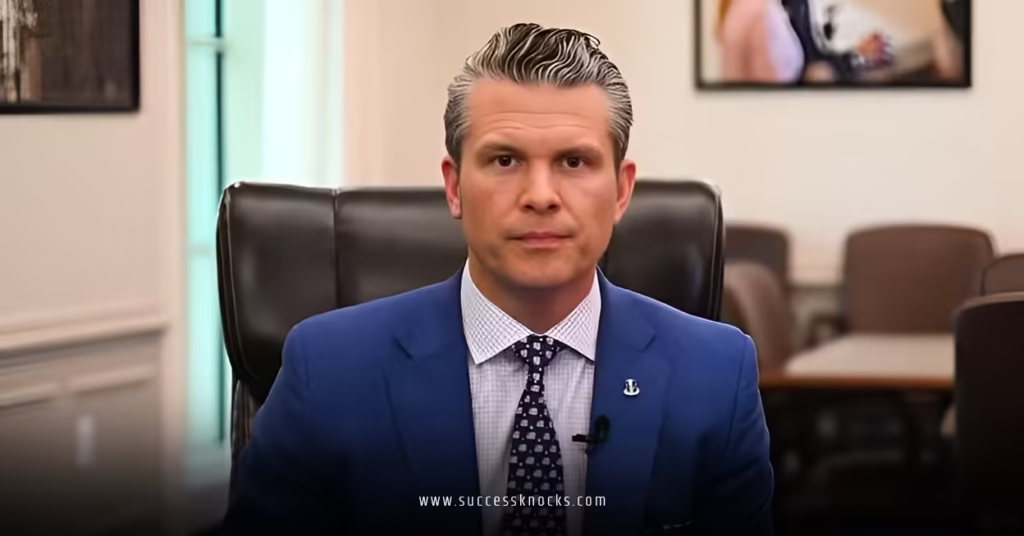
Linking to Current Flashpoints: Pete Hegseth Strait of Hormuz Face the Nation
Hegseth’s military record directly informed his handling of crises like the Strait of Hormuz tensions. In the June 2026 Face the Nation appearance, his emphasis on sustained pressure and safe passage operations echoed lessons from past deployments.
Project Freedom—escorting allied oil through contested waters—showcased the practical application of his views on strength and control. No substitute for credible deterrence, he argues.
Step-by-Step: How to Evaluate a Defense Secretary’s Record as a Citizen
Beginners tracking politics often feel lost. Break it down:
- Review military bio: Check deployments, awards via official bios or DoD sites.
- Track confirmation docs: Senate records detail questions and votes.
- Monitor policy announcements: Pentagon releases and budget proposals show priorities.
- Cross-reference outcomes: Recruiting stats, readiness reports, incident responses.
- Watch media appearances: Compare rhetoric to actions.
- Assess controversies: Separate verified issues from partisan noise.
What I’d do? Bookmark defense.gov and major outlets. Ignore daily outrage cycles. Focus on six-month trends.
Common Mistakes When Assessing Defense Leaders & How to Fix Them
People rush to extremes. “He’s a hero” or “totally unqualified.” Nuance matters.
- Mistake 1: Judging solely by rank. Fix: Value deployment quality over stars.
- Mistake 2: Ignoring implementation challenges. Large orgs resist change. Fix: Look for measurable progress, not just speeches.
- Mistake 3: Over-relying on one narrative. Fix: Read U.S. Department of Defense official biographies alongside independent analysis from Brookings Institution.
- Mistake 4: Forgetting context. Post-2024 election shifts were seismic. Fix: Compare to predecessors’ records.
Think of it like evaluating a startup CEO versus a Fortune 500 lifer. Different strengths, different risks.
Key Takeaways
- Pete Hegseth Defense Secretary Record features solid combat service but limited executive experience at scale.
- Narrow confirmation highlighted deep partisan divides.
- Early reforms center on fitness standards, anti-DEI push, and warrior ethos.
- Deployments in Iraq, Afghanistan, and Guantanamo inform his deterrence-focused approach.
- Crisis management, including Strait of Hormuz operations, tests his leadership in real time.
- Recruiting gains claimed as early success metric.
- Ongoing challenges: Budget oversight, ally coordination, munitions replenishment.
- Overall: Disruptor style that energizes supporters and alarms critics.
Hegseth’s record reflects a bet on outsiders shaking up the Pentagon. Whether it delivers stronger deterrence and readiness remains the ultimate test. Next step: Follow official DoD updates and key metrics like readiness reports. Results over rhetoric will define the legacy.
FAQs
What stands out most in Pete Hegseth Defense Secretary Record regarding military service?
His deployments to Guantanamo Bay, Iraq, and Afghanistan as a National Guard infantry officer, earning two Bronze Stars and the Combat Infantryman Badge.
How does the Pete Hegseth Strait of Hormuz Face the Nation interview connect to his broader record?
It showcased his application of military pressure tactics and operational control principles developed from prior service and advocacy work.
Has Pete Hegseth faced criticism over his Defense Secretary qualifications?
Yes, mainly around managing massive budgets and organizations without prior senior Pentagon experience, despite strong veteran credentials.