

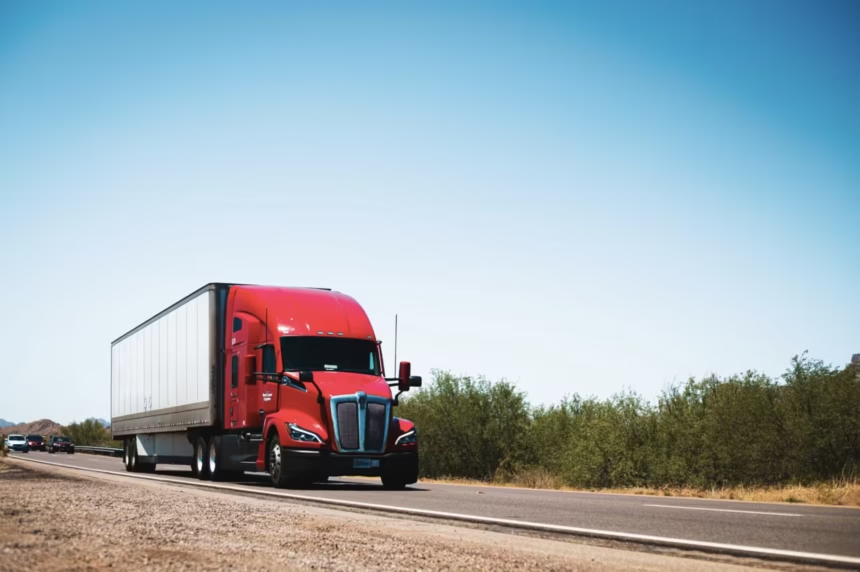
Finding yourself in a collision on the road isn’t something anyone wants or expects when they leave home each day. Sadly, there are over 16,000 accidents a day involving a range of vehicles from cars to motorcycles to trucks and more.
But what happens when you find yourself involved in an incident with a truck? What happens next? It’s not always as straightforward as it would be if it were with another car. This post is going to look at why exactly that is.
More Parties Are Involved
If you have a typical car accident, then usually liability comes down to one driver or another. However, if you’re involved in a truck accident, there’s more to it than this.
The truck driver might have shared responsibility with another driver; there might also be responsibility on the truck company that employs them. It could be an issue with the company that loaded the cargo, the manufacturer of a defective vehicle component, or even a maintenance contractor who failed to keep the truck roadworthy.
And this is the case, then all involved parties might have their own legal representation to protect them and minimise their own liability. This makes the aftermath just that bit more complex.
Trucking Companies Will Have Legal Teams on Standby
As soon as the incident is reported to the trucking company, lawyers will be ready to dissect the incident and get to work finding a satisfactory outcome for the company. Legal and insurance teams will be mobilised quickly, and this means they’re already gathering evidence, interviewing witnesses, and building a defence before you’ve even had the time to process what’s happened.
This is why it’s more important to obtain good legal representation. Having an experienced 18-wheeler accident lawyer on your side means that your interests are being protected from the outset. It means you can get your evidence preserved and that you’re not being overwhelmed by the trucking company’s representation.
Damages Aren’t Always Straightforward
Calculating damages in a vehicle accident isn’t something that’s easy. There is always a degree of liability to each party that will influence the outcome. However, in the event of a trucking accident, it’s more complicated. This is down to the sheer size of the vehicles involved. Injuries are usually more serious — spinal injuries, traumatic brain injuries and long-term disabilities are more common. Then there’s the financial aspect of the injuries or accidents, too.
In these circumstances, calculating fair compensation means accounting for the future, the scope of the damage, and what life looks like for those involved years down the line. But the thing is that insurance companies will often push for settlements that don’t reflect the full extent of the damage, just to cover for the more immediate ones. This can leave those suffering at a huge disadvantage.
Federal Regulations Add More Complexity
Commercial trucking is governed by a detailed set of federal regulations covering everything from driver hours of service to vehicle maintenance standards and cargo securing requirements, to name a few. If there has been a violation of any of these that led to the accident, this will be central to establishing liability. But it’s not easy to uncover or even navigate, meaning you need expert help from a legal team that knows exactly how to uncover if a breach of these regulations occurred and what it means for your case.


