Every big business project, whether it’s a new main office, a bigger warehouse, or a retail store, gets started long before anyone lays a brick. Success really hinges on carefully planning and proper site preparation. It all begins with the ground itself.
Skipping over the crucial step of site preparation is a common mistake, but it’s also one that can easily be avoided. It often leads to projects going over budget, missing deadlines, or completely failing. For any business expansion to work out, getting the groundwork right needs to be a top priority, not something you think about last.
When a site is prepared correctly, it makes sure the final building is safe, strong, and will last. It’s like investing in the long-term health of your property, protecting it from expensive problems that might pop up months or even years down the road. Knowing the main parts of this process is key to managing risks and making sure your project succeeds.
Why Foundation Matters for Any Build
How long any building lasts depends entirely on how stable the ground underneath it is. If the foundation is weak or wasn’t prepared properly, it can cause a lot of problems. You might see cracked concrete floors, uneven surfaces, doors that don’t close, and constant water issues. These aren’t just small cosmetic flaws; they’re signs of a failing foundation that can put the whole building at risk and lead to costly, disruptive repairs.
Think of it like a business plan. A company built on a bad strategy will eventually run into serious trouble, no matter how good its daily operations seem. In the same way, a beautiful building on an unstable base is just asking for problems. The process of creating a foundation is more than just digging a hole and pouring concrete. It involves really looking at the land itself, making sure it’s strong and stable enough to hold the weight and function of the planned structure for decades. This applies to everything, from a multi-story office building to a simple paved loading area.
Why Soil Compaction Is Essential
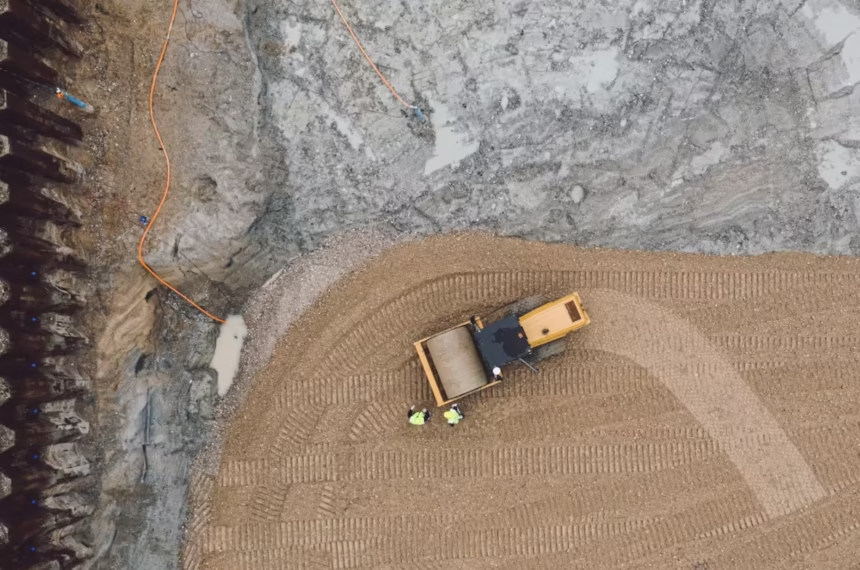
One of the most important steps to building a solid base is soil compaction. This is where machines are used to make the soil denser by pushing air out from between its particles. When soil is compacted correctly, it gets stronger, more stable, and doesn’t let water through as easily. This step is absolutely necessary to stop the ground from settling over time, which is a major reason buildings get damaged.
Different kinds of soil need different ways of compacting. Granular soils, like sand and gravel, compact well with vibration. Cohesive soils, like clay, respond better to pressure. Using the right method is crucial to get the density needed, called the “proctor density,” which is found through soil testing.
Without proper compaction, foundations can shift, asphalt can crack, and concrete slabs can sink. This leads to immediate safety dangers and long-term maintenance headaches. For many businesses doing a project, buying heavy rollers or vibratory plates isn’t practical. That’s where specialized compaction hire comes in handy, offering a cost-effective way to get the right equipment for the job without a huge upfront cost.
Key Stages of Effective Site Prep
Good site preparation is a step-by-step process with several clear stages. Each step builds on the last to create a spot that’s ready for construction. While the exact details can change depending on how big the project is and what the site is like, the main phases are usually the same.
- Site Clearing and Demolition: The first physical step is to clear the land of anything in the way. This includes taking out trees, rocks, old pavement, and any existing buildings that aren’t part of the new plan. All the debris has to be removed from the site responsibly.
- Surveying and Soil Testing: Before any dirt is moved, a professional surveyor maps out the property lines, the shape of the land, and where utility lines are. Geotechnical engineers then do soil tests to check the soil’s makeup, stability, and how much weight it can hold. This information is vital for designing the foundation and planning the rest of the site work.
- Grading and Excavation: Once the site is understood, grading begins. This means shaping the land to create a flat area for the building and to make sure water drains away from the structure properly. Excavation involves digging out space for foundations, basements, and underground utilities.
- Soil Stabilization and Compaction: After grading, the soil underneath is stabilized and compacted to create a firm, solid base. This is the final, and maybe most important, step before any building work can start, making sure the ground can support the huge weight of the building.
Why Cutting Corners Can Cost More Later
It’s tempting to cut corners on site preparation to save time or money, but this is a big risk. These initial savings almost always end up costing much more later. When a project’s foundation fails, the cost of redoing the work isn’t just financial; it also causes major delays that can mess up a business’s growth plans. Many people wonder if site preparation is a necessary step, is worth it, or if it’s just an inflated cost, but experience shows it’s a crucial investment.
Imagine a commercial parking lot paved over a poorly compacted base. Within a year or two, it will likely have potholes, cracks, and dips. This creates safety hazards and gives a bad impression of the business. The cost to tear it out and repave it correctly will be much higher than doing it right the first time.
Similarly, a building foundation that settles can cause structural cracks that need complicated and expensive engineering solutions to fix. These delays not only add direct costs but also push back the time when your new asset can start making money. Investing in thorough site prep is a basic way to manage risk and protect your timeline and budget.
Choosing the Right Equipment for Site Preparation
The right equipment can make site preparation faster, safer, and more accurate. Each stage of the process needs a different type of machine, and choosing the right machinery can help prevent delays, poor results, and unnecessary extra work. For example, an excavator may be needed for digging foundations or trenches, while a roller or plate compactor is better suited for creating a firm, stable base.
Choosing equipment should depend on the size of the site, the type of soil, and the work being carried out. A small paved loading area may only need compact machinery, while a larger warehouse project may require heavier machines that can handle wider surfaces and deeper ground preparation. Matching the equipment to the job helps avoid wasted time, uneven results, and unnecessary fuel or labour costs.
It also helps to plan equipment use in the right order. Clearing, grading, excavation, and compaction all need to happen at the right stage so workers are not waiting around or repeating tasks. When equipment is chosen and scheduled properly, the whole project can move more smoothly from preparation to construction.
The strength of your business’s future physical assets is decided before construction even begins. By seeing site preparation not as a simple chore but as a fundamental investment, you set the stage for a project that finishes on time, stays within budget, and is built to last.