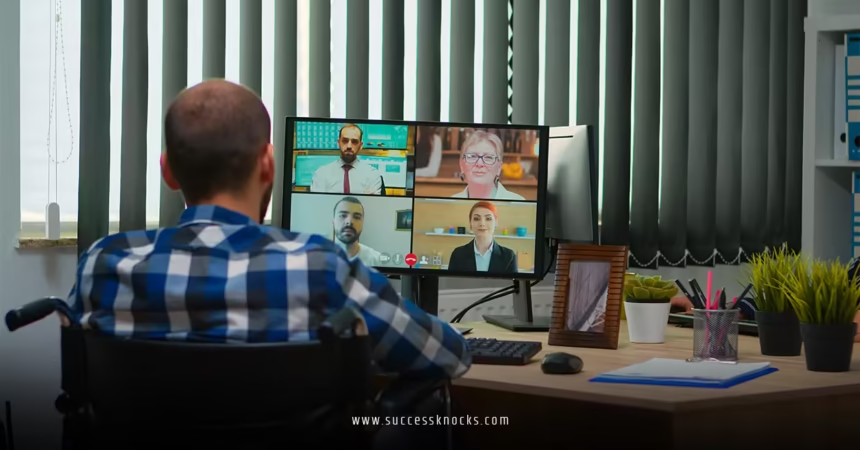
How to run an effective sprint retrospective remotely is something every growing team needs to figure out quickly. You finish another sprint, everyone’s a bit tired, and the last thing you want is another video call that feels like a box-ticking exercise. Yet skipping this step or doing it poorly means the same problems keep popping up week after week. Your team misses chances to improve, people get frustrated, and progress slows down.
We’ve all been there. Remote work makes it harder to read the room and keep energy high, but it doesn’t have to stay that way. With the right approach, your retrospectives become one of the most valuable habits your business builds.
In this article, we’re going to be taking a look at how to run an effective sprint retrospective remotely, and how you can turn these sessions into real drivers of better results for your team. If you would like to find out more, feel free to read on.
Pic – CC0 License
Why Remote Retrospectives Matter for Your Business
Running a sprint retrospective remotely helps your team pause, reflect, and fix what’s not working before small issues become big ones. For entrepreneurs and small teams in the USA, UK, Australia, Singapore, or Dubai, this practice keeps everyone aligned even when you’re spread across time zones.
You get honest feedback on what went well, what didn’t, and what needs to change. This builds trust and makes people feel heard. Over time, you’ll see faster delivery, happier teams, and fewer surprises in your projects.
Many beginner and intermediate business owners treat retros as optional. Don’t make that mistake. Regular retrospectives are one of the simplest ways to create continuous improvement without adding headcount or complicated processes.
Getting Your Team Ready for Success
Start by setting clear expectations. Send out the agenda a day or two ahead so people can think about their input. Tell everyone this is a safe space—no blame, just honest conversation focused on the process and results.
Choose a consistent time that works across your main time zones. For teams spanning multiple regions, rotate the slot so no one always gets the early or late shift. Keep sessions to 45–90 minutes depending on sprint length. Shorter is often better remotely to fight screen fatigue.
Pick a simple format to begin with, like Start-Stop-Continue or Mad-Sad-Glad. These give structure without overwhelming anyone. As your team gets comfortable, you can try others like Sailboat or 4Ls.
Choosing the Right Tools for Remote Collaboration
You need tools that let everyone contribute at the same time. Video calls alone don’t cut it because only one person can speak while others stay quiet.
Popular options include Miro for visual boards, Parabol for guided retrospectives, or simpler ones like EasyRetro. These platforms let team members add virtual sticky notes silently, vote on ideas, and track action items together. Test the tool beforehand so you’re not wasting meeting time on tech problems.
For many teams, a combination works best: Zoom or Google Meet for the conversation and a shared digital whiteboard for ideas. Make sure everyone has access and knows how to use the main features.

How to Run an Effective Sprint Retrospective Remotely: Step by Step
Begin with a quick check-in. Ask everyone to share one word about how they’re feeling or something positive from the sprint. This gets cameras on and voices active right away.
Next, gather reflections. Give people silent time to write what went well, what was challenging, and any ideas for improvement. Silent writing prevents dominant voices from steering the discussion too early and helps quieter team members contribute fully.
Then group the notes together on the shared board and discuss the biggest themes. Use round-robin sharing so everyone gets a turn. Focus on understanding why things happened rather than assigning fault.
Finally, turn insights into action. Agree on no more than three concrete improvements with clear owners and deadlines. End on a high note—maybe with appreciation for the team or a quick fun question.
This flow keeps things productive and positive even when you’re all working from different locations.
Keeping Energy High and Participation Strong
Remote meetings can feel flat, so small things make a big difference. Encourage cameras on when possible, but don’t force it. Use timers for each section to maintain pace. Rotate who facilitates the retrospective so different perspectives lead the conversation.
For teams across the US, UK, Australia, Singapore, and Dubai, consider asynchronous options for parts of the process. Let people add notes before the call if schedules don’t align perfectly. This makes sure everyone’s voice is included.
Pay attention to body language on video. If someone seems disengaged, gently bring them into the discussion. Build psychological safety by reminding the team that the goal is to improve together, not criticize individuals.
Common Pitfalls and How to Avoid Them
One big mistake is letting discussions drag on without clear outcomes. Time-box everything and stay focused on actionable steps. Another issue is skipping follow-up—always start the next retrospective by reviewing previous action items. This shows you take the process seriously.
Don’t reuse the same format every time. Rotate templates to keep things fresh and uncover new insights. Also watch out for technical glitches by having a backup plan, like a shared Google Doc.
If participation drops, check your meeting length and frequency. Sometimes shorter, more frequent sessions work better than long ones. For more on building strong remote team habits, see this guide from Atlassian on remote team collaboration.
Turning Insights Into Real Business Growth
The real value comes after the meeting. Document the action items where everyone can see them—maybe in your project tool or a simple shared sheet. Assign owners and check progress regularly. Celebrate when improvements stick.
Over time, you’ll notice your team solving problems faster, communicating better, and delivering more consistently. This is especially powerful for growing businesses that need to stay agile without big corporate structures.
Many successful teams also link retrospectives to broader goals. For deeper reading on continuous improvement, check Harvard Business Review’s articles on team performance.
Making It Work Long Term
Schedule retrospectives at the end of every sprint without exception. Treat them as non-negotiable as your customer calls or payroll. Track a few simple metrics over time, like how many action items get completed or team satisfaction scores.
As your business grows, you can bring in more advanced practices like anonymous input tools or AI-assisted summaries, but start simple and build from there.
We hope that you have found this article enlightening in some way. Taking the time to run solid sprint retrospectives remotely will pay off in stronger teams and better results. Start small this sprint, stay consistent, and watch your business improve one reflection at a time.