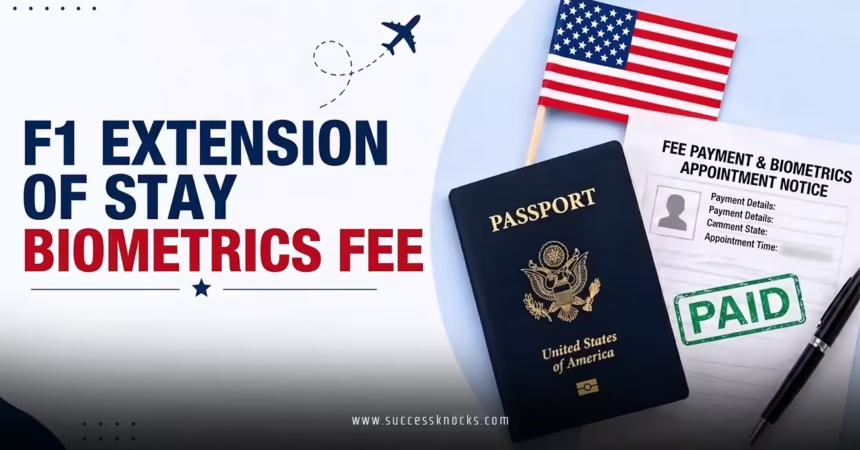
F1 extension of stay biometrics fee might sound like a tiny administrative detail, but if you or your team rely on international student status to build, join, or grow a business, it can make or break your timeline and your cash flow. We see founders across the USA, UK, Australia, Singapore, and Dubai juggling visas, tuition, side projects, and startups—all while trying not to miss a single immigration deadline. One small misunderstanding about a fee or a form can derail an internship, a co‑founder agreement, or even a funding round.
So let’s cut through the noise. In this article, we’re going to be taking a look at f1 extension of stay biometrics fee, and how you can plan better for your visa costs so they don’t blindside your business or career. If you would like to find out more, feel free to read on.
Pic – CC0 License
The basics: what the f1 extension of stay biometrics fee actually is
When we talk about the f1 extension of stay biometrics fee, we’re really talking about the cost of the fingerprinting and photo step that often comes with certain U.S. immigration applications handled by U.S. Citizenship and Immigration Services (USCIS). Biometrics are used to confirm identity and run security checks.
For many F‑1 students, especially those just extending time in a degree program within the original visa period, biometrics might not come into play. But when you file certain applications with USCIS—like a change of status or some types of work authorization—there can be a separate biometrics fee on top of the main filing fee.
As of 2026, USCIS has overhauled a lot of its fee structure. The biometrics fee that used to sit at around $85 has, in many cases, been rolled into the main application fee. That means whether you pay a separate biometrics fee depends on the exact form you’re filing and the version of the rules in effect when you file.
The headline for you: you can’t just assume “no biometrics” or “always biometrics.” You need to check the current instructions for the specific USCIS form tied to your F‑1 status plans.
Where f1 extension of stay biometrics fee shows up in real life
If you’re purely in student mode, extending your stay by staying in status with your school and Designated School Official (DSO), you may never see a separate biometrics charge. Your school updates SEVIS, you keep your I‑20 valid, and you keep studying.
The biometrics fee usually becomes relevant when you intersect with USCIS directly. For example, in the U.S. you may hit this if you’re:
- Filing a change of status inside the U.S. to move into or out of F‑1.
- Applying for certain work authorizations linked to study or training.
- Dealing with a status issue that requires a more complex USCIS filing.
One key example for student entrepreneurs is Optional Practical Training (OPT) or STEM OPT, which lets you work in roles directly related to your degree—common for startup internships or founding your own venture. Currently, most standard OPT applications (Form I‑765) don’t require a separate biometrics fee, but USCIS policies can shift.
Outside the U.S., countries like the UK, Australia, Singapore, and Dubai also use biometrics for student visas and extensions, but the F‑1 label itself is U.S.-specific. So if you’re operating globally, your “biometrics fee” story will look different country by country.
Why this matters for entrepreneurs
You might be wondering why we’re spending time on something as dry as the f1 extension of stay biometrics fee instead of talking about sales funnels or pitch decks. Here’s the reality: visas are infrastructure.
If you or your key team members are on student status, any fee, delay, or misunderstanding can influence:
- When someone can legally start working for your company.
- Whether a founder can stay in the country long enough to close a funding round.
- Whether you can hire that brilliant grad as an employee or only as a short‑term intern.
A missed biometrics appointment or an unpaid fee can result in application delays or denials. That doesn’t just hurt the individual; it can ripple through your business roadmap. Cash flow planning, hiring timelines, and even corporate location strategy all end up tied to immigration details.
Treat this fee as one line item in your broader “talent and immigration budget” rather than an afterthought you’ll deal with at the last minute.
Planning your budget: the f1 extension of stay biometrics fee and other costs
To keep things practical, let’s look at how we can budget around the f1 extension of stay biometrics fee and related charges. Think in terms of a full cost stack rather than one isolated fee.
Typical costs F‑1 students and student founders might encounter include:
- Main USCIS filing fees (for applications like change of status or work authorization).
- Possible biometrics fees if required for that particular filing.
- SEVIS I‑901 fee when first getting F‑1 status.
- School-related fees for issuing new I‑20s, advising, or documentation.
- Legal fees if you work with an immigration attorney.
In 2026, USCIS fees are subject to regular review and can differ based on whether you file online or by paper, and whether you qualify for certain discounts. Our best move is to check the latest fee schedule published by USCIS on its official fee page and always verify the current edition of the form instructions before you file.
For your business, this planning might mean setting aside a small “immigration buffer” in your operating budget. If you know a co‑founder or key hire is on F‑1, build their visa‐related costs into your financial model just like you would software subscriptions or marketing spend.
How to stay on top of changing rules
Immigration rules are not static, and the structure of the f1 extension of stay biometrics fee can change as governments adjust policy. So we want a simple system for staying up to date instead of scrambling every time someone needs to extend their stay.
Here’s a straightforward approach:
- Check official sources first. For U.S. F‑1 matters, start with the U.S. Department of State and USCIS official websites. Look at the pages for student visas, fee schedules, and form instructions rather than blogs or forums.
- Work with your school. Your DSO is your front line. They see policy changes early and can guide you on whether your situation requires USCIS filings (and possible biometrics) or just school-level updates.
- Consult an immigration attorney when stakes are high. If you’re tying funding rounds, founder equity, or long‑term hiring plans to visa outcomes, treat legal advice as a business investment.
- Document your process. Create an internal checklist for any team member on F‑1: form used, fee amount, biometrics requirements, timing, and what to do if notices arrive late.
This doesn’t need to be complex. A simple shared document or task list inside your project management tool can make sure nobody misses an appointment or fee payment.
f1 extension of stay biometrics fee and global talent strategy
Let’s zoom out. While F‑1 is specific to the U.S., biometrics and similar identity checks appear across student and work visa systems in the UK, Australia, Singapore, and Dubai. If your business spans these markets, you want a basic playbook for “talent on visas.”
Think in terms of:
- Which countries are friendliest for student founders.
- How long graduates can stay and work after finishing their studies.
- The costs and lead times for visa applications and extensions, including biometrics.
For instance, some countries have dedicated “graduate visas” or entrepreneurship pathways that reduce friction for startup activity after studies. Others require you to move quickly from student status to a work or business visa. In every case, fees and biometric appointments sit right in the middle of that shift.
The better you know this landscape, the more confident you can be in hiring and partnering with people who are still on student visas but whose skills are vital to your growth.
Practical next steps for you
To turn this from theory into action, here’s how we’d suggest you move forward if F‑1 status touches your business:
- Map out who on your team (or potential hires) is on F‑1 or another student visa.
- List upcoming visa milestones for each person: extensions, work authorization, or status changes.
- For every milestone, check if a USCIS filing is involved and whether a biometrics fee is currently required.
- Add those costs and timelines to your financial and hiring plans.
- Keep one shared “immigration updates” note where you drop key changes you see from official sources.
Doing this once can save you multiple rounds of panic later when an invoice, a payroll start date, or a launch timeline collides with a missing fee or an ignored USCIS notice.
Bringing it all together
We hope that you have found this article enlightening in some way, and that the f1 extension of stay biometrics fee now feels less like a mysterious penalty and more like one small part of a bigger planning puzzle. The goal here isn’t to turn you into an immigration expert; it’s to make sure visa costs and requirements don’t surprise you in the middle of building your business.
By treating visa and biometrics fees as planned line items and tying them to your hiring and founder plans, you reduce risk and protect your growth. You also send a clear message to your team: their status and security are part of the business strategy, not an afterthought.
As rules evolve across the USA, UK, Australia, Singapore, and Dubai, staying close to official guidance and professional advice will keep you ahead of the curve. And the more predictable you make these administrative pieces, the more energy you can put back into building products, serving clients, and growing the business you actually want to run.