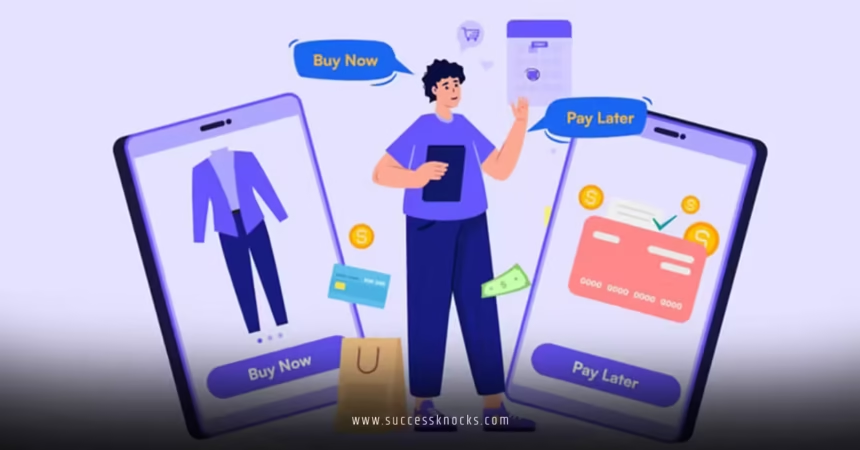
BNPL payment options for small businesses :
BNPL payment options for small businesses are no longer just something you see on big retail sites. They’re becoming part of everyday checkout for boutiques, online stores, service businesses, and even local shops. When customers can spread payments out, they often feel more confident buying now instead of waiting, which can help your sales and average order value.
At the same time, if we plug BNPL in without thinking it through, we can create confusion, higher support costs, and messy cash flow. So we’re going to keep this simple and look at how you can use BNPL in a way that fits your business, your margins, and your customers.
Pic – CC0 License
Why BNPL is on your customers’ radar
Your customers are seeing BNPL offers everywhere: fashion, electronics, travel, subscriptions, and even healthcare. They’re getting used to the idea that they don’t always have to pay the full amount up front. For small businesses, that expectation shows up at checkout, even if you haven’t added BNPL yet.
Here’s what’s driving that interest:
- People want flexibility in how they manage their personal cash flow.
- Younger shoppers, in particular, often prefer fixed installments over running up a card balance.
- Large platforms and marketplaces now promote BNPL heavily, which sets a standard your customers start to expect.
If we connect this to credit card BNPL usage trends USA UK 2026, we can see the pattern clearly: customers are mixing card payments with BNPL plans instead of choosing one or the other. That mix is what you want to design around.
Common BNPL options small businesses can use
When we talk about BNPL payment options for small businesses, we’re really talking about a few simple models you can plug into your checkout. The main approaches look like this:
- Third‑party BNPL providers
- These are services you integrate into your online store or point‑of‑sale.
- They handle the credit checks, collect the installments, and take on most of the risk.
- You get paid (often quickly), minus their fee.
- Card‑linked installments
- Some payment processors and banks now offer installment plans on top of a credit card payment.
- The customer uses a card, but the transaction is split into fixed payments.
- This often feels familiar and safe to customers who already trust their card issuer.
- In‑house payment plans
- You can offer your own simple “pay in 2 or 3” options, especially for services or high‑ticket items.
- This gives you full control, but it also means you handle the admin, reminders, and any late payments.
For most small businesses, starting with a third‑party BNPL or card‑linked installments is the easiest path. It lets you test the impact on conversion and refunds without rebuilding your whole billing process.
How BNPL can help (and where it can hurt)
BNPL can be a powerful tool, but it’s not magic. We want to be clear about both sides.
Where BNPL can help your business:
- Higher average order value when customers can split bigger purchases.
- Lower cart abandonment for higher‑priced items.
- A more modern checkout experience that matches what buyers see on larger sites.
Where BNPL can create problems:
- Higher fees on each transaction, which can eat into tight margins.
- More complexity around refunds and disputes, especially if multiple providers are involved.
- Potential confusion for customers if the terms aren’t clear and simple.
If you’re selling in markets like the USA and UK, it’s worth keeping an eye on credit card BNPL usage trends USA UK 2026, because those trends will shape how customers expect BNPL to work alongside cards, not instead of them.
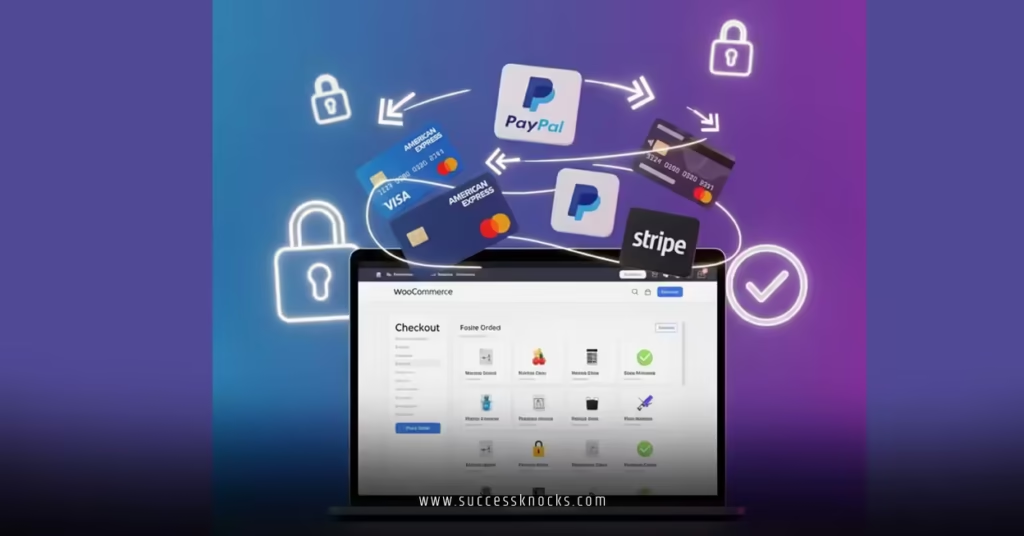
Picking the right BNPL option for your small business
We’re going to keep the decision process straightforward. Instead of chasing every shiny option, you can ask a few simple questions:
- What is your average order value?
- If most orders are low, BNPL might not add much value.
- If you have a mix, try BNPL on mid‑ to high‑ticket items first.
- How strong are your margins?
- BNPL fees are real. Run the numbers before you switch everything on.
- Protect low‑margin products by limiting BNPL to where it helps most.
- Where do your customers shop from?
- If many of them are in the USA, UK, Australia, Singapore, or Dubai, local preferences and rules matter.
- Some providers are stronger in certain regions, so match the option to your main markets.
- How simple do you want support to be?
- If your team is small, you may prefer options where the provider handles most of the complexity.
- If you’re more hands‑on, in‑house plans can work, but only with good processes.
Best practices when adding BNPL to your checkout
Once you’ve decided to test BNPL payment options for small businesses, the next step is making sure the rollout is smooth. Here are practical tips you can use right away:
- Keep the terms short and clear
Customers should understand what they are signing up for in a couple of sentences. Spell out how many payments, when they’re due, and what happens if they cancel. - Match BNPL to specific products or price ranges
You do not need to offer BNPL on everything. Start with the items most likely to benefit from it and track the impact. - Watch your data from day one
Look at conversion rates, average order value, refund patterns, and support tickets. This will tell you whether BNPL is helping or just adding noise. - Train your team
Make sure everyone who talks to customers knows how BNPL works in your business. They should be able to answer questions in plain language and handle basic issues confidently.
Bringing it all together for 2026
BNPL payment options for small businesses are becoming part of the standard payment mix, not just an experiment. As BNPL continues to grow alongside cards, it’s smart to keep an eye on credit card BNPL usage trends USA UK 2026 so you can adjust your approach as customer habits shift.
We hope that you have found this article enlightening in some way, and that it gives you a simple framework for deciding how and where BNPL fits into your business. If you focus on clarity, protect your margins, and start with small, controlled tests, you can enjoy the upside of BNPL without turning your checkout into a headache. Over time, the goal is simple: give your customers flexible ways to pay, while keeping your cash flow and your operations steady.