Sports Sponsorship Strategies for Small Business If you run a small business, you’ve probably looked at big sports deals and thought, “That’s only for the giants.” The truth is simpler: the same principles that power major championships work just as well at the local level—and they can deliver real returns without a Fortune 500 budget.
Sports sponsorship strategies for small business start with one clear idea: match your money and time to the people who already care about the team, the event, or the sport. Do it right and you get visibility, goodwill, and conversations that advertising rarely creates.
Start Local and Stay Focused
The smartest entry point is almost always close to home. Youth soccer clubs, high-school teams, adult rec leagues, charity runs, or a regional tournament often offer packages from a few hundred dollars up to a couple of thousand.
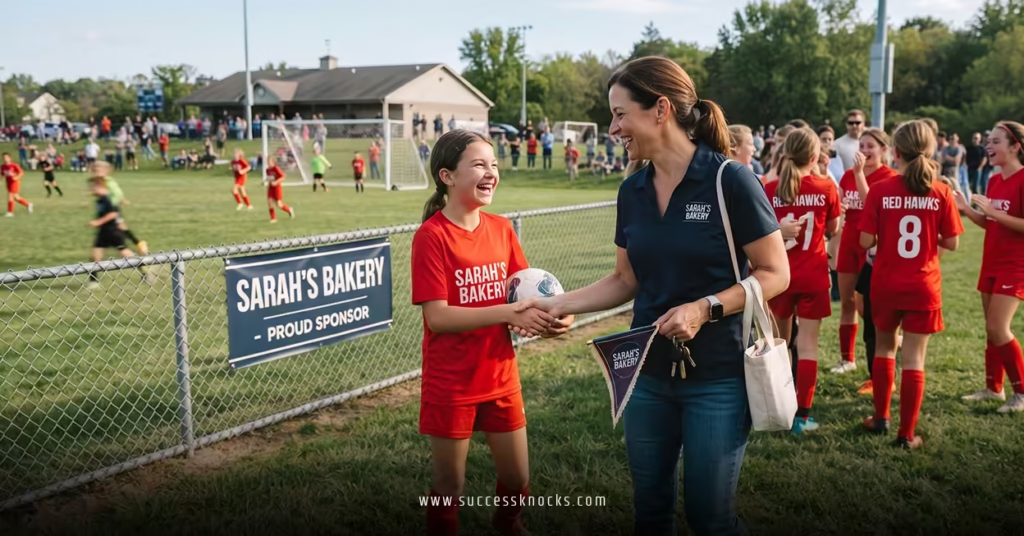
Sports Sponsorship Strategies for Small Business Those numbers put you in front of parents, coaches, local families, and community leaders—exactly the audience many small businesses need. A banner at the field, a logo on team shirts, or a presence at registration day can outperform a generic digital ad because the connection feels personal.
Before you sign anything, write down one or two goals. Do you want more foot traffic? Better brand recognition in your town? Stronger ties with existing customers? Clear goals keep you from buying a package that looks impressive but delivers nothing you can measure.
Choose the Right Level of Involvement
Not every sponsorship needs to be a title deal. Think in tiers:
- Basic visibility – Signage, website mention, social posts. Lowest cost, still useful for awareness.
- Activation-friendly – Permission to set up a table, hand out samples, or run a simple contest on game day. This is where most small businesses see the best return.
- Deeper partnership – Jersey rights, hospitality for clients, or co-branded content. Higher investment, higher potential payoff if you activate it.
The key word is activate. A logo sitting quietly on a fence is better than nothing, but a logo plus a friendly face offering water bottles or a discount code turns passive viewers into active prospects.
Learn From Bigger Examples Without Copying the Budget
Look at how major events handle partnerships. The AIG Women’s Open golf Lancashire 2026 shows what happens when a sponsor commits for the long term, raises the profile of the property, and ties the investment to clear values. AIG didn’t just put its name on the championship; it helped grow prize money, open iconic venues, and connect the event to broader goals around women in sports and business.
You can borrow the same mindset at a fraction of the cost. Choose a local team or event that already shares your values. Support it consistently for two or three seasons instead of one. Measure what changes. That long-view approach builds trust faster than a one-off splash.
Make the Numbers Work
Track what you can. Simple metrics include:
- Website visits or coupon redemptions tied to the sponsorship
- Social mentions and local press
- New customers who mention the team or event
- Employee morale if your staff gets involved
Ask the rights holder for audience data and past sponsor results. Most local clubs are happy to share what they know. If they can’t give you anything measurable, negotiate a lower price or walk away.
Tax treatment can help too. Many local sports contributions qualify as marketing expenses or charitable donations, depending on how the deal is structured. Check with your accountant before you sign.
Practical First Steps You Can Take This Month
- List three local teams or events that attract your ideal customers.
- Reach out and ask for their current sponsorship packages—most have ready-made options.
- Pick the one that offers the best mix of visibility and activation rights for the money.
- Decide how you will show up in person or online.
- Set a simple review date three months after the season starts.
Sports Sponsorship Strategies for Small Business You do not need a massive budget or a national platform. You need a clear goal, a relevant local partner, and the willingness to treat the sponsorship as a relationship rather than a transaction.
Sports sponsorship strategies for small business work best when they feel natural. Choose the team your community already loves, support it in a way that fits your brand, and stay consistent. Do that and the returns—both in business and in goodwill—tend to follow.