
Sports Marketing Strategies for Small Business If you’re a small business owner in the USA, you’ve probably watched big brands pour money into sports sponsorships and wondered how you could ever compete. The truth is you don’t need a Fortune 500 budget. Smart, focused sports marketing can help you reach engaged customers, build loyalty, and stand out—especially when a major event like the FIBA Women’s Basketball World Cup September 2026 is drawing global attention.
In this article, we’re going to be taking a look at practical sports marketing strategies for small business that fit real budgets and real schedules. If you would like to find out more, feel free to read on.
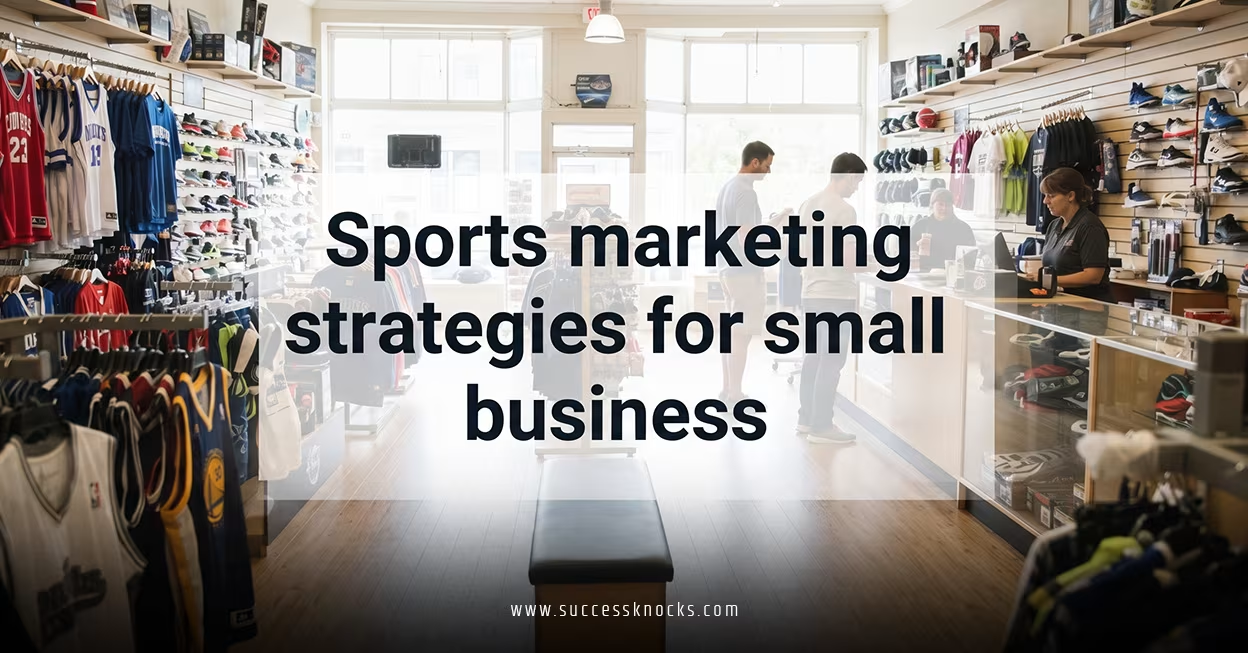
Pic – CC0 License
Why Sports Marketing Works for Small Businesses
Sports Marketing Strategies for Small Business People connect with sports on an emotional level. They cheer for teams, follow athletes, and share big moments with friends and family. When your brand shows up in that conversation in a natural way, customers notice.
You don’t have to sponsor a professional team to benefit. Local leagues, high-school games, youth tournaments, and major international events all create openings. The key is choosing moments that match your audience and staying authentic.
Start with Clear Goals and a Realistic Budget
Before you spend a dollar, decide what success looks like. Do you want more foot traffic? Email sign-ups? Social engagement? Brand awareness in your city?
Set a small monthly or quarterly budget—many small businesses start with a few hundred dollars and grow from there. Track results so you know what’s working. Simple tools like Google Analytics, Instagram Insights, or even a shared spreadsheet will do the job.
Leverage Major Events Without Big Spending
Big tournaments create free attention. The FIBA Women’s Basketball World Cup September 2026, for example, will put women’s basketball in the spotlight from September 4 to 13 in Berlin. USA fans will be watching, talking, and posting.
Here’s how a small business can ride that wave:
- Create timely social posts that celebrate Team USA or highlight teamwork lessons.
- Offer a short-term discount or freebie tied to game days.
- Host a low-cost watch party at your store or online for customers and staff.
- Share short videos or graphics about preparation, resilience, and performance—themes that translate directly to business.
You stay relevant without buying official sponsorship rights.
Partner Locally and Build Real Relationships
Local sports clubs, school teams, and community leagues often need support. Offer to supply water bottles, print T-shirts, or provide a small prize in exchange for logo placement and social mentions.
These partnerships usually cost less than national campaigns and create stronger goodwill in your area. Parents, coaches, and players become familiar with your business, and word spreads naturally.
Use Content That Feels Helpful, Not Salesy
Sports give you ready-made stories. Write short posts or emails about:
- How elite athletes recover and what that teaches about rest in business
- The value of a strong bench (cross-trained employees)
- Setting clear goals the way a coach builds a game plan
Keep the language simple and useful. People share content that helps them, not content that only promotes you.
Activate Your Existing Customers
Sports Marketing Strategies for Small Business Your current customers already know and trust you. Invite them to join a friendly prediction contest during a tournament, or create a small loyalty reward for anyone who posts about supporting a local team while wearing or using your product.
These actions cost almost nothing and turn casual buyers into advocates.
Measure, Learn, and Adjust
After each campaign, ask three questions:
- Did we reach the right people?
- Did it lead to any sales, sign-ups, or stronger relationships?
- What would we do differently next time?
Sports marketing works best when you treat it like a series of experiments rather than one big bet.
Common Mistakes to Avoid
Don’t force a connection that feels unnatural. If your business has nothing to do with sports, a heavy-handed campaign can backfire. Also avoid last-minute scrambling—plan a few weeks ahead so your content and offers are ready when the event starts.
Finally, don’t ignore your regular customers while chasing new ones. Balance is everything.
We hope that you have found this article enlightening in some way and that these sports marketing strategies for small business give you clear next steps you can take this month. Whether you’re watching the FIBA Women’s Basketball World Cup September 2026 or supporting a local team down the street, the principle stays the same: show up where your customers already care, stay genuine, and keep the focus on value.